Category Archives: Uncategorized

Gresley Buffet – Part 4 Finished!
…..but, before it was counted as finished, it needs to be doing the job it was designed for – buffeting. And that means it needs to be populated with people.
Regrettably few modellers, even finescale modellers, actually put people in thier coaches (and sometimes in contrast to platforms which are stuffed with them!). This is a shame as they do make a difference to even a fairly casual viewer. At a show recently, a dad and his son who were probably not modellers spotted the people in my coaches instantly. I’ll take that as proof of the point!
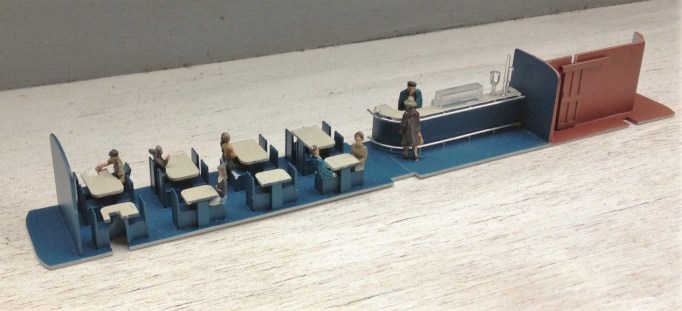
As is common with rtr coaches, the seats are moulded in place such that there is no room for the little peoples legs, so some severe amupation is required! In the case of Hornby’s buffet, the seats are also modelled pushed tightly underneath the tables – which has meant that the backs to the seats or the lip of the table also needs to be hacked away a bit. As all of this surgery occurs below the waistline of the coach, it is not visible from outside so your Dr Crippins’ tendancies will go unnoticed!!
Next up was to paint the exterior where the new plastic was cut in and here I had some problems. I was warned by Brian of Shawplan that I should paint the whole side when I repainted the new sections but I decided not to follow this advice – something I now regret!! So having masked up theadjacent areas and sprayed in only the affected sections i found that the grey that Hornby used was notably bluer than that provided by Precision Paints. The first attempt at repainting had the colours sticking out like a sore thumb and even on the second attempt, with a dab of blue in the mix is not perfect but is just ok underneath the grime. So, if you are proposing to do follow this build follow Brian’s advice, not mine!
Once a couple of new windows were cut into the reshaped windows in the kitchen area of the buffet car, it was necessary to weather the vehicle. These buffet cars were notorious for being really tatty by the 1970’s; partly because the paint supposedly was prone to debonding from the underlying teak but also because the automatic washers were not good at getting into the corners of the panelling. After an overall spray of dirt to tone down the colours and another to represent the brake dust and track muck, I used two techniques to represent the weathering on the panelling. The first was to spray the whole coach with a mist and once it had started to dry a stiff artist’s brush was dipped in thinners was used to remove the bulk of the paint. The areas that it does not come away from are the nooks and crannies around the panelling; the same areas that would have retained the dirt in the real things. I to find, however, that the margine between where the paint has been removed and not can be a bit stark, so I used a second technique to both hramonise this and also acceptuate the effect. Using a heavily thinned dirty black paint, run a brush over the whole of the sides – the paint runs to the corners and achieves the same effect. It pays to be brave with this as the wetting effect of the thinners makes this initially look much darker until the thinners have dried off.
And this is what the finished article looks like………
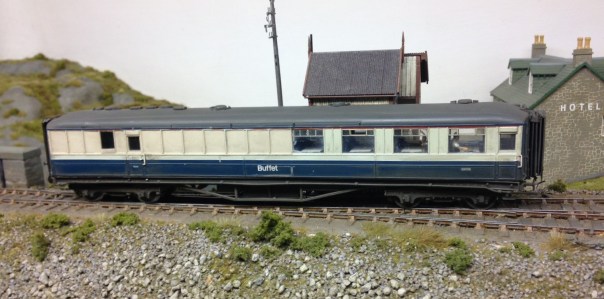
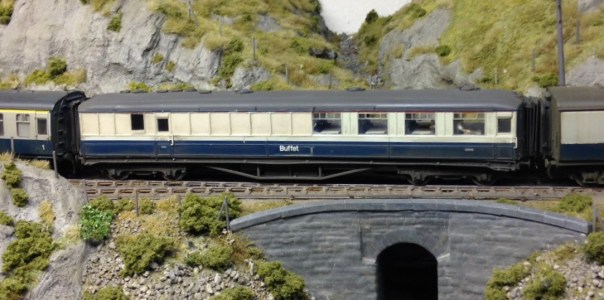
So thanks Hornby for supplying the model in the first place and the inspiration to do some plastic surgery. Whilst this write up may have lasted some months, actually this was quite a quick conversion – the basic surgery on the side was only 4 hours – so why not have a go?
The Dingwall & Skye Railway
The Dingwall & Skye Railway – A Pictorial Record of the line to Kyle of Lochalsh.
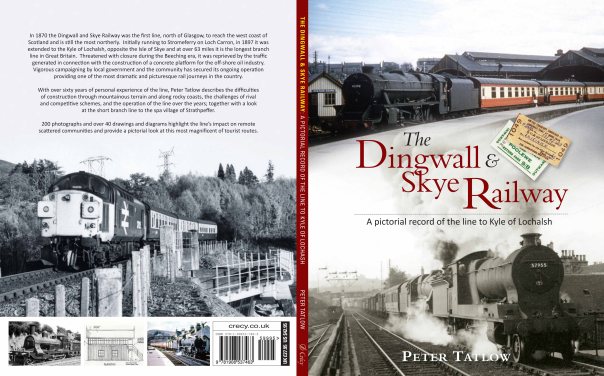
For those of you that are aware of my main exhibition layout you will be aware that it is based very firmly on the Dingwall & Skye Railway, which is the name of the line we now call either the Kyle line or occassionally the line to Skye.
I have to confess that the layout is heavily influenced by my memories of family holidays to the line in the early 1970s – we were dragged up there by my father and I at least (it all appears to be lost on my brother!) picked up a bug for the railways west of Inverness. This bug seemed to have been passed to me by my father and he was in turn infected in the late 1950s when he first made his visits to the area.
Based on his love of the line to Kyle of Lochalsh, my father’s latest book is upon the line. It does not seek to be a strict history of the line (Rails to Kyle of Lochalsh does this) but is instead a review of the line on a station by station basis. It is full of photographs (literally hundreds of them) and also a substantial number of drawings of the engineering and architectural infrastructure apparent on the line as well as around it. This covers station buildings, water tanks, bridges, sheds, signals, water columns, water tanks, cattle docks and indeed many other aspects of the line. There are historical reviews of aspects of the operation of the line, the exploration of alternative schemes that did not come to pass and some of the quirky storys of the past.
It is thus for those that like a coffee table picture book, a historical review of the highland railway, those that are interesting in modelling tbe line and those that simply are caught up in the nostalgia of the “line to Skye”…..
The Dingwall & Skye Railway – a pictorial record of the line to Kyle of Lochalsh, by Peter Tatlow ISBN 978 1906 537463 @ £27.95 by Crecy Publishing Ltd. For those of you who are members of the Highland Railway Society, you will find that your membership entitles you to a significant discount if you buy from the society. Thus if you are waivering about joining the society, you will be do well to do so if only to buy this book!
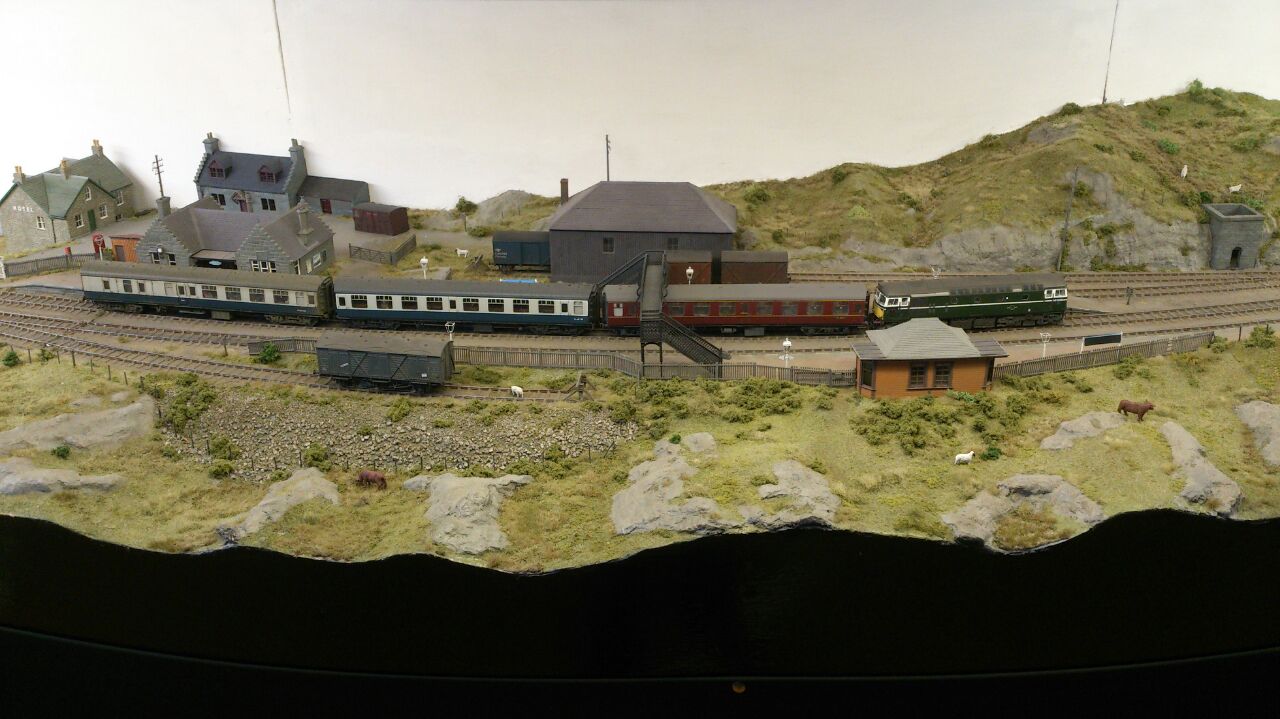
A Quiet Day at Portchullin…………
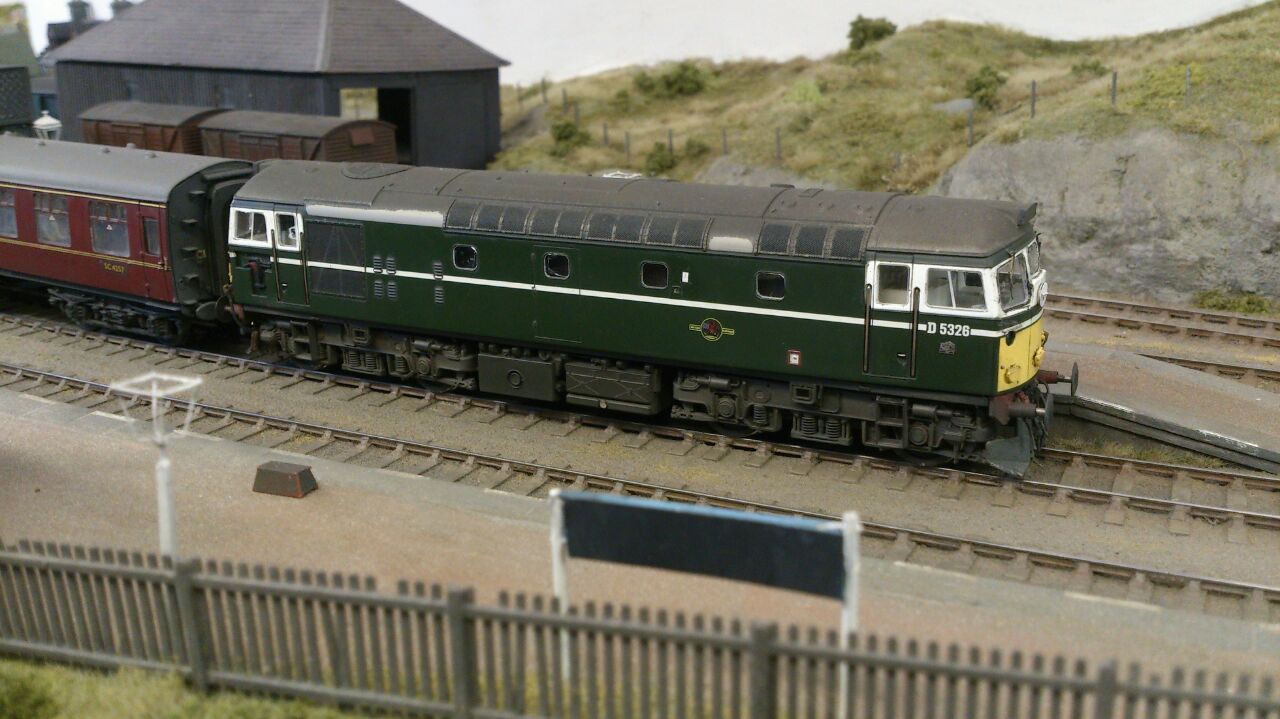
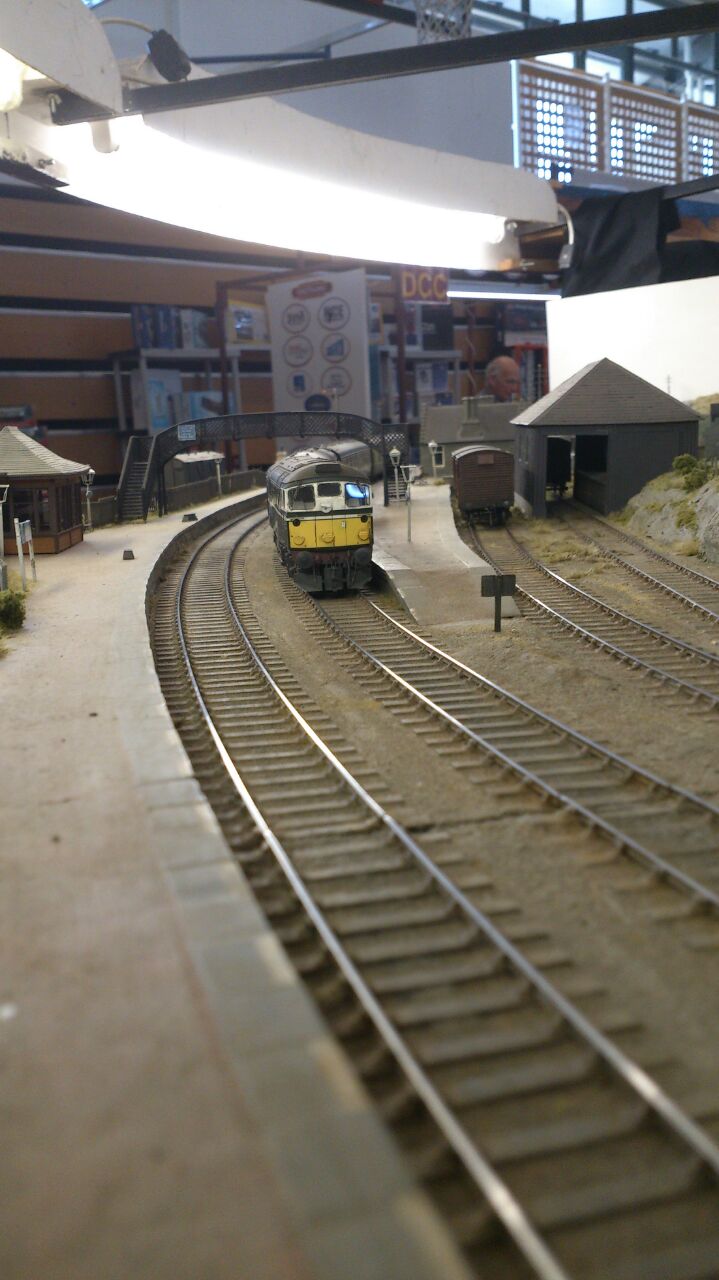
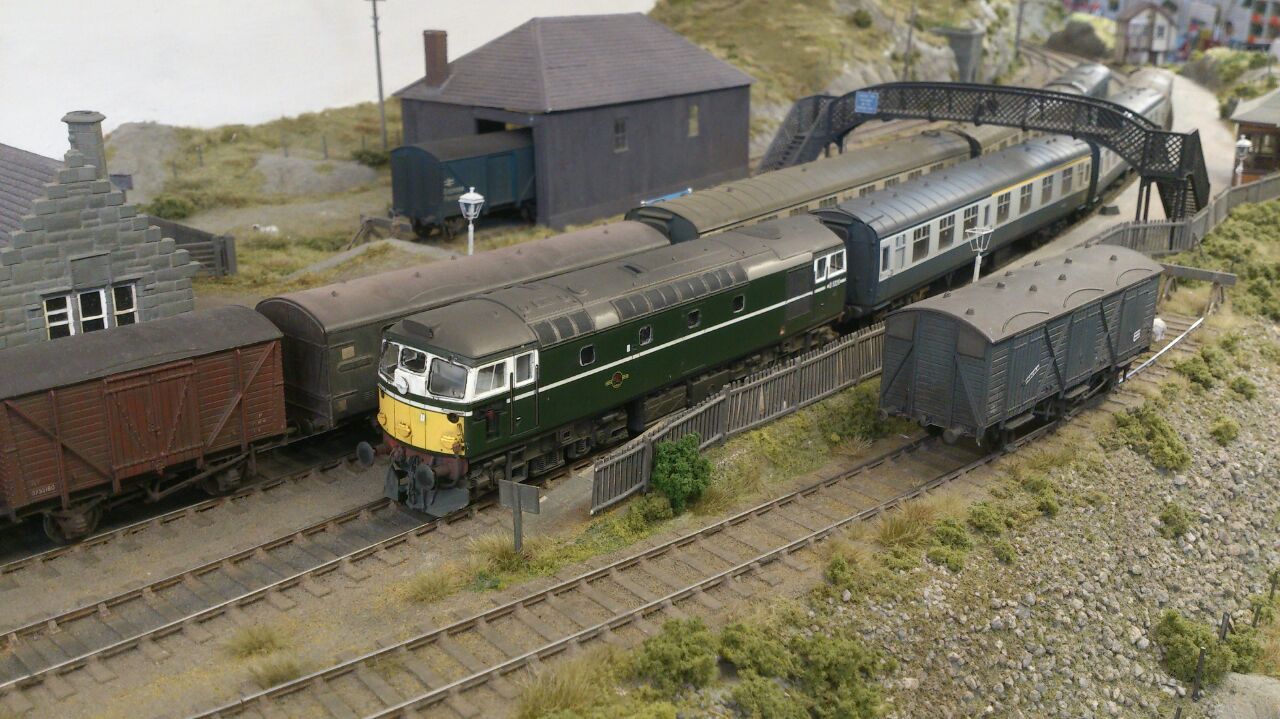
Although it may be that there is a train in the yard as the shunt signal is off…… I suspect it will be one of the class 24s?
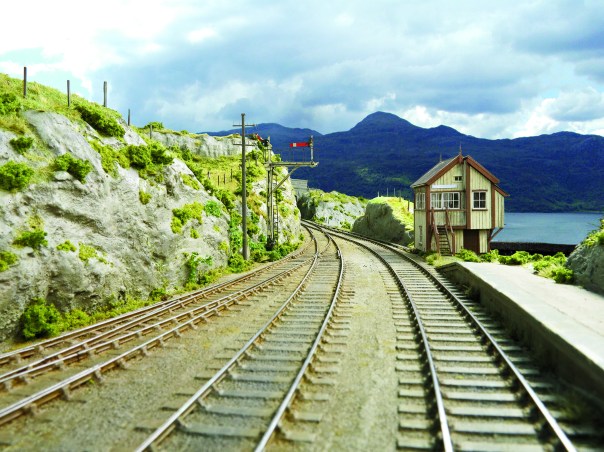
Portchullin is just back from a trip to the St Alban’s show and its next outing will be in Telford, for the Diesel & Electric Show on the 20-21 February.
With thanks to David Brandredth and Tim Venton for the cracking photo. Now my fav of the layout!
Ton Up – aka Ben Klibreck
Today has proved to be a fairly big day, but not for modelling reasons.
Today I climbed Ben Klibreck, which is the second most northerly Munro in Scotland. Not in itself a hugely remarkable mountain, not particularly high or with any major technical challenges. Mind you it does (as you will see below) have stupendous views of the wildness of Sutherland from its top or approach ridge.
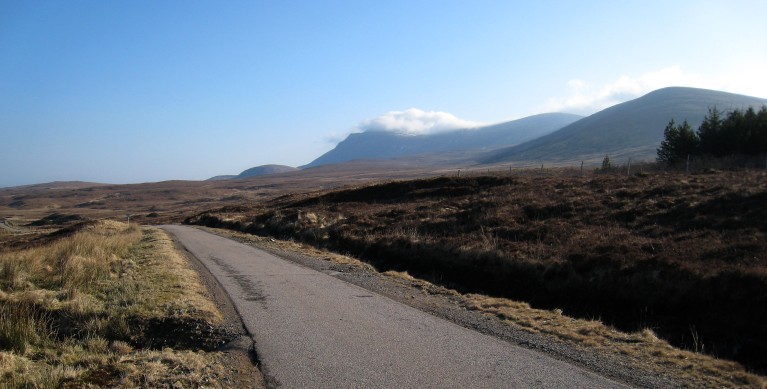
Ben Klibreck from the south west
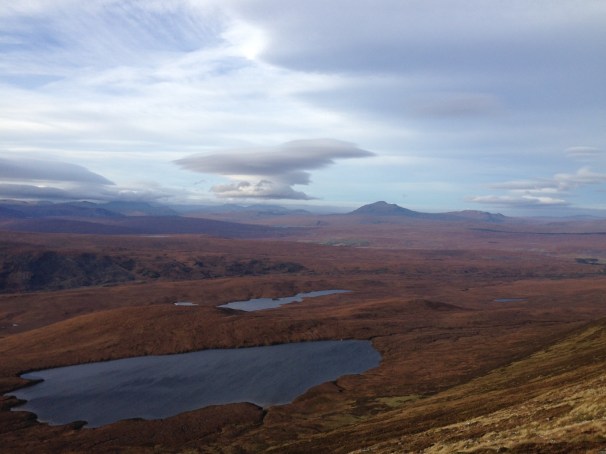
Looking north west from the assent of the approach ridge to the mountain
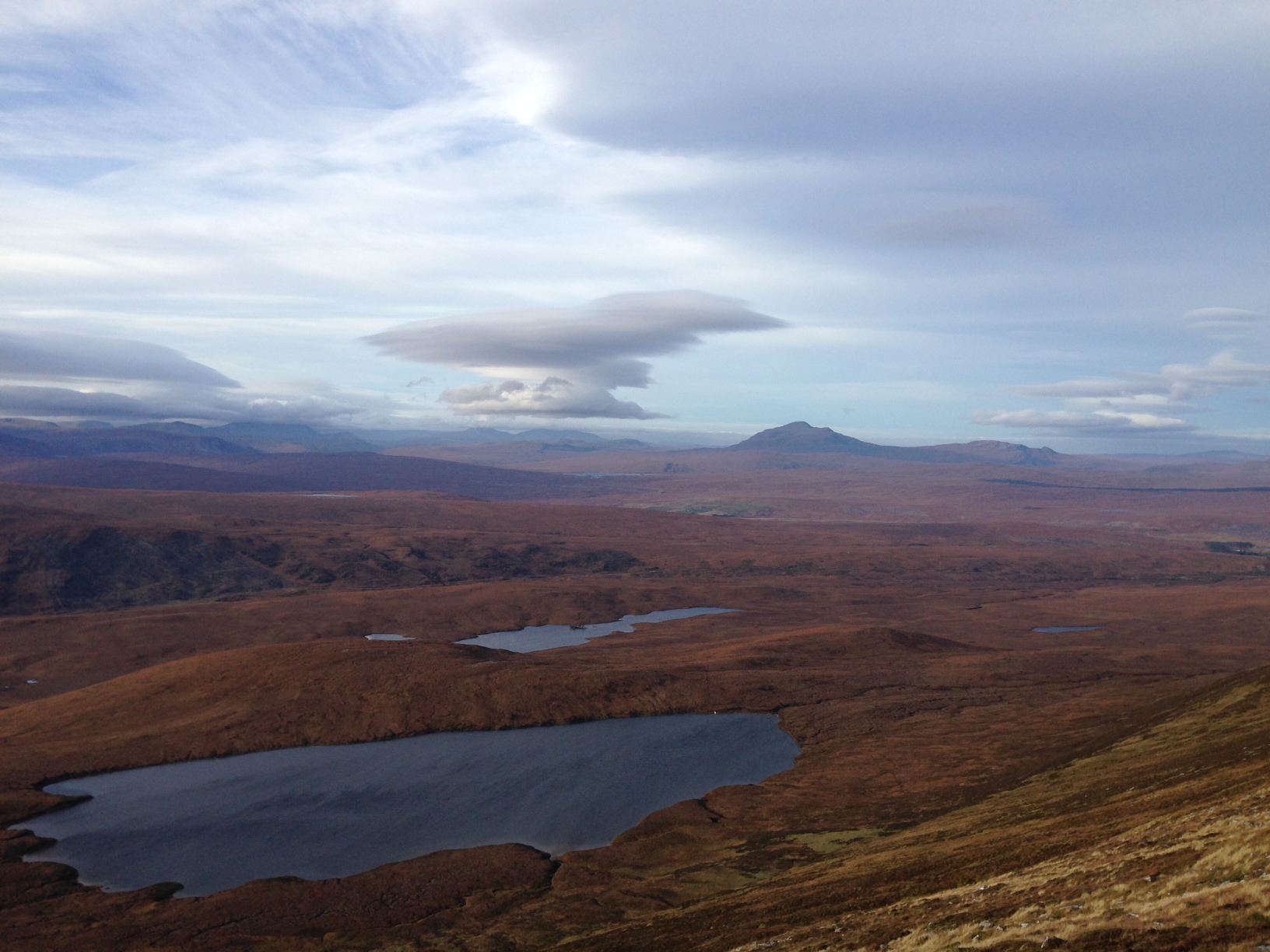
and a panorama around the north.
And the reason why it is such a significant mountain; it marked the completion of my 100th Munro. All I have to do is crack the next 182 out now……………..
Although, maybe some modelling too……………but first a bath and bed!
Highland Holiday? …………… aka a Blantant Plug…………..
One of the reasons I have not been doing quite as much modelling as I, or the gorilla, fancy lately is that I have been doing a spot of house restoration and redecoration. Worse than that, said house is some 650 miles from me so getting to it is not without its adventure………….
Unfortunately, this decision was partially provoked by a pair of bereavements which has kicked my wife and myself to do something that we had talked about in the past but then chickened out of. We have acquired a cottage for holiday letting, in this case located in Jemimaville in the Black Isle – which for those of you that don’t know is Inverness and then up a bit and right a bit.
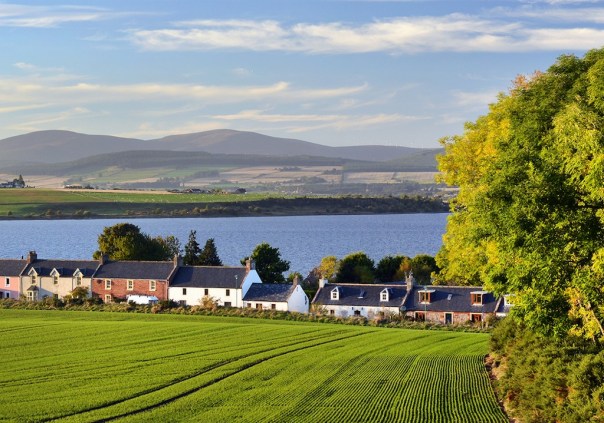
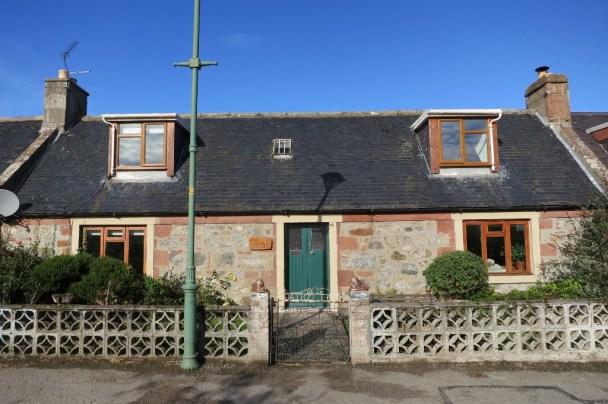
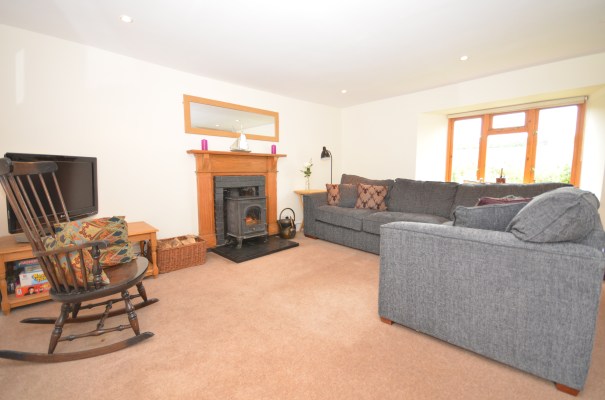
Having spent a few weeks of our time now overcoming some of the issues we inherited and smartening it up; it is now available for letting. If anybody is fancying a Highland Holiday, here are its details and it remains largely available through the summer months of this year as it literally has only been listed in the last few days. If anybody was tempted, please contact me via here though – we can let to friends/family for certain amounts each year and can offer a significant discount (in part because the agents fees do make you wince!).
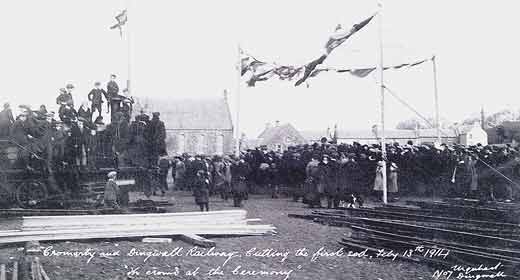
Don’t worry, there is a railway angle to the cottage. The former branch line to Cromarty runs through the bottom of the garden. In case any of you consult your old railway maps and conclude there never was a railway to Cromarty, well you are not quite right…………there was, but it was never finished so did not open but the first 6 miles or so were completed, including through Jemimaville. Here is a picture to prove it:
End if plug; normal service will be resumed soon – a Gresley dining car…………or maybe some trackwork for the Gorilla.
Day Return to Castle Rackrent
You will recall that approximately a year ago, I posted about my last visit to Castle Rackrent and I mentioned that the layout was about to undergo a significant reconfiguration. A month ago I had a chance to revisit Richard Chown and see how it is getting on.
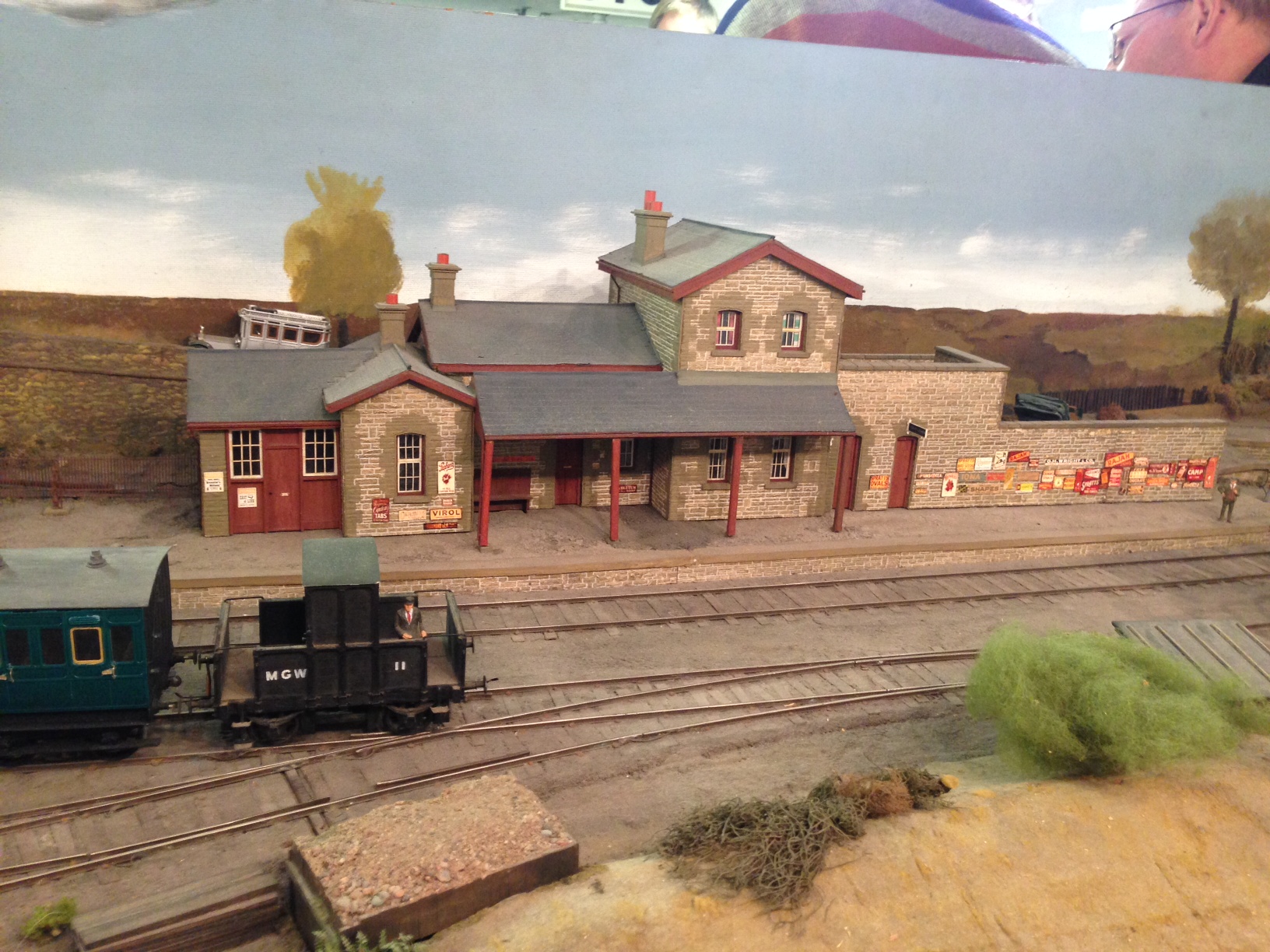
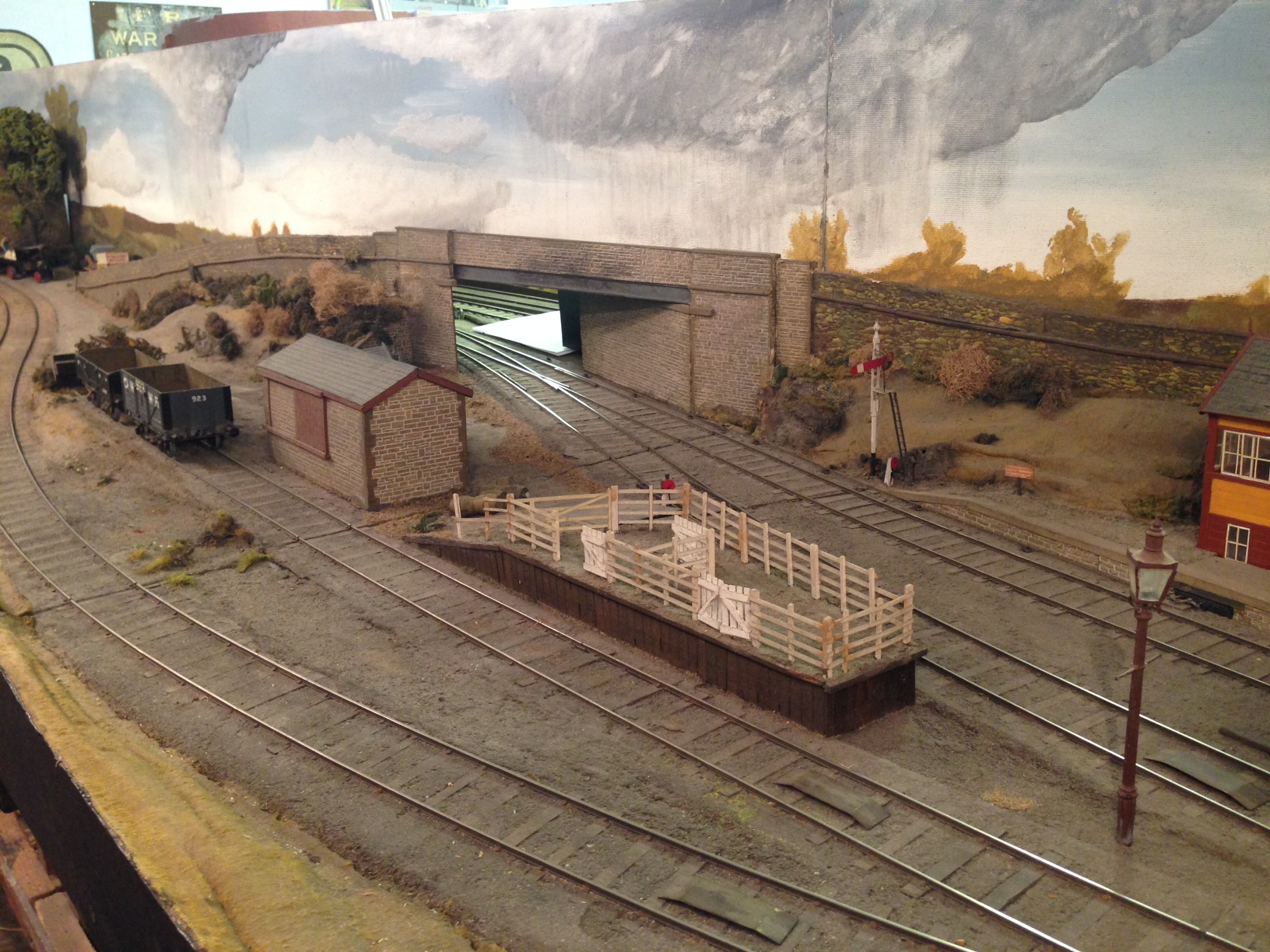
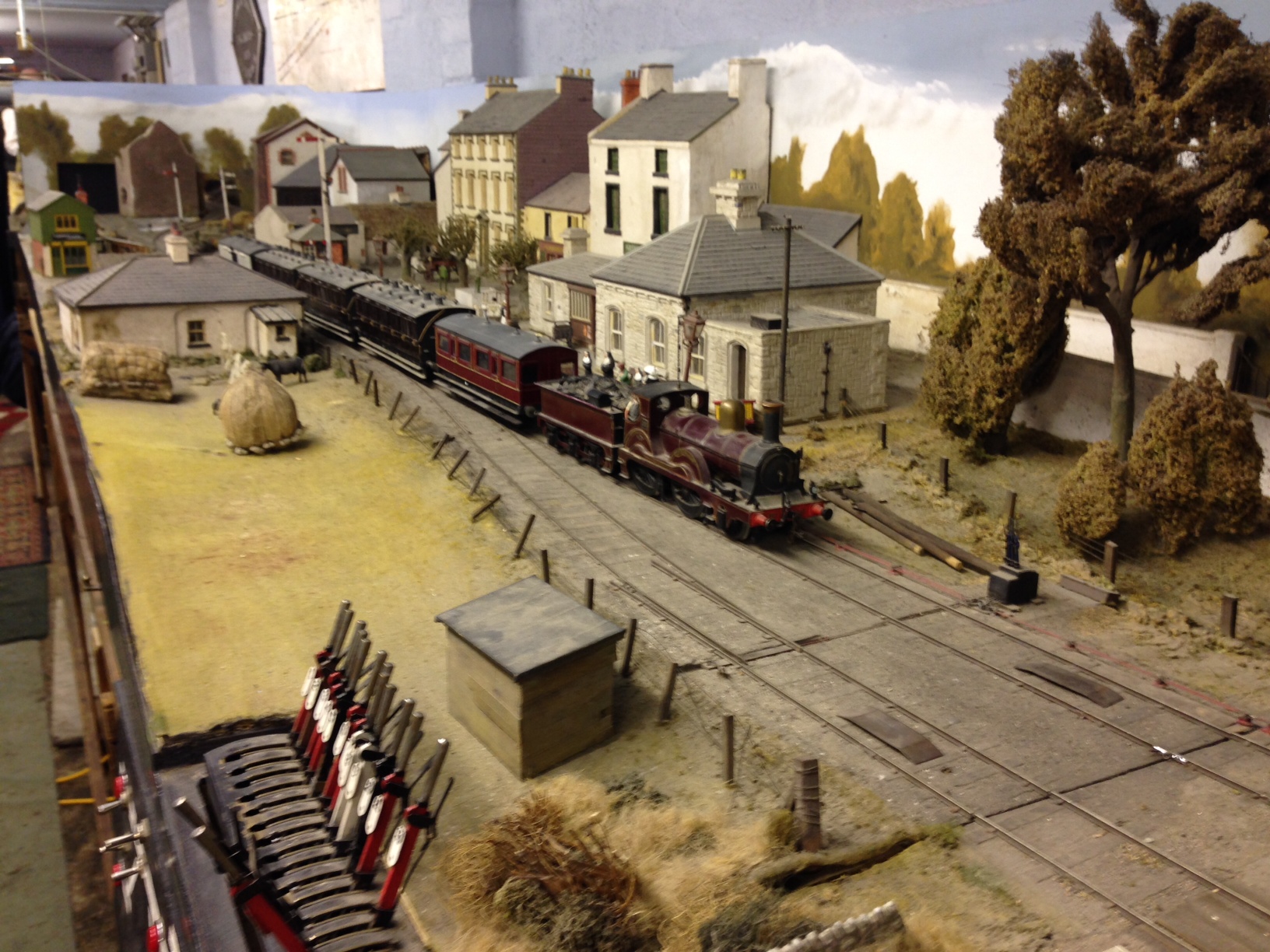
Here are some photographs from my visit (but only a few as I had difficulties with low light levels):
Castle Rackrent Station
Storms above Castle Rackrent
St Juliet Town
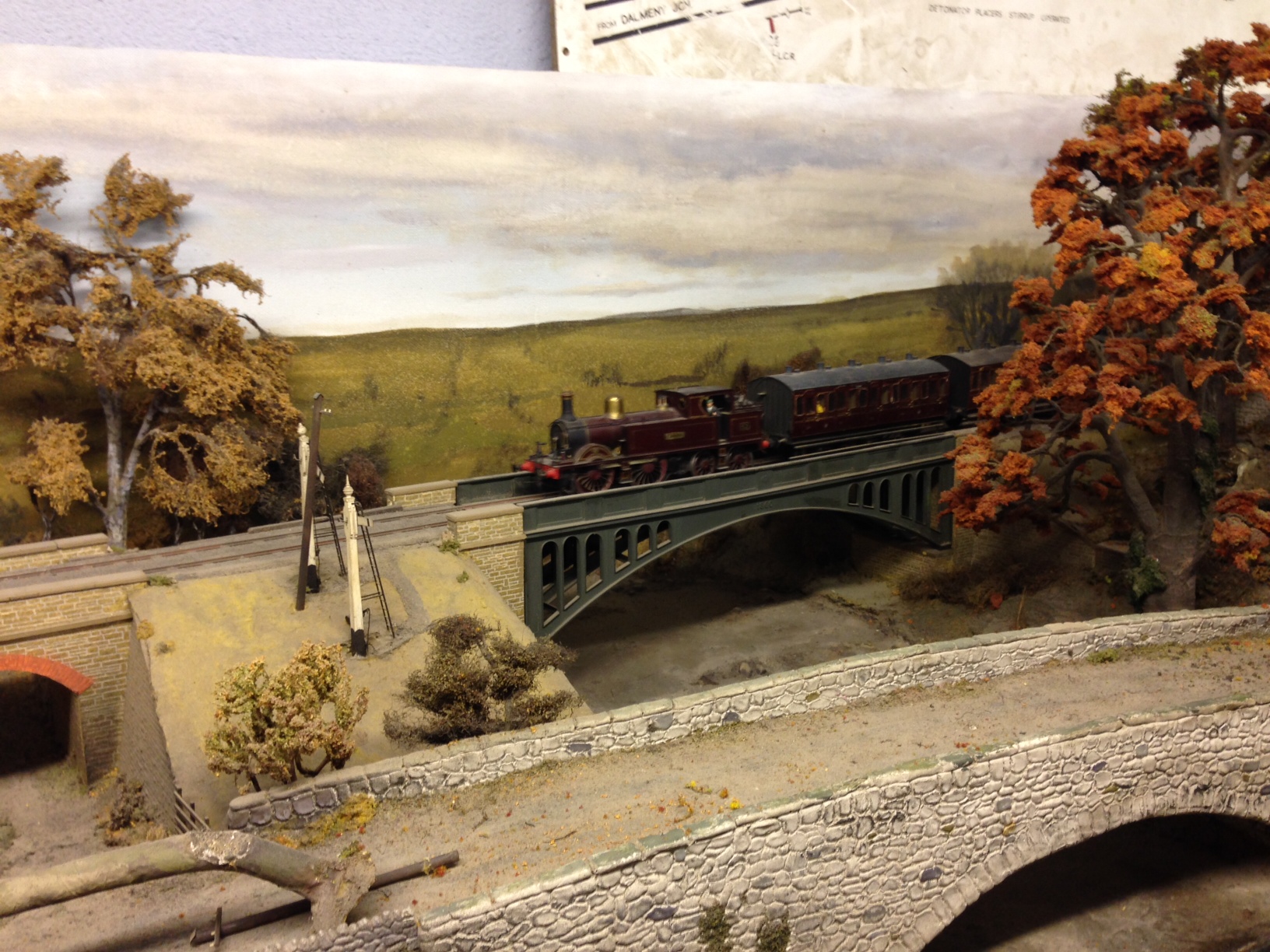
As you can see, a number of stations are undergoing a rebuild.
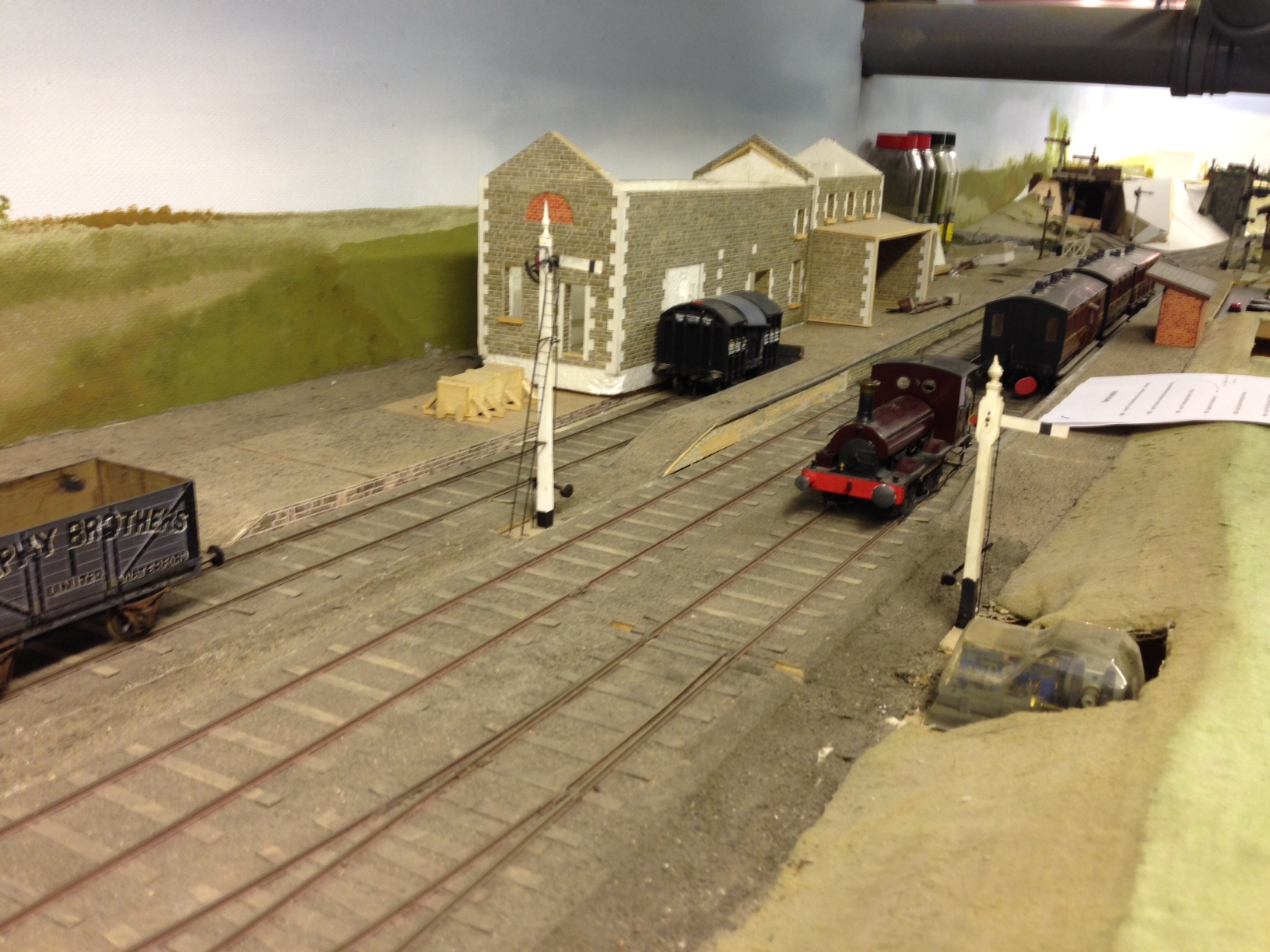
A lot of work remains, as large sections of the line remain simply track on bare track on boards and some fettling of the track will also be necessary but already there is a lot done. Hopefully I will be able to visit again when things are a little more developed.
Also on view was Fangfoss which was in an even darker room, so no photos at all of the actual layout, but a few of the locos were elsewhere and here is a taster.
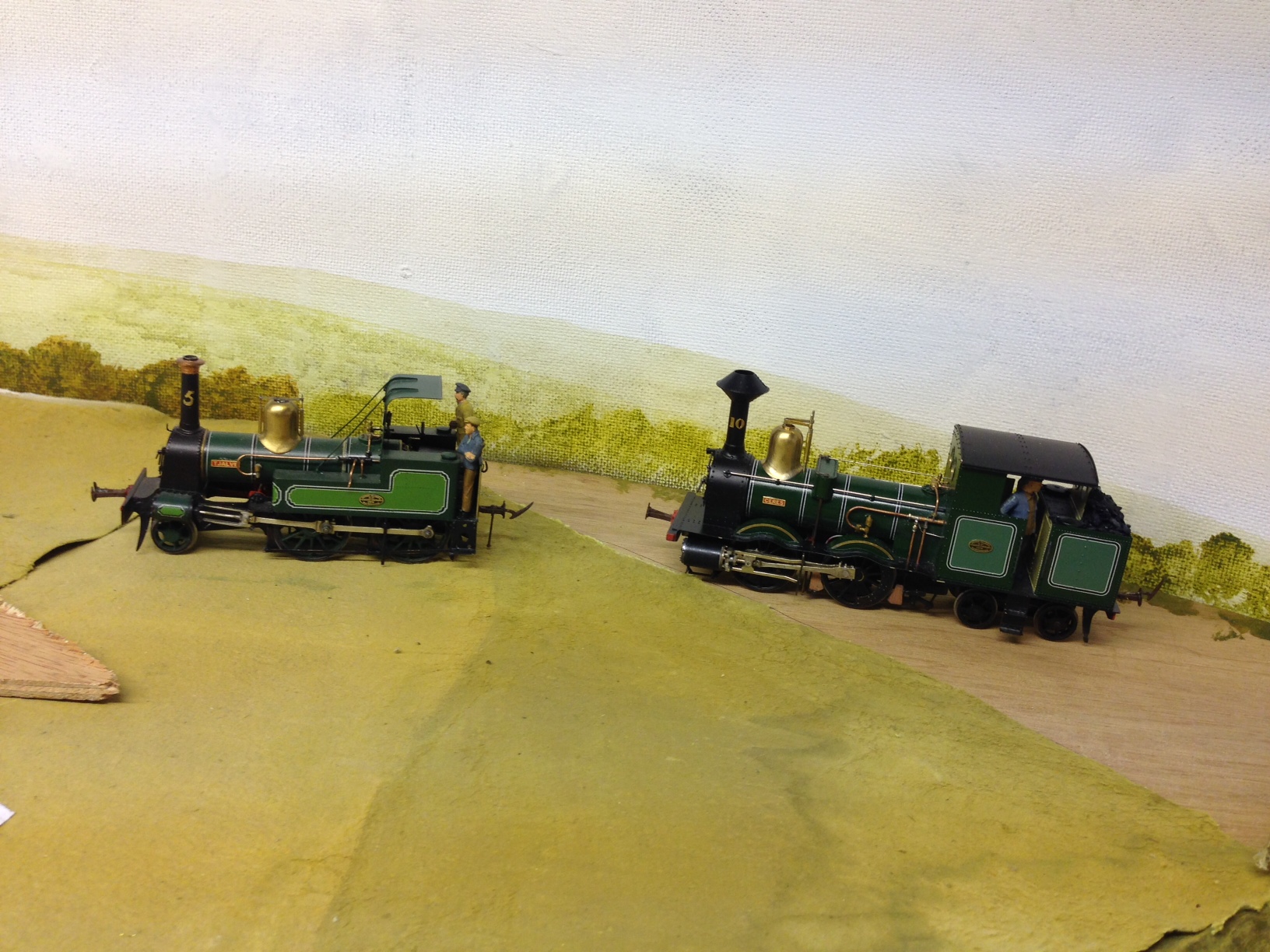
You will be able to see Fangfoss for yourself (and it is worth I can assure you) at this year’s Scaleforum which will be held in Aylesbury on 19/20 September – details here .
See you there if you go!
Scottish Holiday Photos!
Oli has wound Portchullin’s real time period back by a year or so in order to get some green boxes to supplement the blue ones that I normally use.
I have to say, very nice it looked too; one could almost get into them!
Thanks for your assistance Oli!

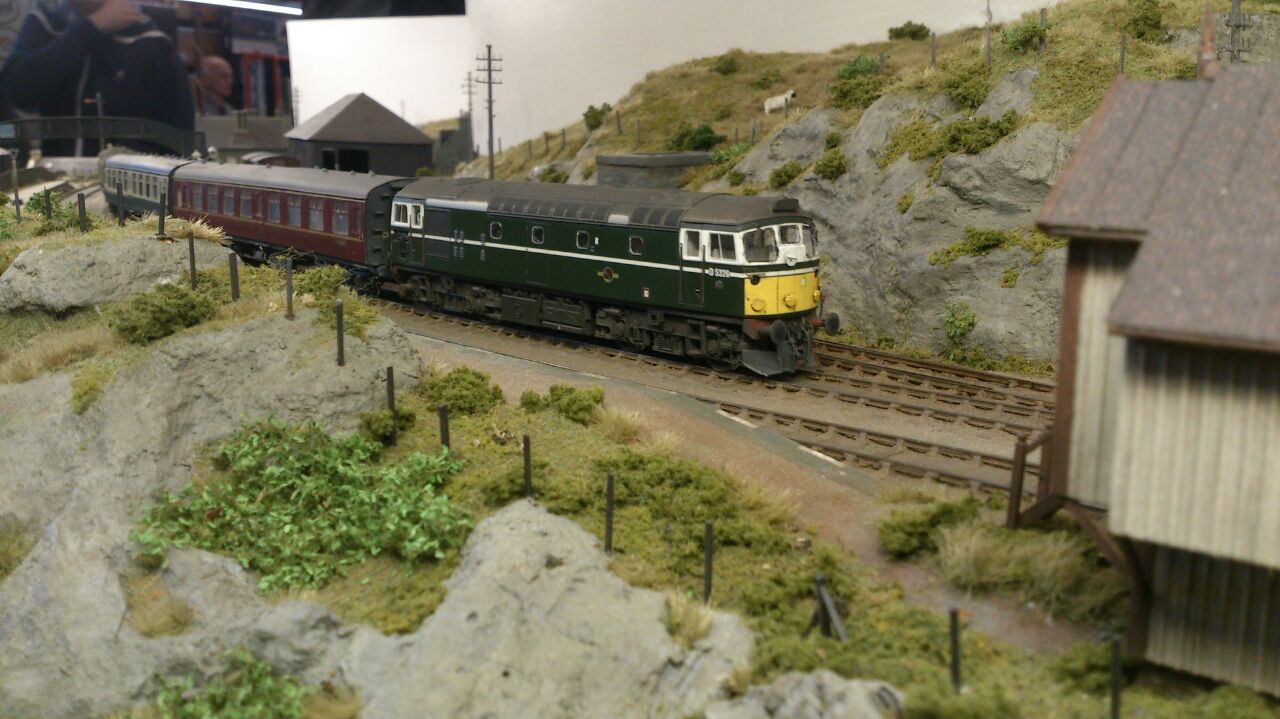
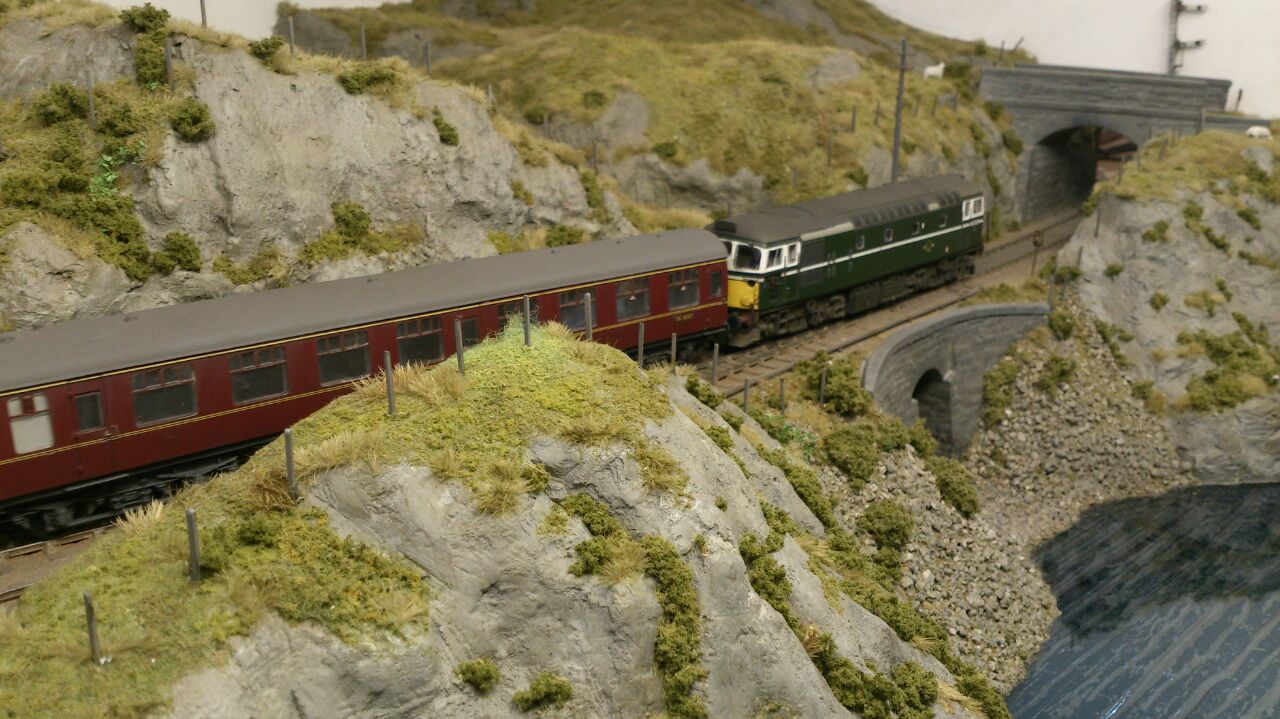
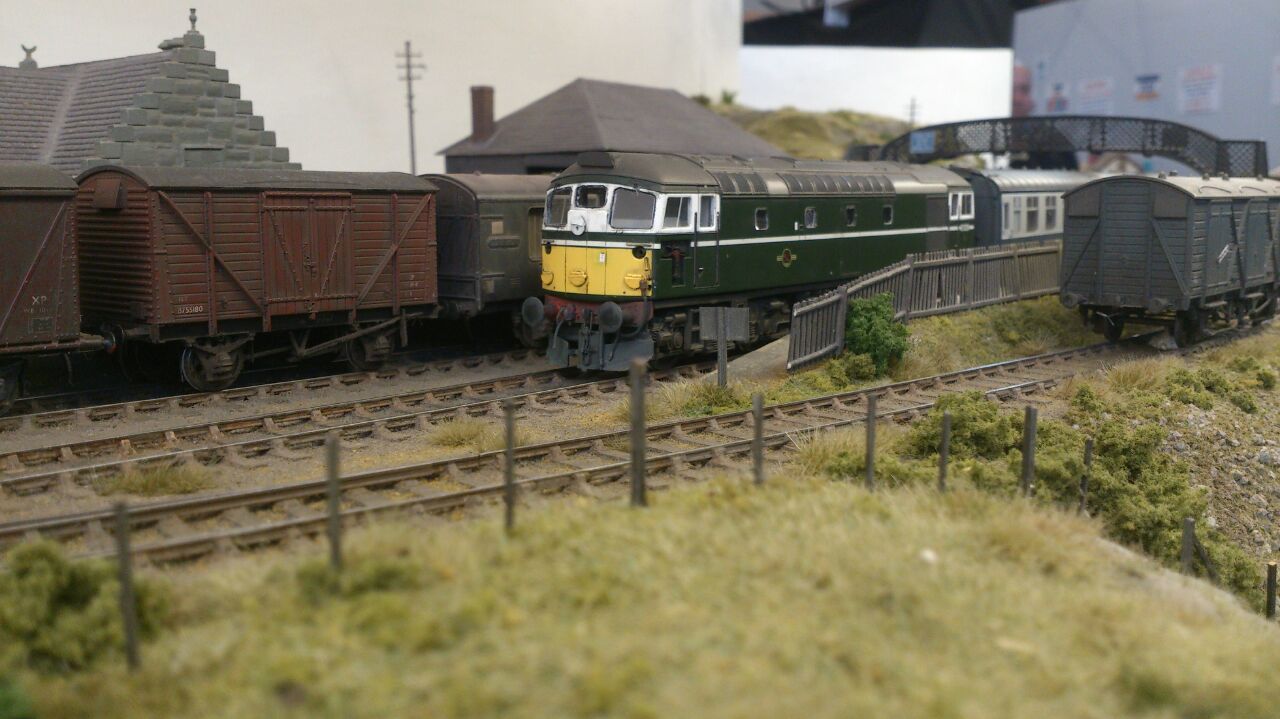
Well they sort of behaved, after Mark had taken my bodge and did it properly!
Bob Symes (1924 – 2015)
In a rare departure from my general policy of ignoring of topics beyond strictly modelling, I thought I really ought to comment on the passing of Bob Symes at the beginning of this week
.
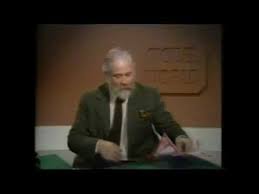
To those in the UK of my age, you probably will have first encountered Bob as the presenter of the Model World TV series in the early 1970s. This was a series of six (I think) episodes, each dealing with a different modelling subject; military modelling, ship modelling, aeroplane modelling and, of course, model railways. You couldn’t see the BBC risking BBC channel 73 with a series on making models now, let alone a prime evening slot on BBC 2 which is where I think these were aired. Most of the episodes are available on youtube (for example this one) and whilst perhaps the quality of modelling has come quite a long way in the last 40 years, I wonder if the charm that Bob seemed to impart to his interest may have been lost? And for you that really were there watching these back in the 1970’s, the opening music will instantly wipe away the years………….
Thereafter, I encountered Bob quite regularly as he was the president of my then local model railway club; the Astolat Club in Guildford. He would attend most of the Astolat’s shows and was always encouraging to the efforts of the juniors, such as myself, which was certainly appreciated. He would also have an open day at his house in the summer where you could get to see and play with his trainsets – and didn’t he have a few! It is not everyone that has what must be something like a 12 inch guage circuit in their garden; and gauge 1 circuit, and a couple of others besides and that is even before you get to his steam powered generator and water pump!

I still pass close by to where he lived quite regularly and thought I ought to see if I could get a further invite. Now the chance is gone. So rest in peace Bob, you definitely were an asset to the hobby.

The majority of these photographs are with thanks to Guy Carpenter of Gullwing Photography and he retains copyright of them. For more information please go to Guy’s website and for some more of Guy’s fine photographs of his visit to Bob’s house please go here.
The Hundred of Manhood and Selsey Tramway
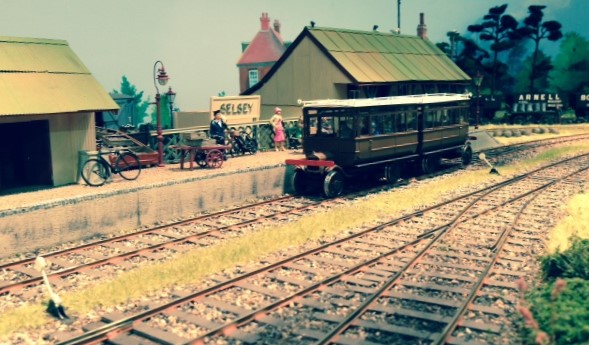
On Sunday, I got to play trains on something that is mildly different for me. This is a layout called Selsey Town which depicts the same on one of the best named railways you can imagine – the Hundred of Manhood and Selsey Tramway (you couldn’t make it up could you?).
This line was one of Colonel Stephen’s light railways; this being engineered by him, managed by him and largely owened by him at the end. The line was incorporated in 1896 and opened the following year. It ran from Chichester, which was on the LBSC coast line about 25 miles west of Brighton down to Selsey which was on the coast. It ran across predominantly flat ground but this was quite marshy (indeed, floods severed the line on a number of occassions).
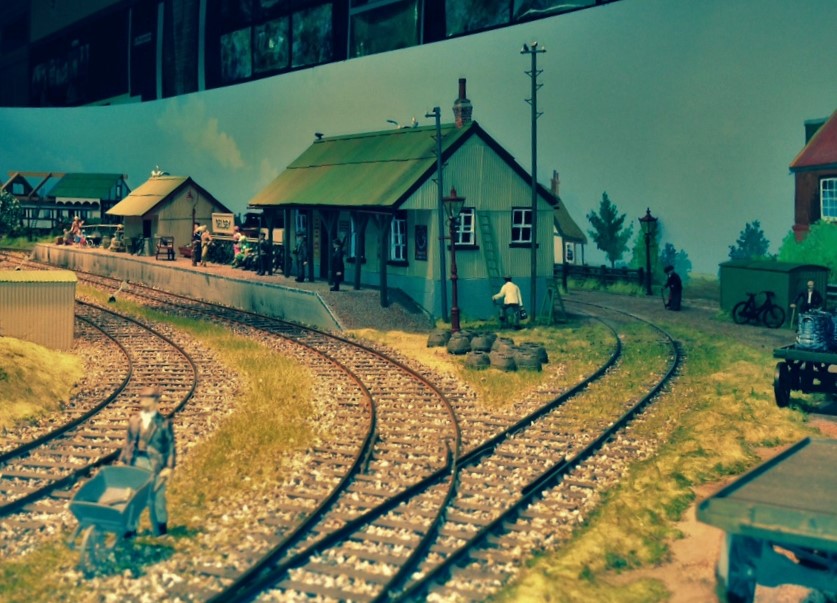
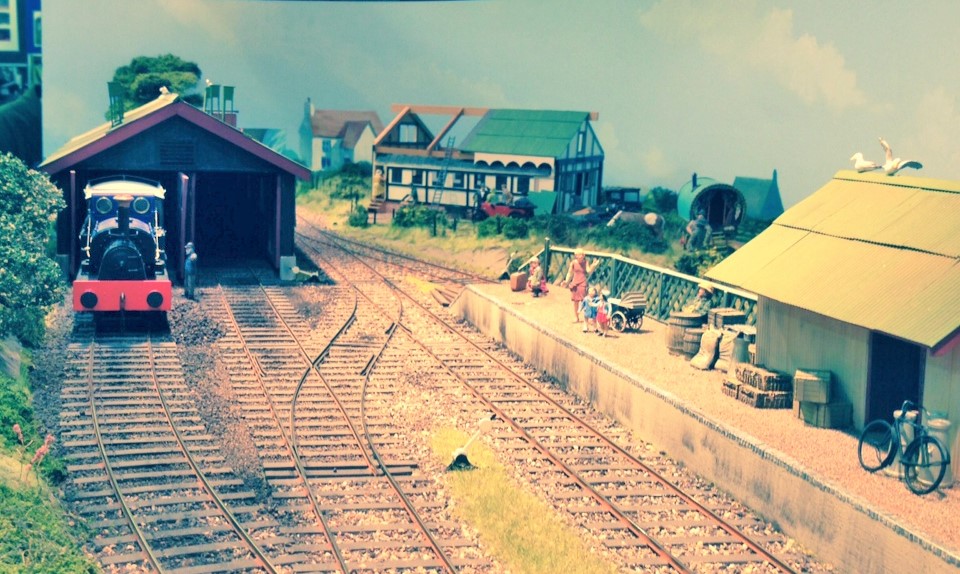
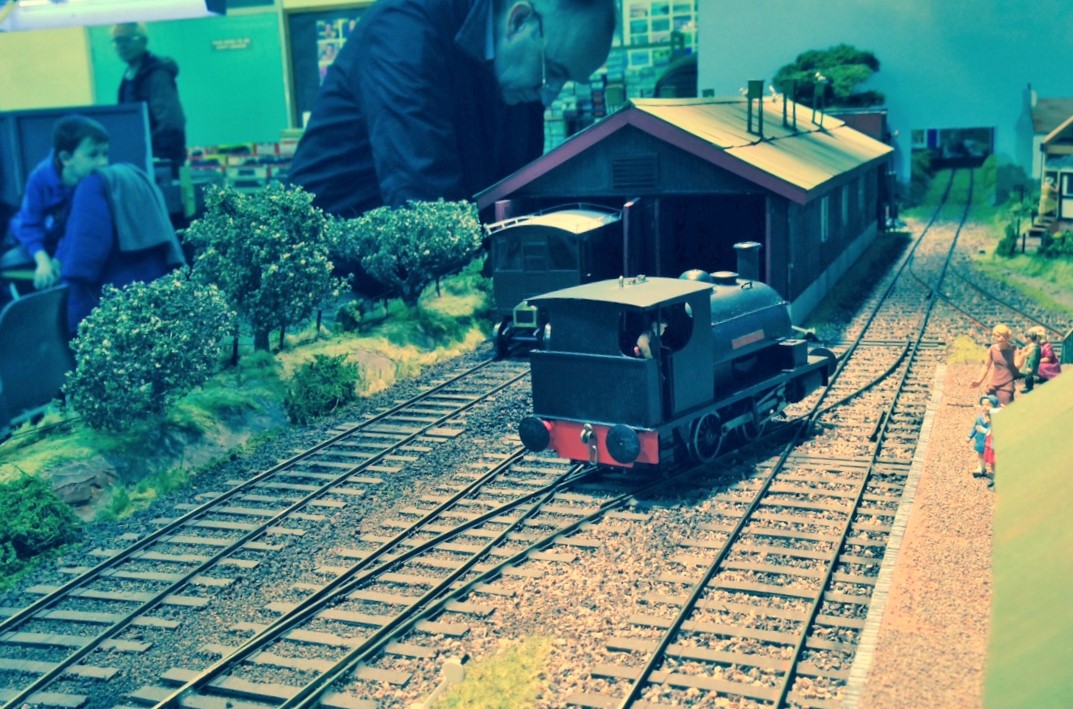
In typical Colonel Stephens style, the line was a real hotch potch of cobbled together equipment that was patch, patched again and then patched some more to get it to go. The line operated without Board of Trade approval for its first thirty years on the basis that it operated exclusively on private land. My knowledge of the controls is that this can’t be true, but it certainly did not have approvals in place until much later in its life.
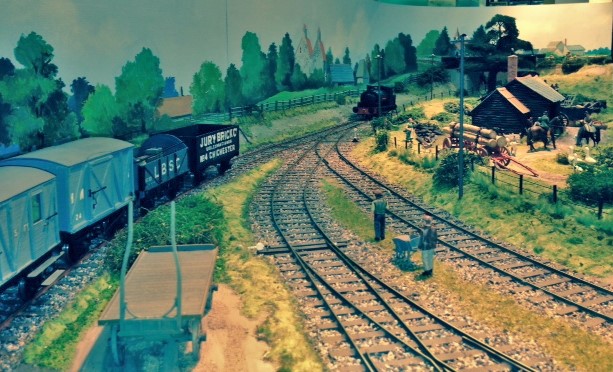
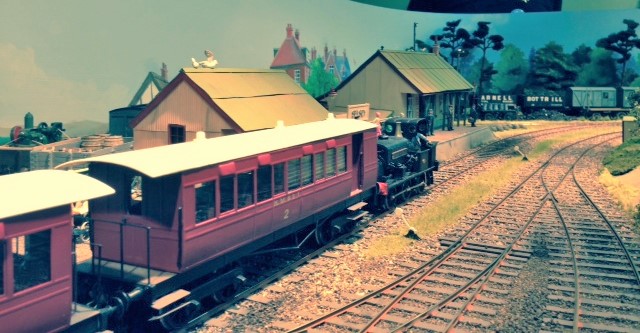
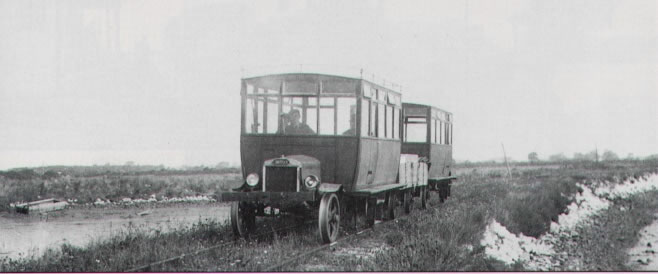
The line was famous for the first use of petrol railcars; something of a calling card for Colonel Stephen’s lines. These came in several different forms and on the layout a pair of them work back to back. There are apparently plans for a further pair; one of which will be a flat bad lorry. To bad if the compartment is full!
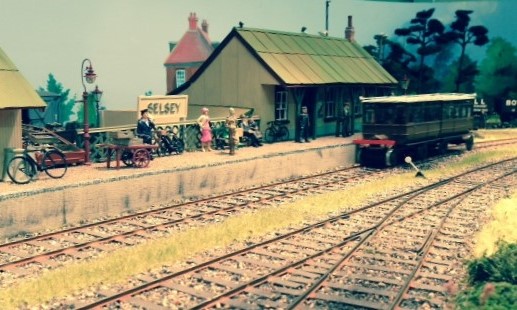
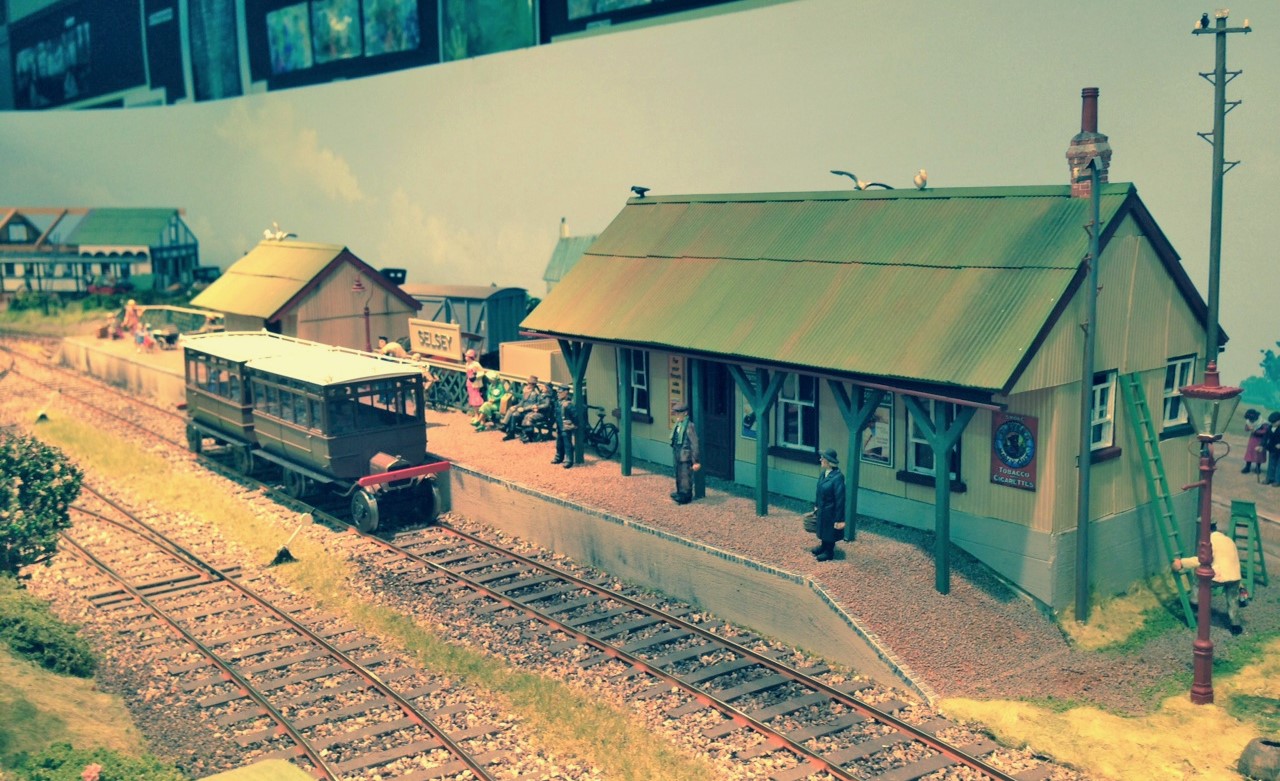
One rather curious procedure that happened on the real line was the some waht unorthadox mixed trains. On the outward journey from Chichester the wagons would be tucked behind the coaches but on the return journey they were sometimes propelled by the train, whilst the remainder of the train was pulled. Somehow, I don’t think the Board of Trade would have approved!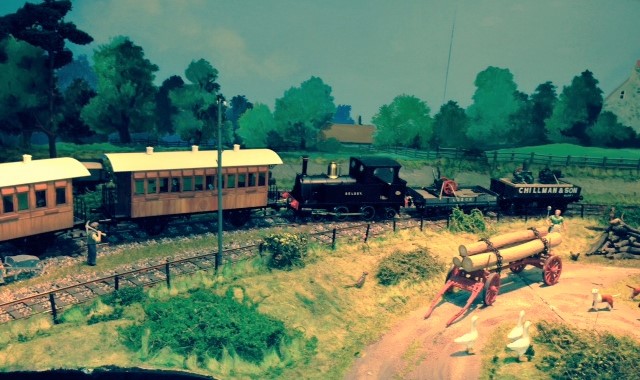
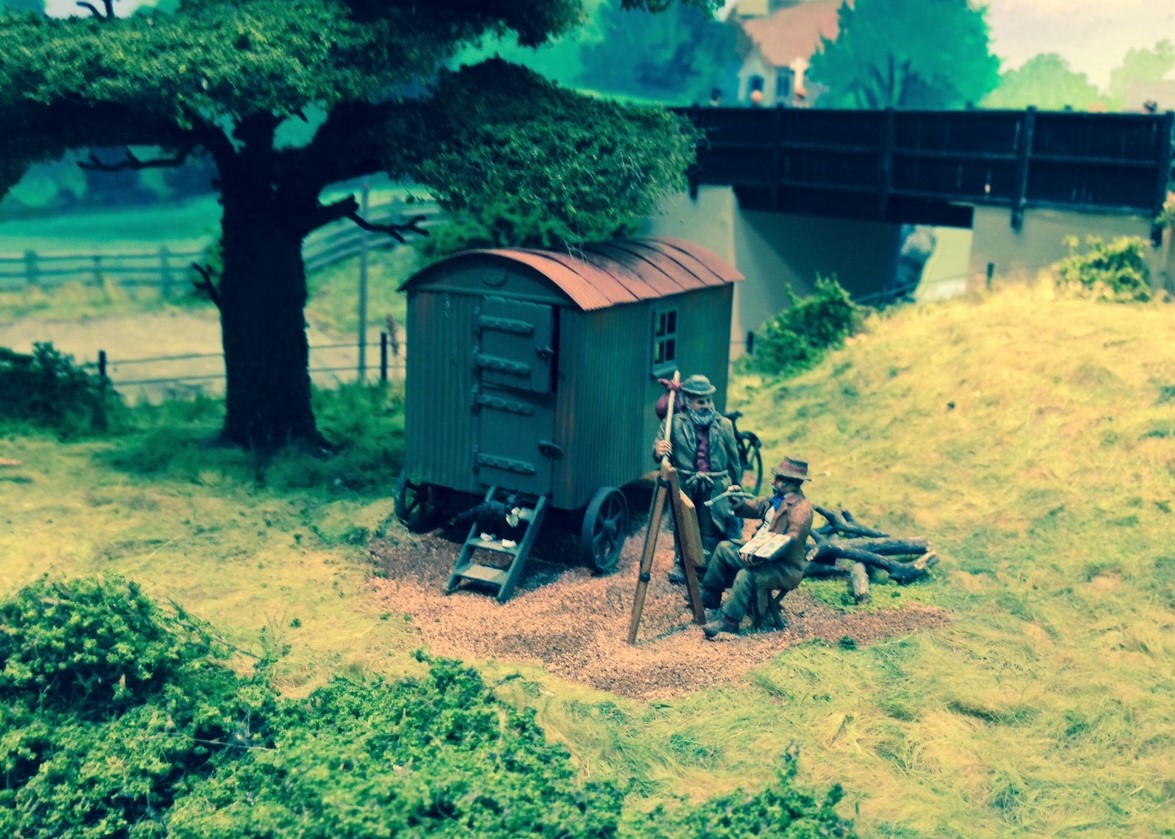
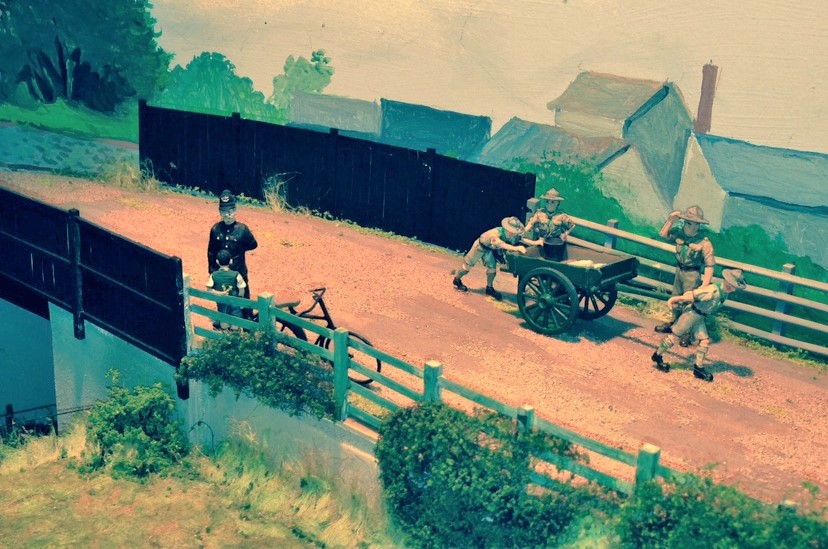
The layout was built by Keith Smith; although he was convalescing so was not actually there – thats why they needed a bit of assistance and how I bummed my invite! Keith’s pleasure is making the scenary and there are large number of very well executed people and cameos on the layout. Here are a couple; an artist being interrogated by a shepherd and a little boy going through a rather more severe interrogation from a police office – I wonder if Dixon of Dock Green will see the caterpolt behind the boy’s back?
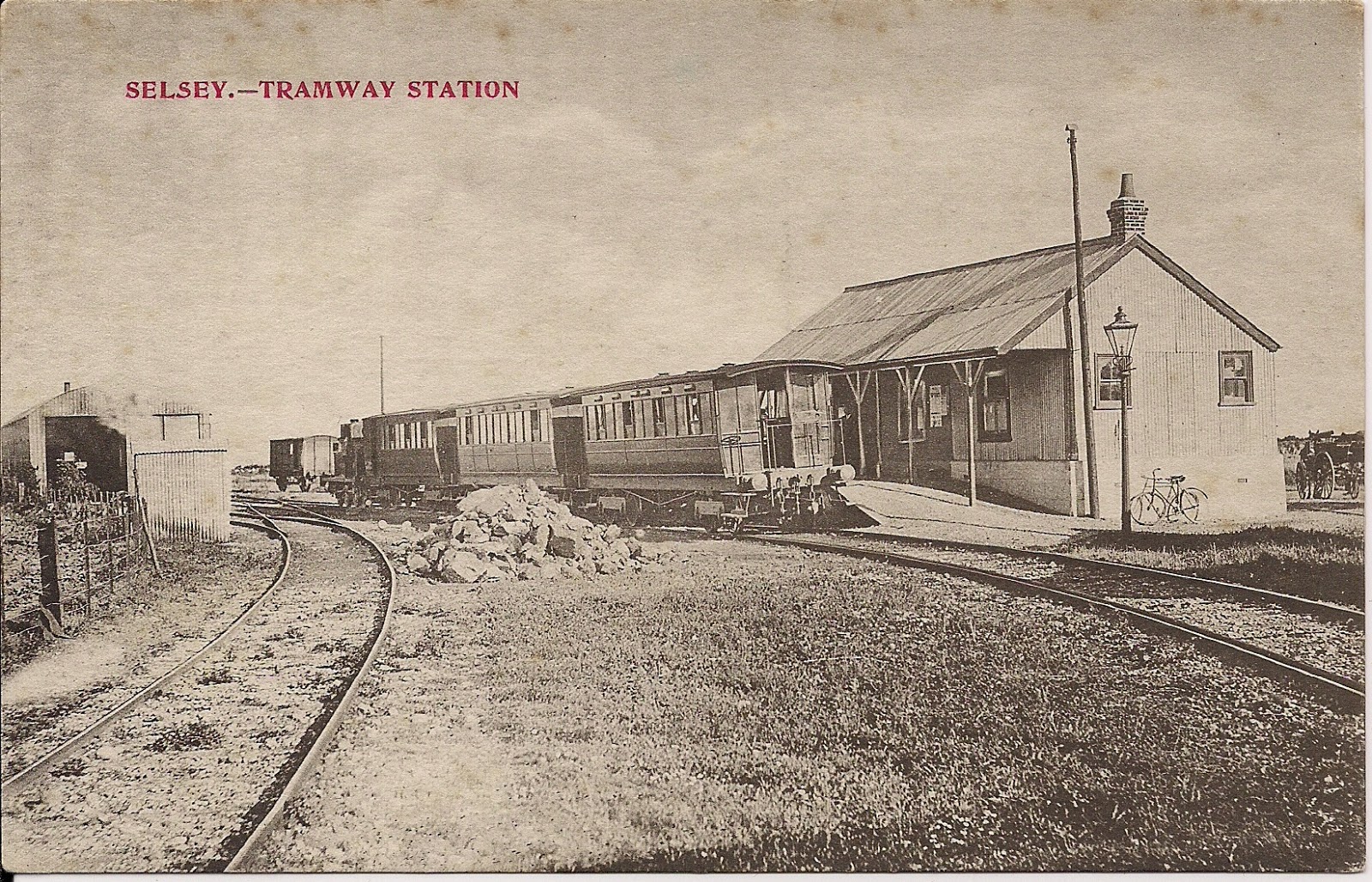
And finally, here are a couple of postcards of what the line lloked like in real life; with those Ford Railcars out in action. The line was famous for the poor condition of its trackwork; a point that can’t be disputed by the first photograph at least! The line eventually closed in 1935, a few years after Colonal Stephens died and now there is very little remaining of it.
Compare this!
Peter Bond’s Aultbea
I can’t claim any of the credit for this one, it is the work of one of my friends and stalwart operators of Portchullin, Peter Bond.
His latest layout (in EM) is based on the line that was proposed from Achnasheen to Gairloch and Aultbea. This was a real proposal in the late 19th century but the scheme came to nothing. Peter has imagined that not only was it built but it thrived; to a large degree due to the naval connection where the navy did use Gairloch as a significant port. He has also presumed that Aultbea became the port for the Hebrides and thus the Kyle line faded away (a point I don’t like!).
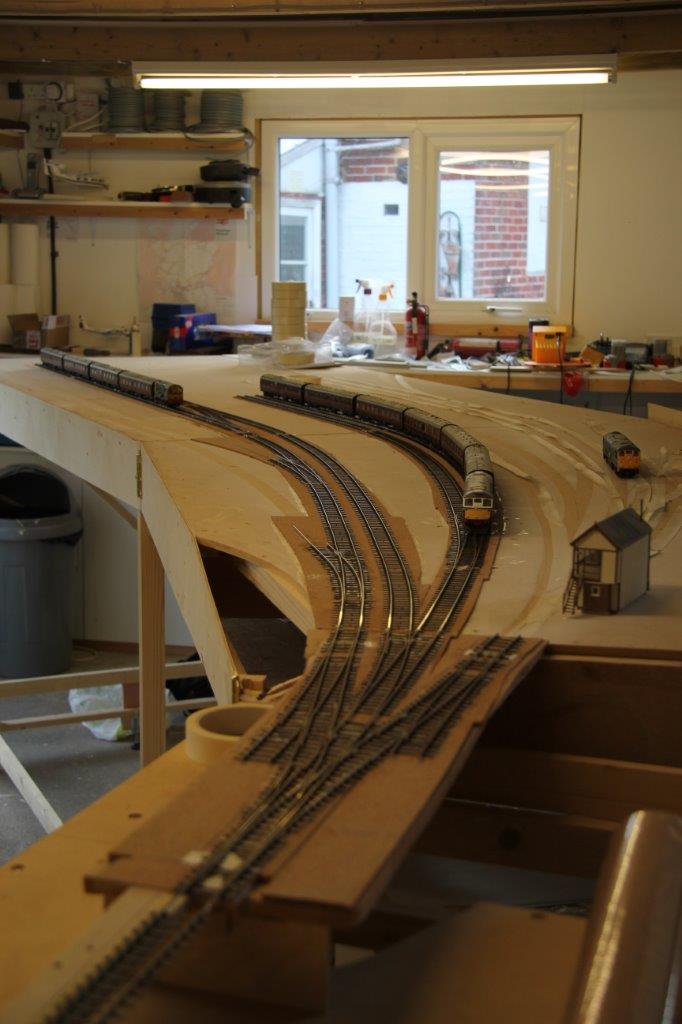
You can see in this view the rather nice model of the signal cabin for Aultbea, based on that at Kyle. The description of the building of this was in BRM in September and October 2012 and is worth a read.
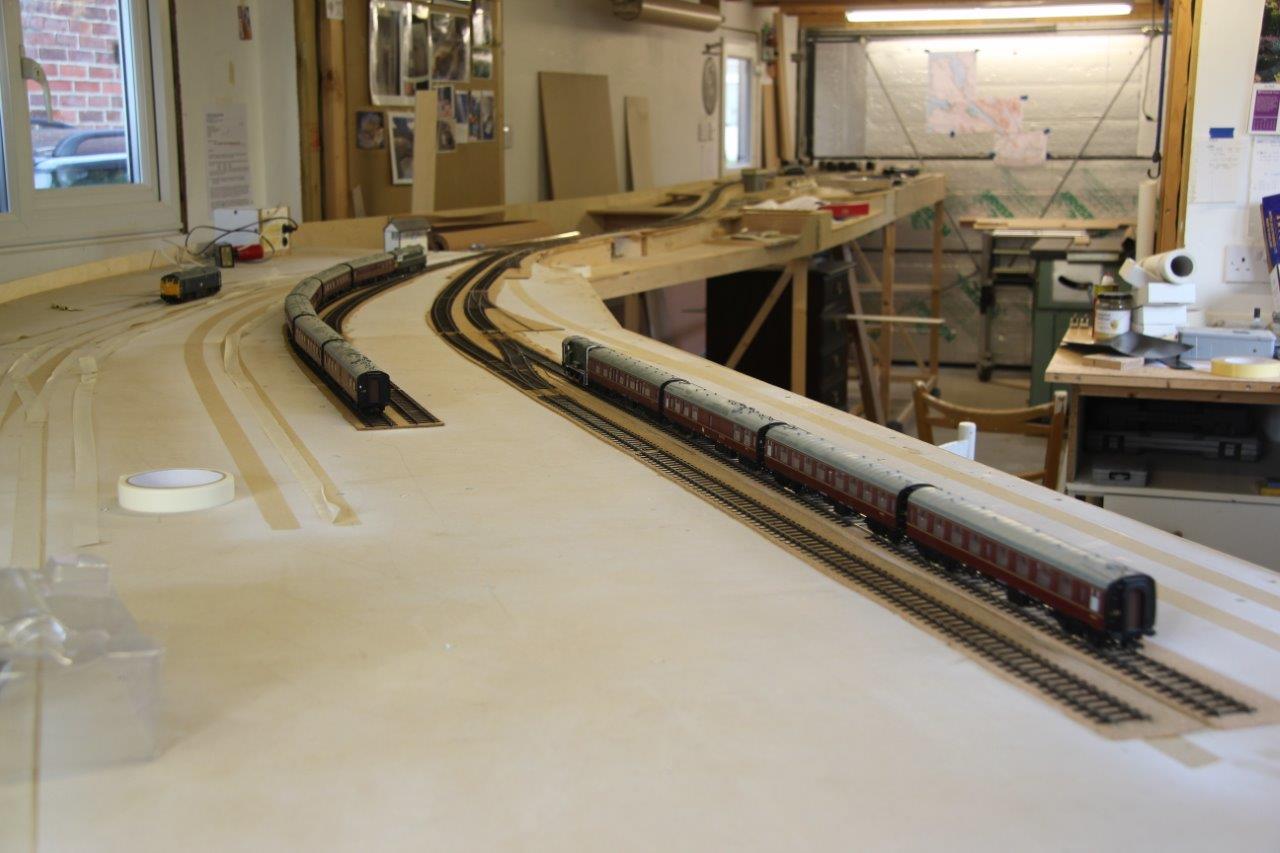
The layout is pretty big; some 30 feet long and relatively deep at the station end. Peter envisaged that with the rise in traffic during the first war, the station had to be enlarged – much like Oban was when the Ballachulish line was built. Indeed, Peter is taking a lot of his inspiration from Oban, including portions of the trackplan, the overall roof and the engine shed being a little detached from the rest of the station. As you can see, it will be set in the late 1960’s so a little earlier than Portchullin.
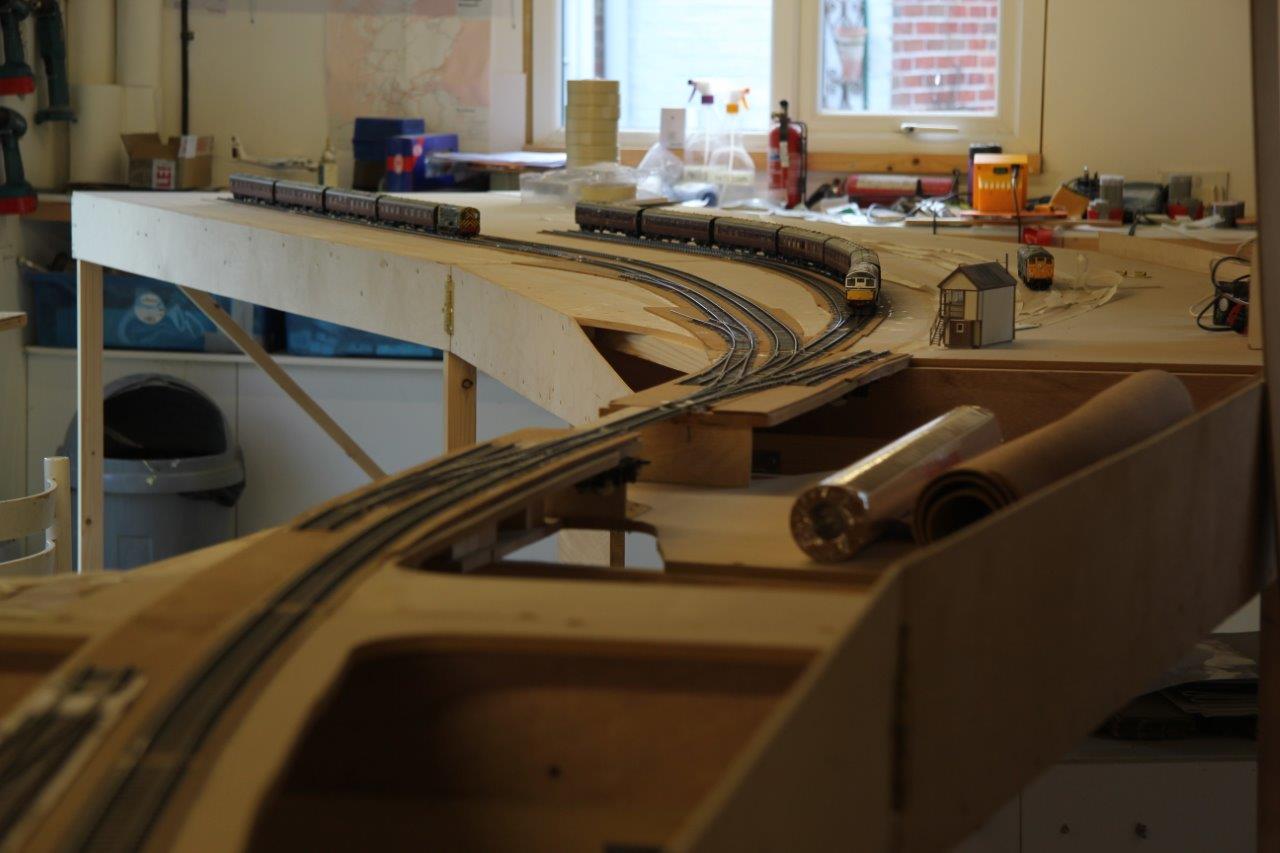
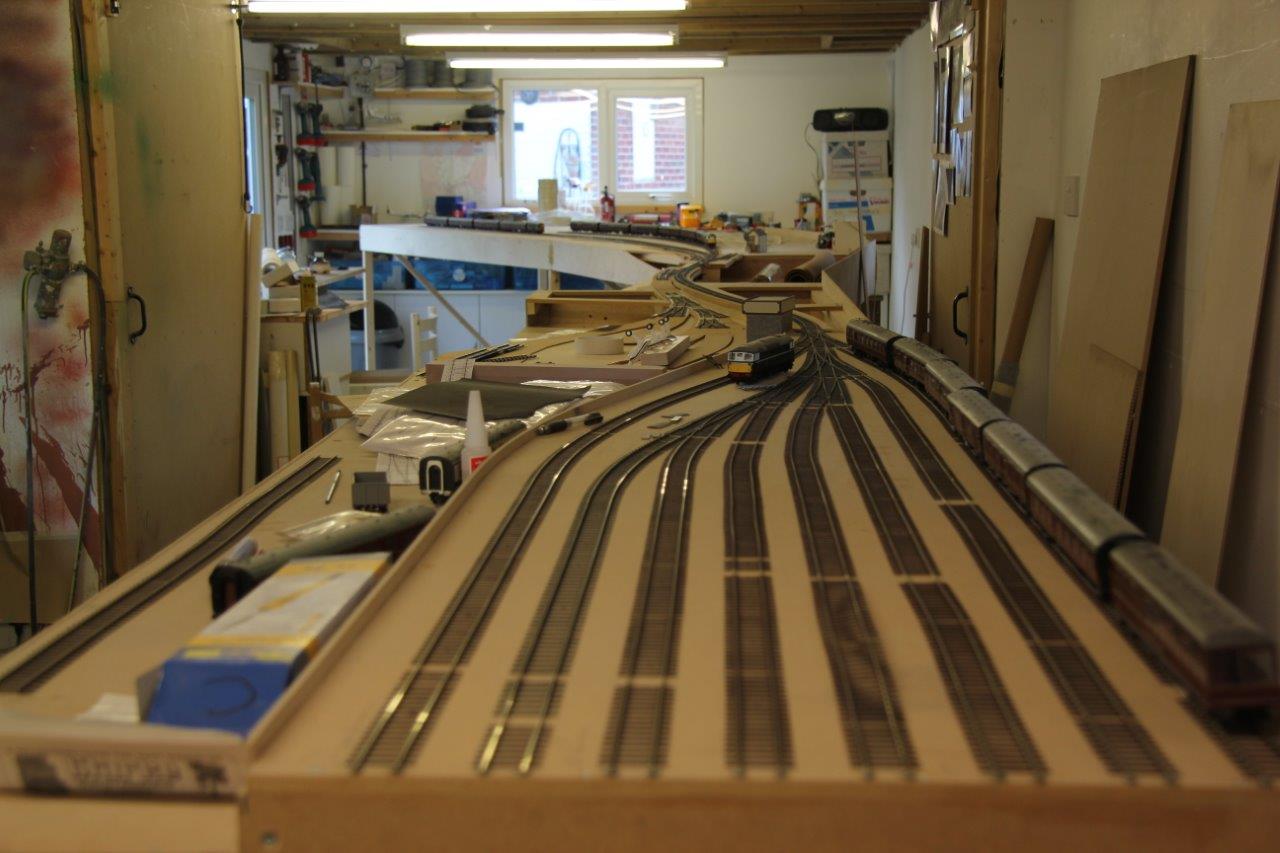
Now Peter is an inveterate starter of layouts, so by posting these progress pictures, I am hoping to prod him along to finishing this one.
Over to you Pete!
 highland miscellany