Monthly Archives: February 2013
Glenmutchkin: Part 3 – Era
Whilst I seem to be known in the electronic ether for my 1970’s modelling, this is not really my main interest.
Many years ago, I set my main era as the early years of the LMS. Whilst I do quite like some of the LMS standard classes, it was really the sight of the Edwardian and Victorian locomotives of the Highland in the lined red pulling a rake of fully lined coaches that seduced me. After all; who could resist something like this:
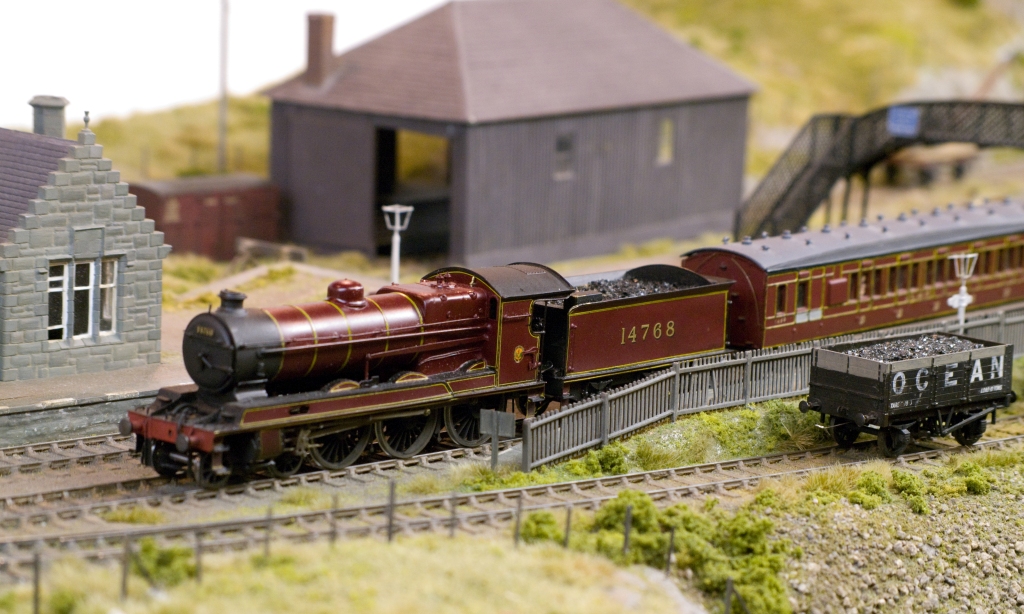
or this:
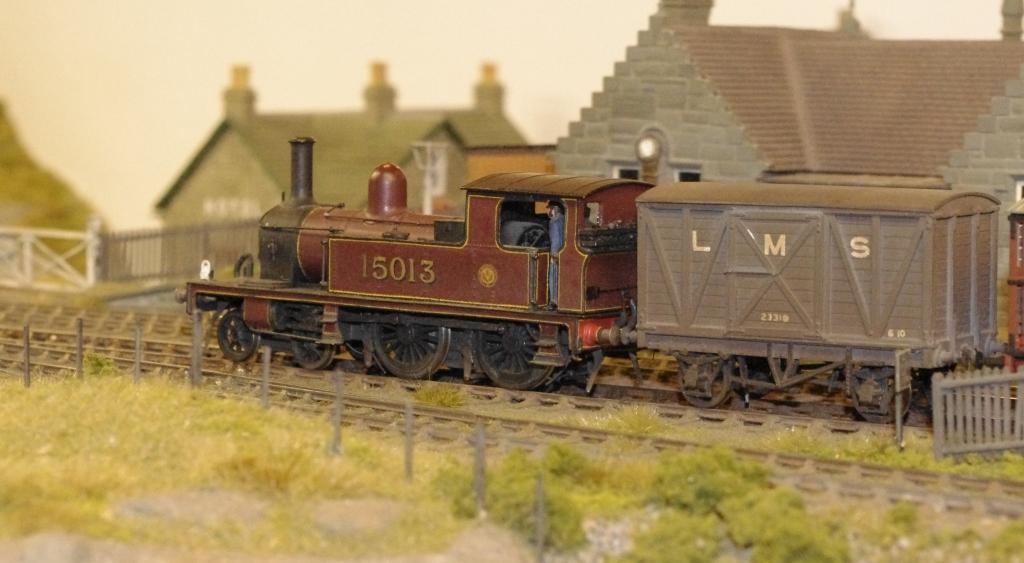
Its peculiar; I would think that the 1920’s is the least modelled era after about the 1880s? Think about it, when did you last see a model from this era?
My regret for this period though is the loss of the red oxide painted goods stock. The Highland often (apparently at random as to when they would and when not) pick out the ironwork of these in black and again I am drawn to the fusion of colour that occurred as a result. To get over this contradiction; I model in about 1925/1926. Much of the passenger stock and locos had by then been repainted in the new corporate LMS colours but at least some of the good stock remained in the old pregroup livery.
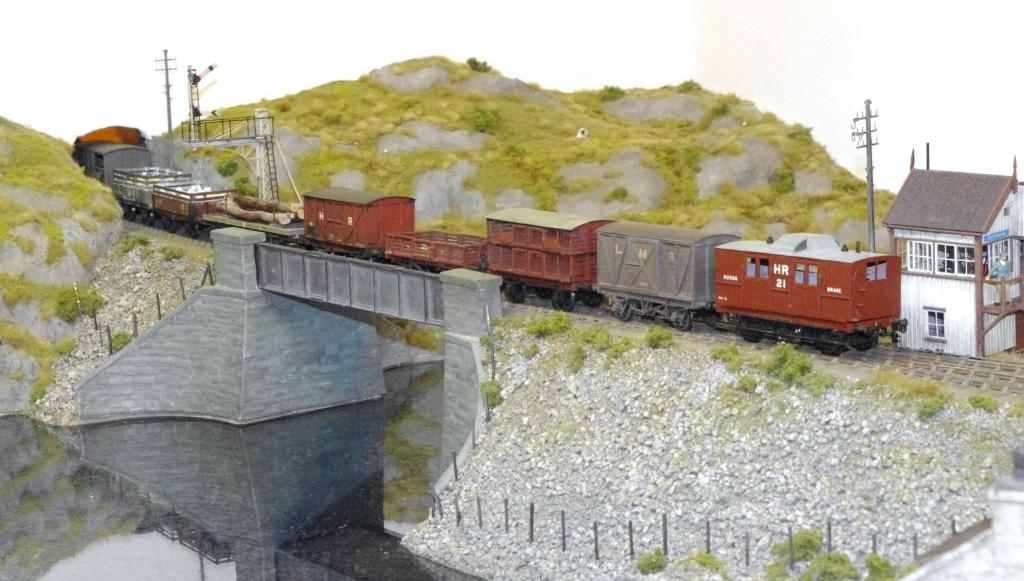
with thanks to Ray Nolton for two of the pictures
Portchullin’s Next Outing
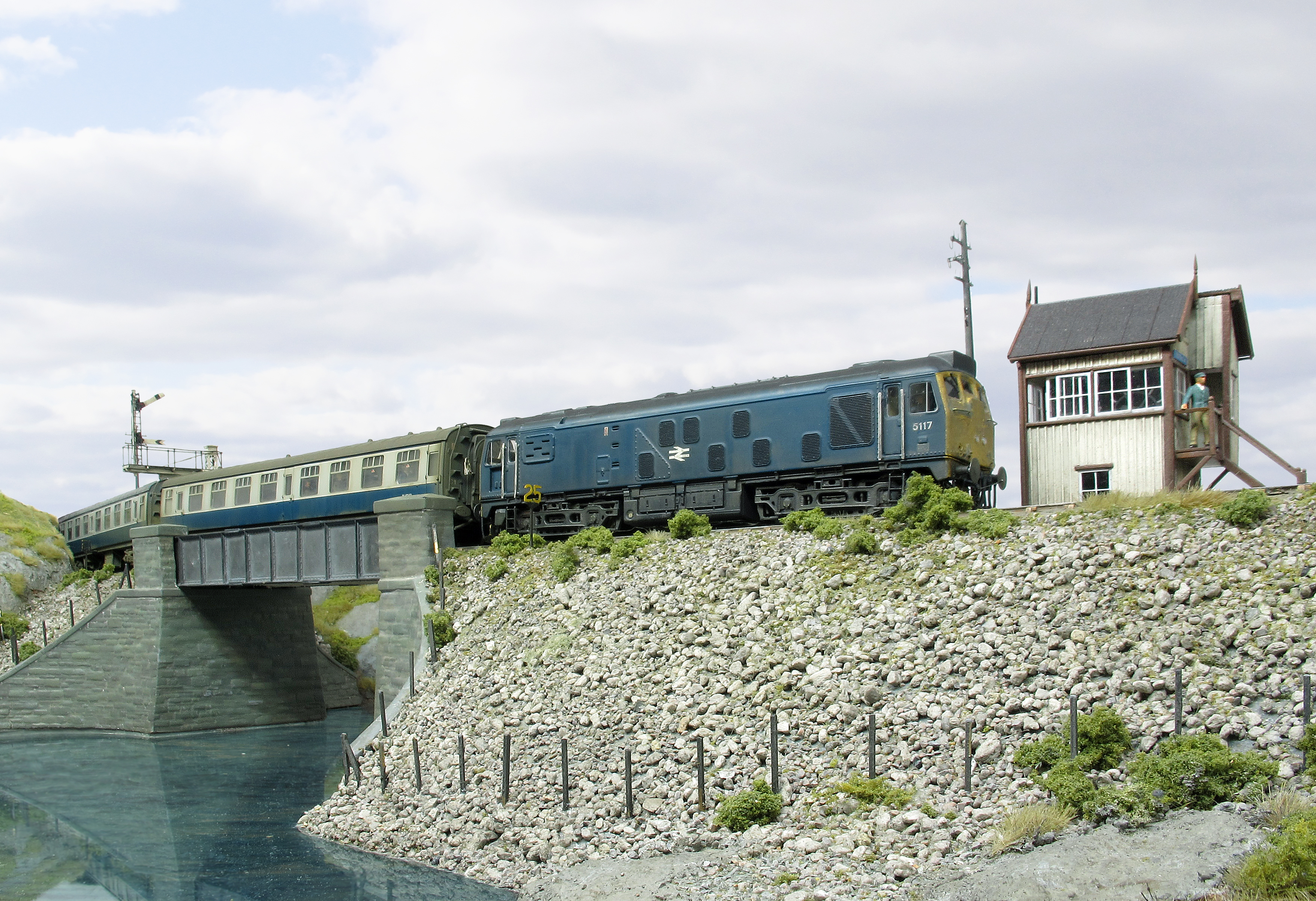
My existing layout, Portchullin – as shown above in Andy York’s photo, has its next outing this Saturday (16th Feb) at Tonbridge. Details of the exhibition are here
After this, it will be a month’s rest and then we are out at the London Festival of Model Railways at Alexandra Palace. This is on the 23 and 24th of March and Details can be found here
After this, it will be Wigan in June an unconfirmed invite for Hartlepool in July and then Warley way off in November.
First Signal for Glenmutchkin
I have managed to finished (for now anyway, see below) the first bracket signal for the layout. So here are some pictures:


One error I did manage to include in the build was to make the holes in the balance levers, the crank elbows and the signal arms a tad to big for the operating wire I used. I used 12 gauge guitar wire and the slop that this creates in a 0.5mm hole is rather too much. 0.5mm drills were the smallest I had when I built this so I have invested in a stack of 0.4mm and 0.3mm from drillsuk (on ebay). Next time I will try these really small drills because the thin operating wire does look the part.
The effect of this is to allow the arms to slop too much and they will not be capable of being made to bounce properly. This signal will be in a cutting of the proposed layout, so I will have to replace the wire with something a bit thicker to overcome this.
You live and learn!
I am also having a bit of trouble with the MERG servo drivers; I may be cooking them with my power supply so this needs a bit of work too
Railway Breakdown Cranes – Volume 2
The second volume of the old man’s book on Railway Breakdown Cranes was published last week.

This substantial tome is full of high resolution photographs and drawings of all the breakdown cranes built for the railways in the UK. It deals with cranes that have relieving bogies, which means mostly cranes from the mid 1930s. Volume 1 deals with the earlier cranes that did not have relieving bogies (although there was a period where both types were built).
I know I am biased, but it is a really good book. Available from Noodle Books (http://www.noodlebooks.co.uk/index.htm) and I understand that 190 were sold in the first weekend! I also understand that something like 1700 of the first volume have been sold, so there are only 300 left of this!
At the moment this will be the end of the series as the two volumes cover all of the breakdown cranes built in the UK. There is a slight chance that there will be a volume 3 on permenant way cranes though – perhaps, maybe!
 highland miscellany