Blog Archives
The Road Overbridge – Part 2
The bridge is coming along and is now close to finished (constructionally).
It has taken a lot of time with plastic filler to get the stones to meet neatly at the corners and also to be coursed sensibly at the corners. Having said this, I am inclined to think it is one of the more important parts of modeling structures and buildings. Cracks or missing sides/ends on a building are just a total no no and even an untrained eye (I am a chartered surveyor so it is worse for me!) spots the error immediately.
This is where we have got too:
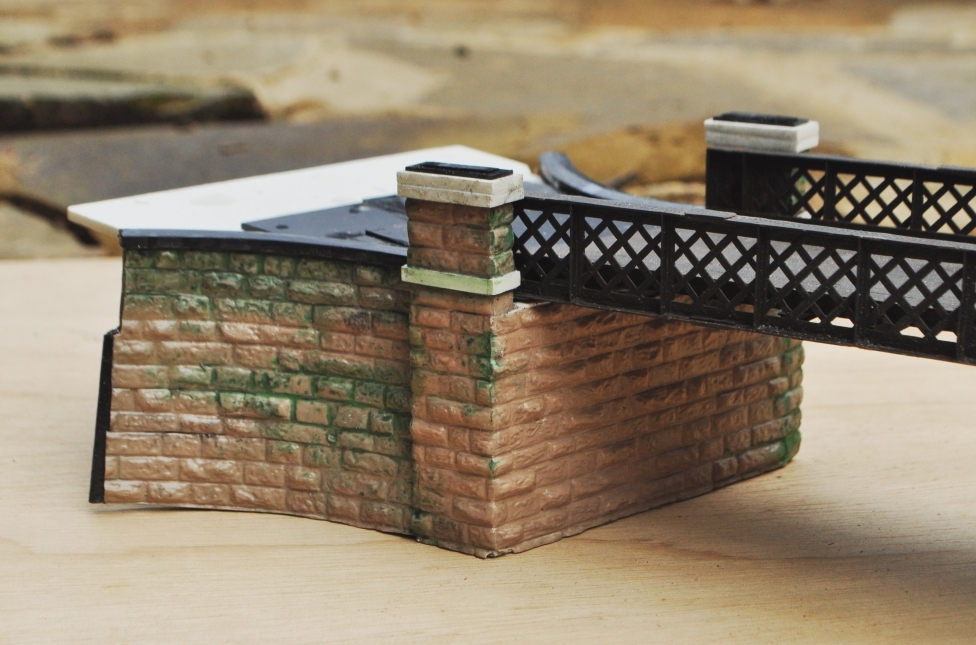
Lots of filler in evidence – but there is still more too do!
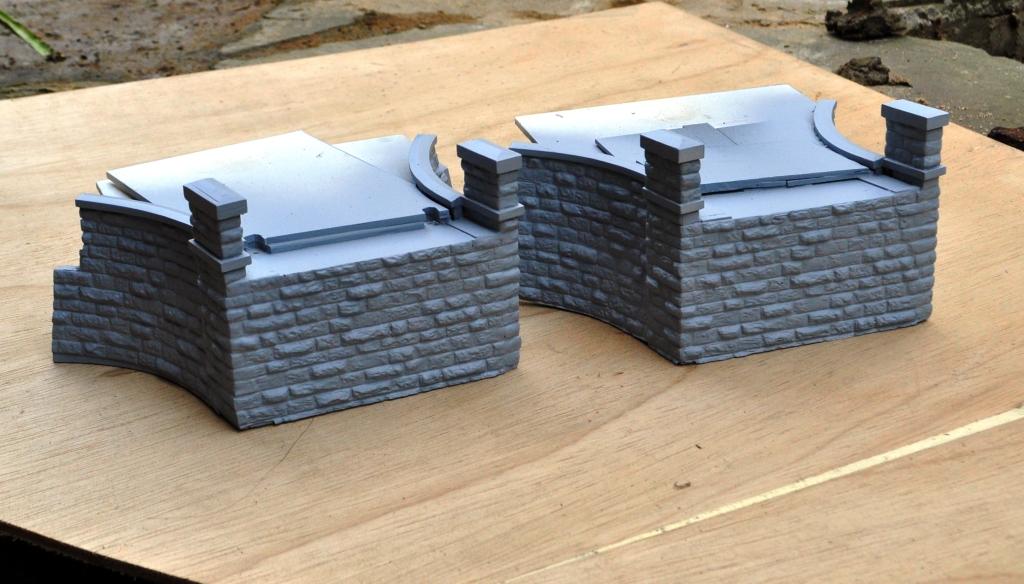
The abutments end on
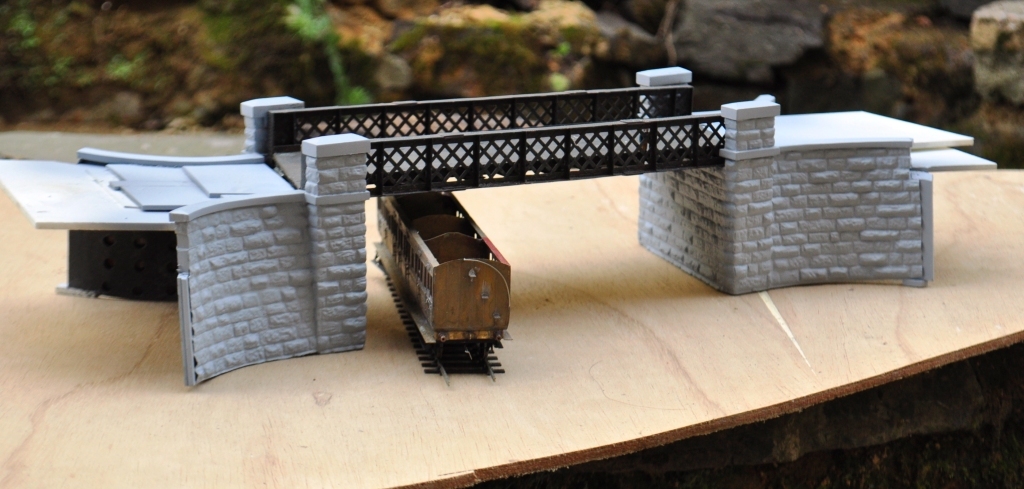
With a carriage to give a sense of scale – the Microrail Drummond All Third has only been on the stocks for 15 years………..
I am not happy with the string course at the moment, it sticks out too abruptly and possibly the same for the copings to the top of the parapet – so more filing and sanding………….
However, it does look like a bridge and I doubt the civils guys will condemn it!
The Road Overbridge – Part 1
The bridge is in fact modelled on the one at Killiecrankie, but there were very similar ones at The Mound, Kyle of Lochalsh, Keith amongst others. Heres a picture of the Kyle one:
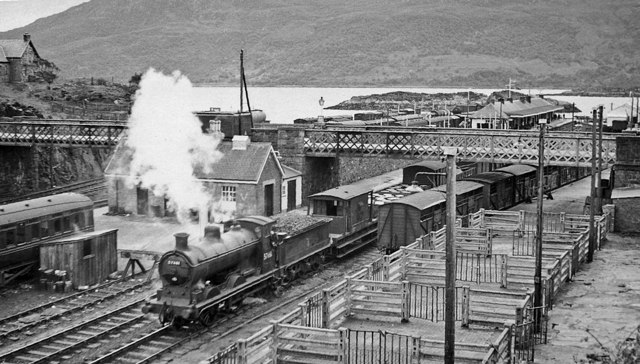
Copyright by Ben Brookshank and reproduced under a creative commons licence
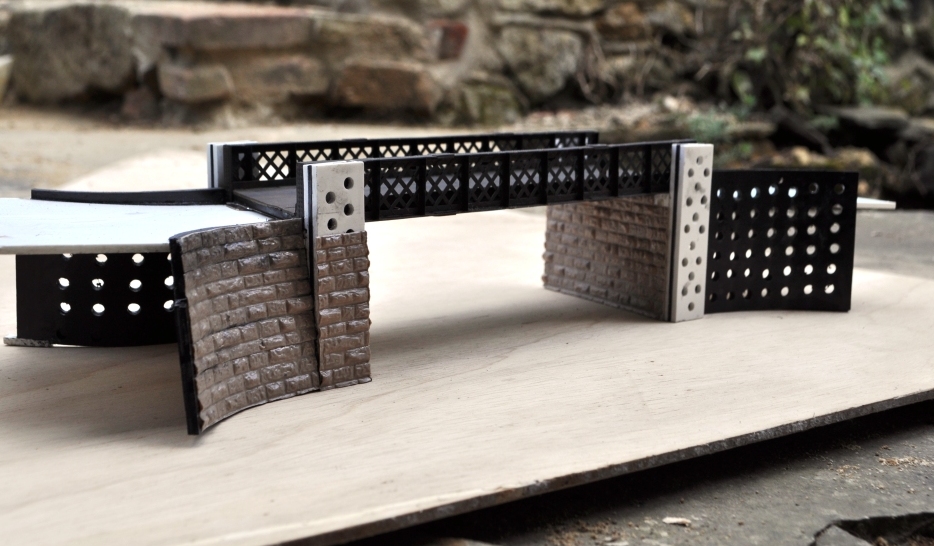
The advantage of using the Killiecrankie bridge is that I had previously modelled one for a layout of this station and whilst the abutments are still firmly attached to some mothballed boards, the deck could be reused. The deck has a nice skew to it to make it a bit more interesting and utilises lattice girders; which few seem to bother modelling. This is what it looks like:
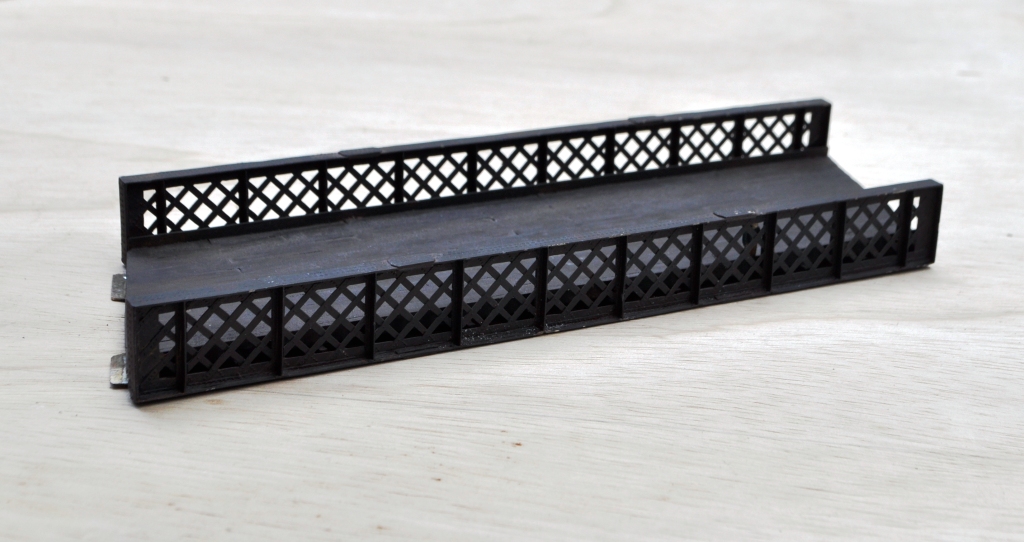
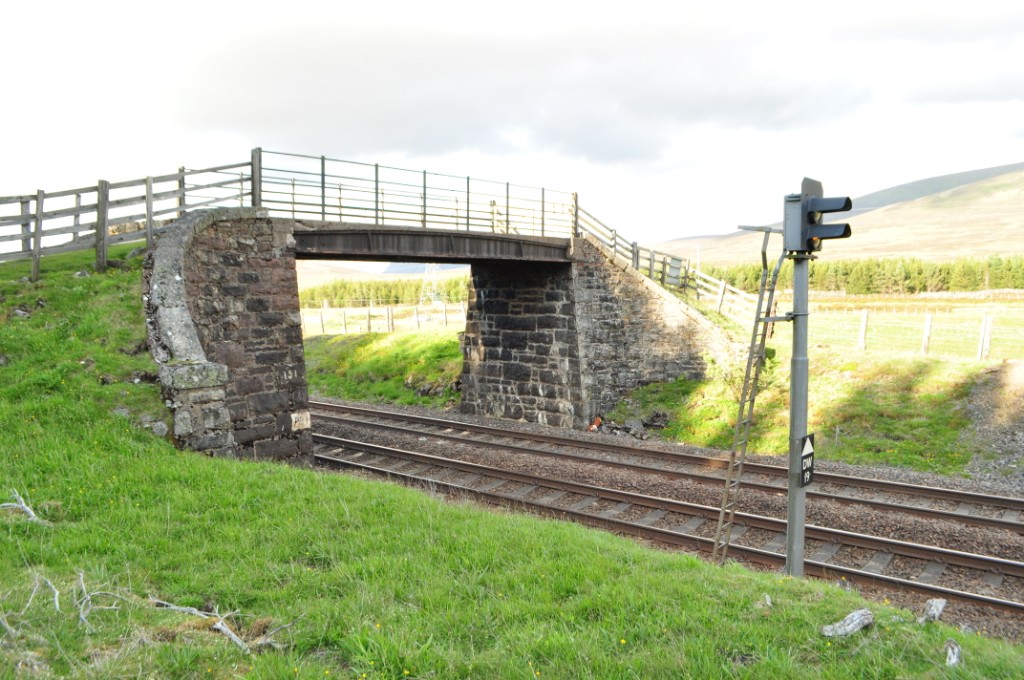
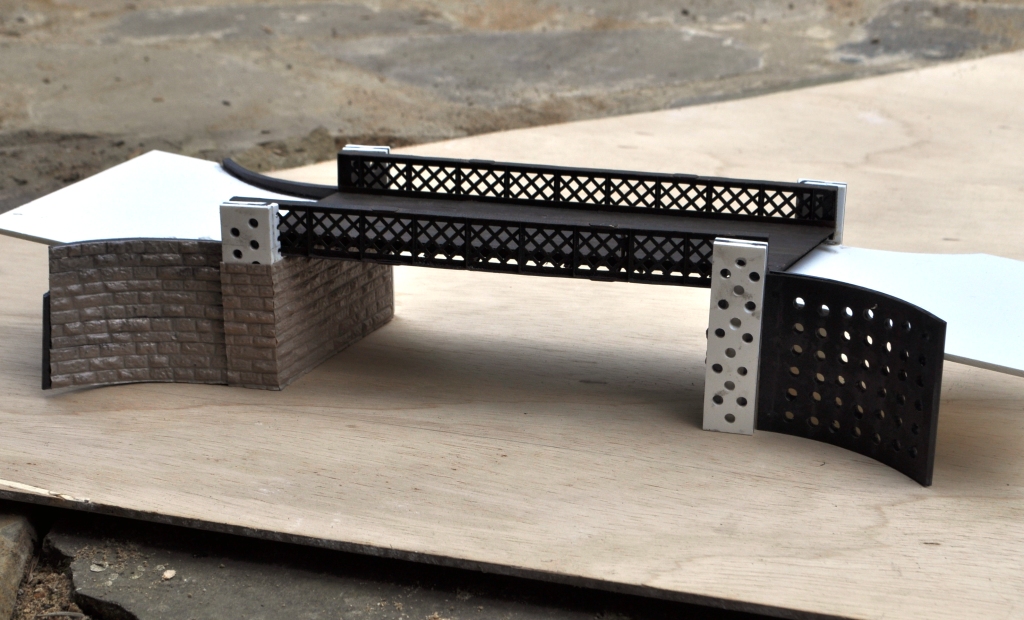
In terms of abutments, most Highland (and indeed this is common to most scottish lines) had bridges with curved wingwalls swept back from the face of the abutment. To give the layout some locational character, this was something I wished to produce. This is where we are at presently with the abutments: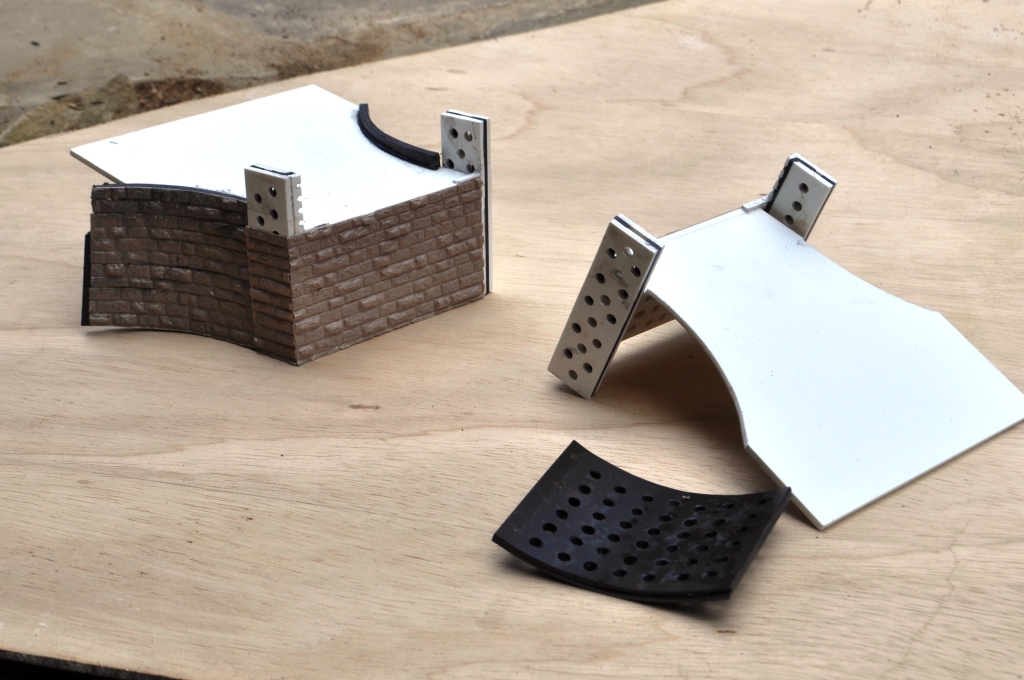 Typically, the random or dressed stone ranges from Wills are my favoured mediums but seeing Andy G making a good go utilising Slaters 7mm coursed stone I thought I would have an experiement with this. This is because many of the later bridges on the Highland used the same coarsely dressed stone; like this one at Dalwhinnie:
And these show the bridge deck on the abutments as they stand:
_________________ Mark Tatlow
 highland miscellany