Blog Archives
The Road Overbridge – Part 2
The bridge is coming along and is now close to finished (constructionally).
It has taken a lot of time with plastic filler to get the stones to meet neatly at the corners and also to be coursed sensibly at the corners. Having said this, I am inclined to think it is one of the more important parts of modeling structures and buildings. Cracks or missing sides/ends on a building are just a total no no and even an untrained eye (I am a chartered surveyor so it is worse for me!) spots the error immediately.
This is where we have got too:
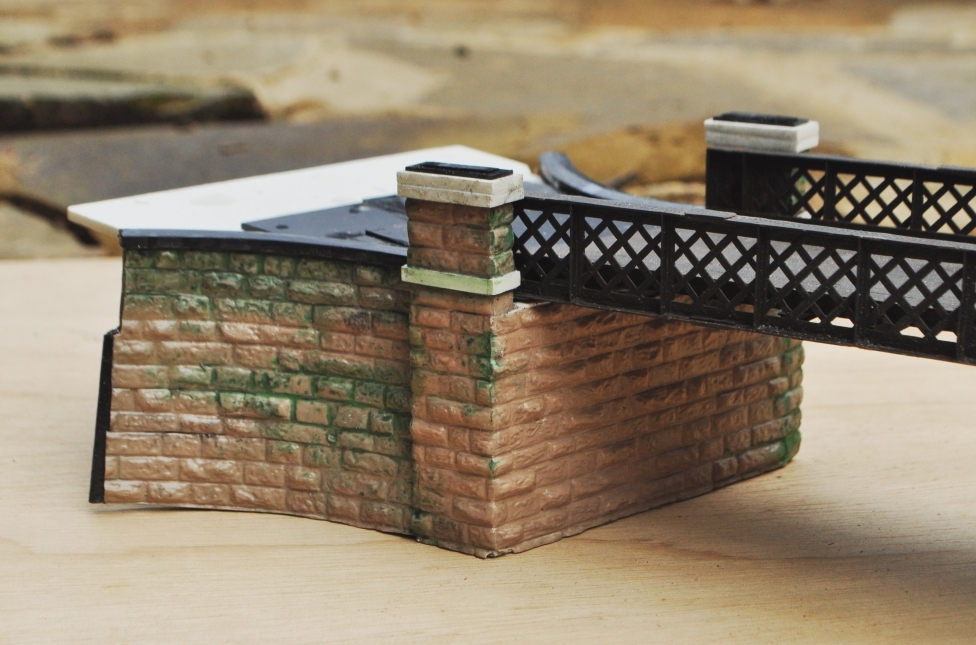
Lots of filler in evidence – but there is still more too do!
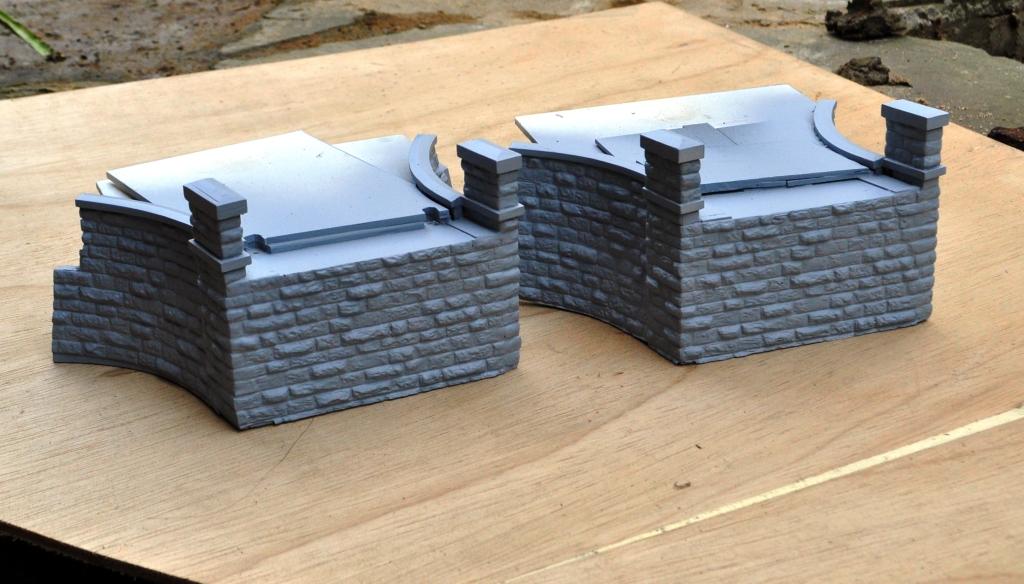
The abutments end on
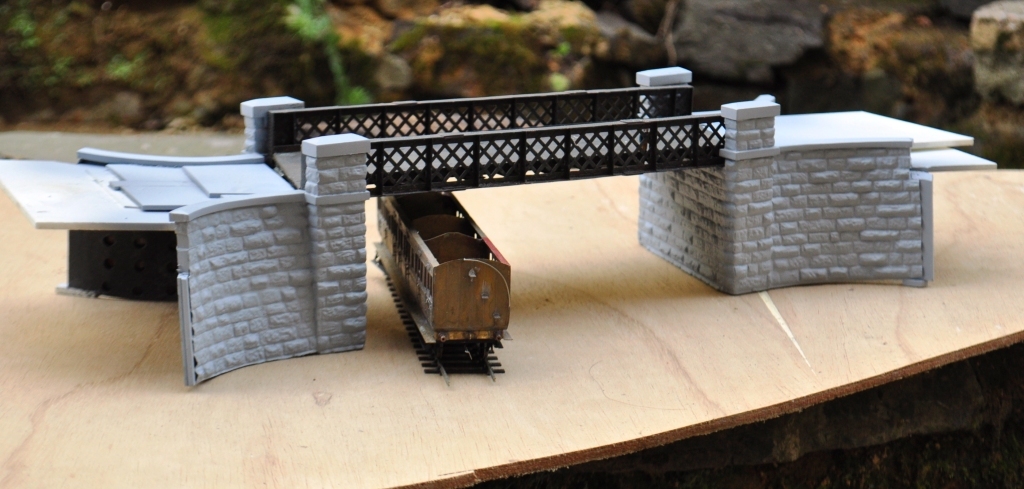
With a carriage to give a sense of scale – the Microrail Drummond All Third has only been on the stocks for 15 years………..
I am not happy with the string course at the moment, it sticks out too abruptly and possibly the same for the copings to the top of the parapet – so more filing and sanding………….
However, it does look like a bridge and I doubt the civils guys will condemn it!
Glenmutchkin Part 5: Signalling
Whilst they are not without their frustrations (they are delicate for example), I was slightly surprised to have enjoyed building and using the signals as much as I did. Therefore, Glenmutchkins will going a bit more large on signals.
I am assisted in that the Highland seemed to follow the trend of the pre-group companies and be fairly lavish with their signals. Taking significant cues from my sources of inspiration, Wick and Kyle of Lochalsh, this is where I have got to with a signalling plan.
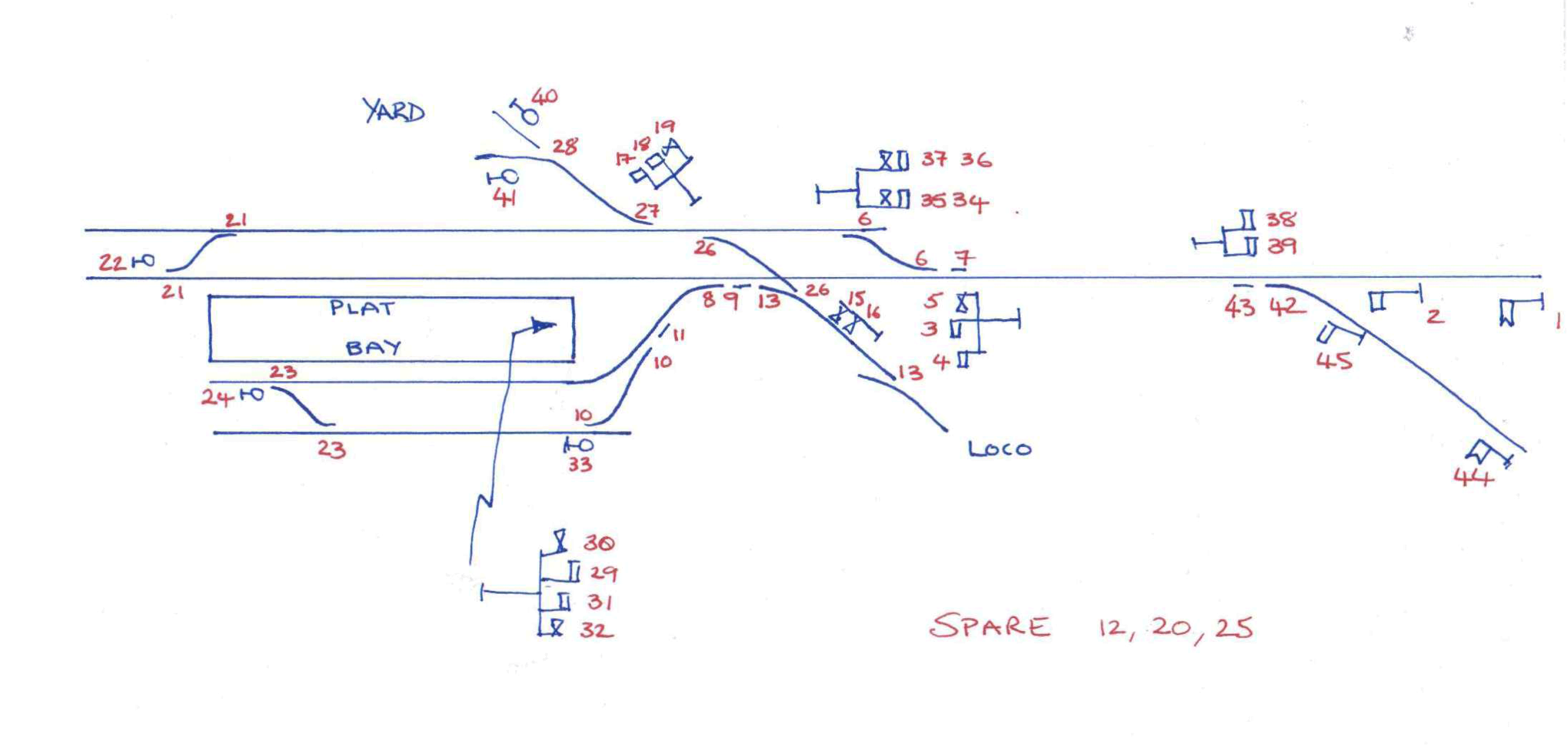
As can be seen, there is a fair amount to this as I have assumed that there is a junction off scene that is signalled from the station cabin (although this is still under review) and not only is the yard signalled onto the running line but both the run around loops and the shed are both signalled. It looks like this will be a 45 lever frame, so there is a fair amount to do……………
A particular signal to note is the one with arms 17,18 & 19 on it. This is a repeater for arms 15 & 16 so directs locos coming off the yard where they are to go to. This exact same situation existed at Kyle and in addition to being a surprising duplication between the two signals the former is that the signal is situated well up on the bank and faces fairly firmly towards the shed, not the running lines. I do not presently have a photograph that is free of copyright to illustrate this but there are lots in the various text books; try The Highland in LMS Days or LMS Engine Sheds.
Diagram 39 Brake Van
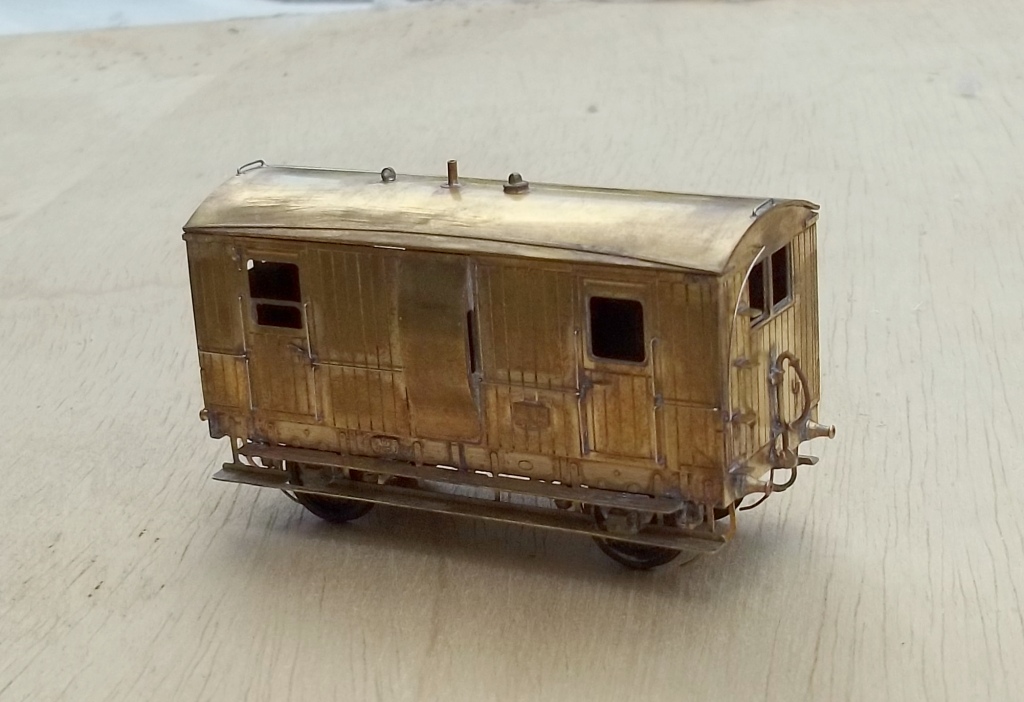
The latest completion off the workbench is a goods brake van.
This is a diagram 39 version; which was the Highland’s last brake van design (and there is some speculation that they were not delivered until after the start of the LMS era but if someone has a photograph in HR days, we would be all eyes!). These were quite modern by the Highland’s standards and were the first ones for several decades to do away with the lookout on the top of the roof which was likely to be a retrograde step given all the twists and turns of the Highland’s lines.
 .
.
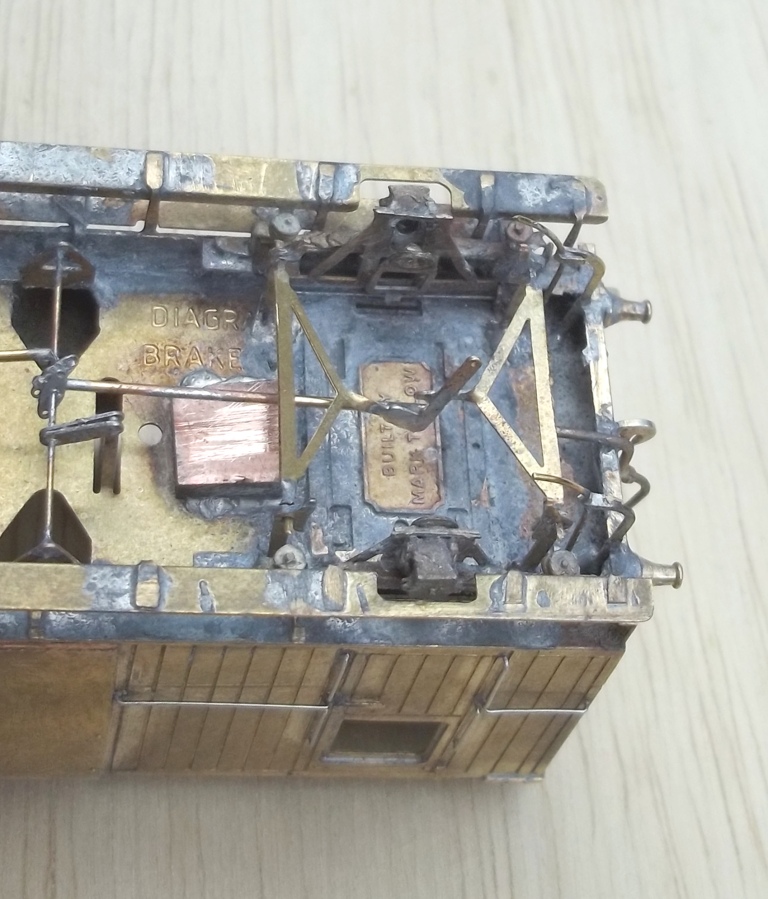
It was built from a Lochgorm Models kit; constructed mostly as intended. However, I elected to insert some sprung suspension using Bill Bedford sprung W irons, rather than the designers intention of compensation. I also found that the sides were a little tall, so these needed to be cut down a tad. Other than this, it is was pretty easy. Having bought some of the NBR Models etched builder’s places, this became the first model of mine to be fitted with one – so a small first!
 highland miscellany