Blog Archives
Scrap Tank Test Build – Part 3; Cab Inner & Roof
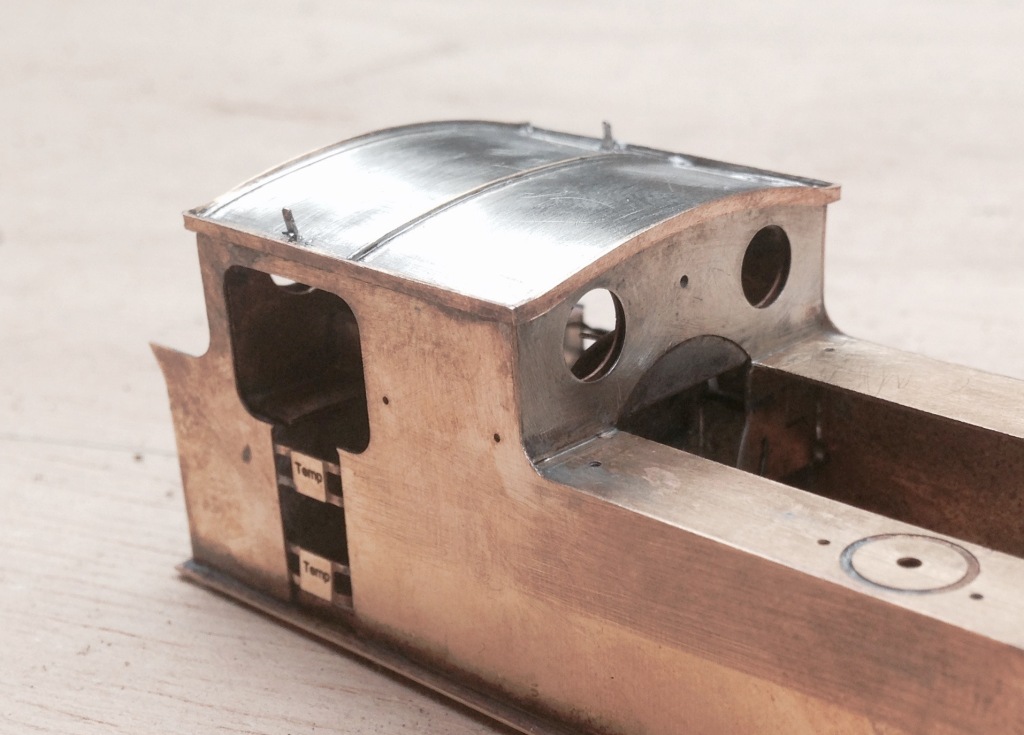
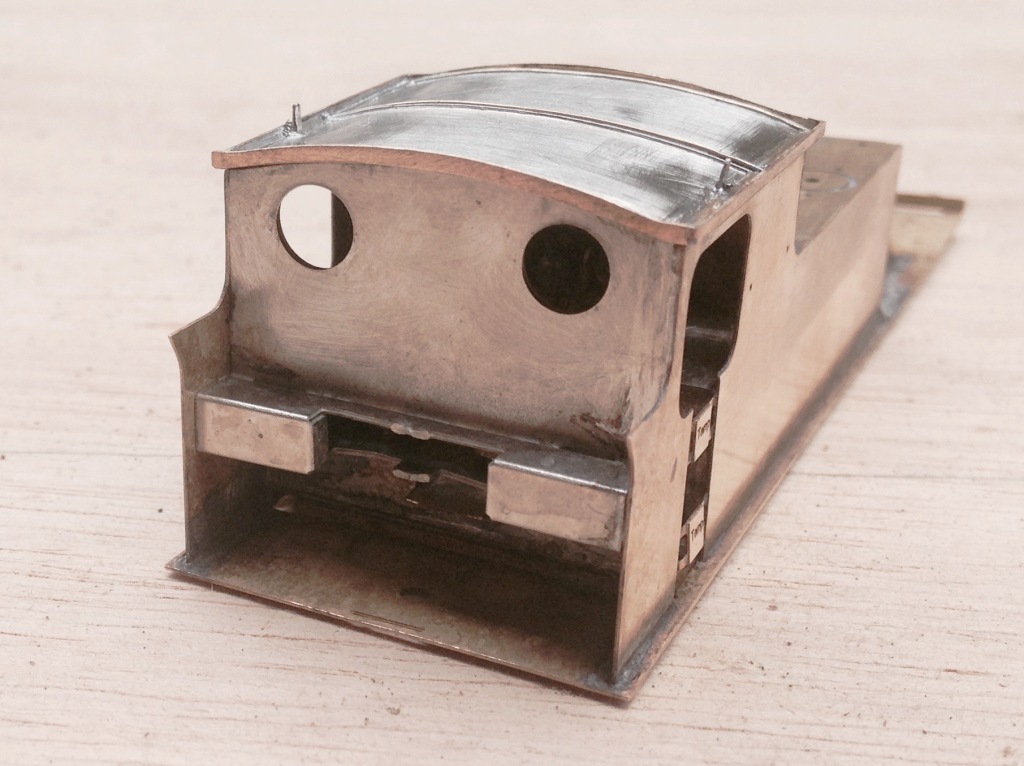
I have designed the cab roof and much of the cab interior to be a separate assembly, that can be secured by a series of screws. As can be seen below, there are two screws at the rear that locate into a tool box that sits on where the bunker projects into the rear of the cab. As the screws are somewhat lost in the bunker, I have come up with a little dodge where these are retained by an initial nut that traps them in place but still allows them to twist and thus engage in the cab roof assembly. The other screw comes through the top of the boiler, just inside the backhead.
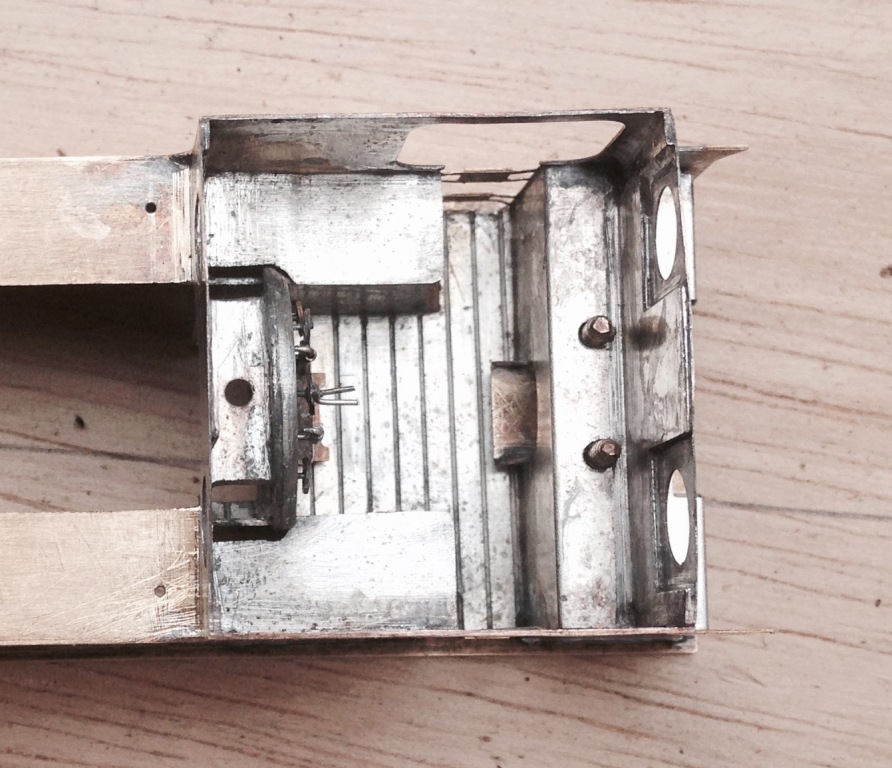
The roof is connected to these fixing points with some inner liners to the cabs which can be seen here; the nuts for the rear piece are hidden in the toolbox and to the front within the false top to the boiler. You can just rebate in the rear spectacle plate that will take the glazing material.
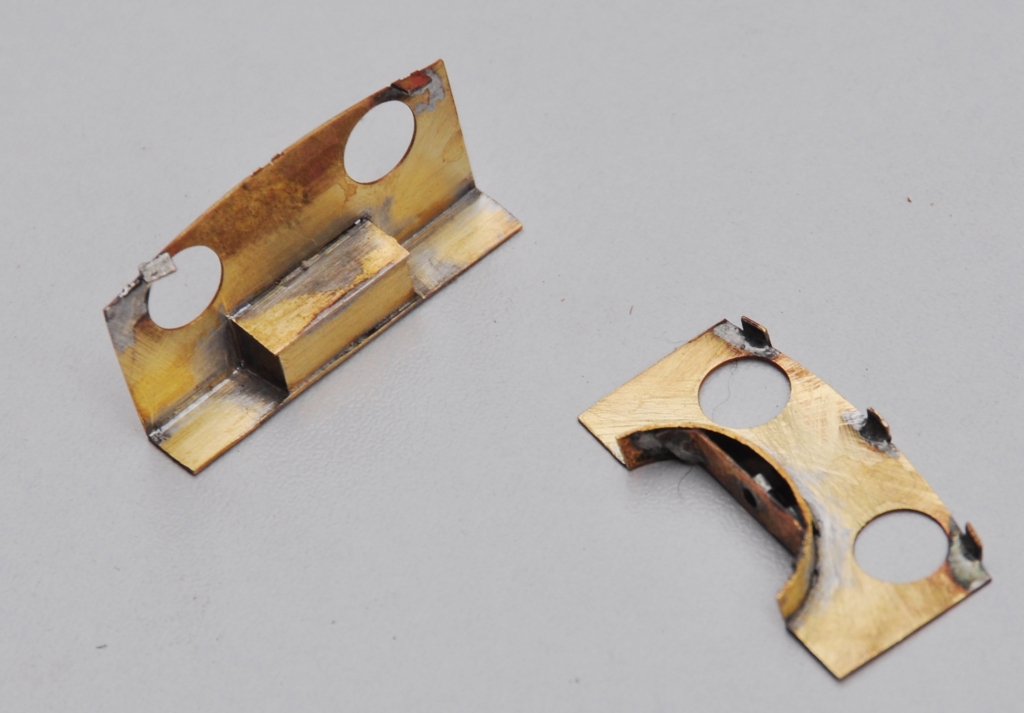
The actual cab roof has a double skin, to aid its strength, include the lamp irons and also to assist with locating it on the cab. The outer skin includes the ribs that appear on the real roof, including a grove to allow brass wire to be used to form the seam to this. To the perimeter of this, there is a valance.
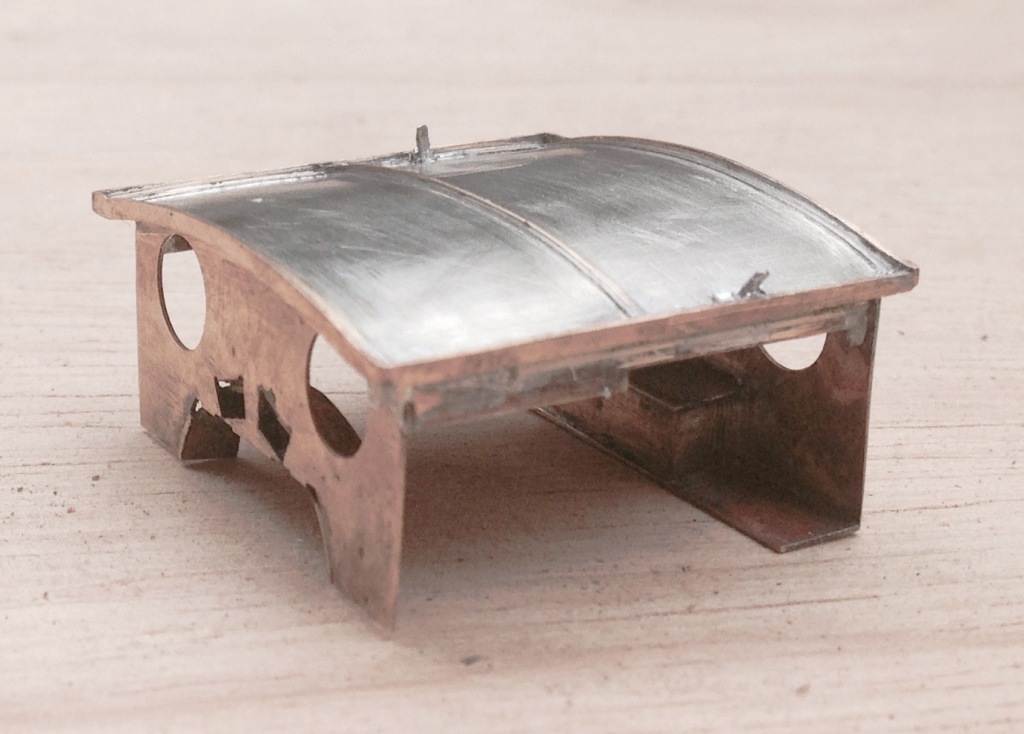
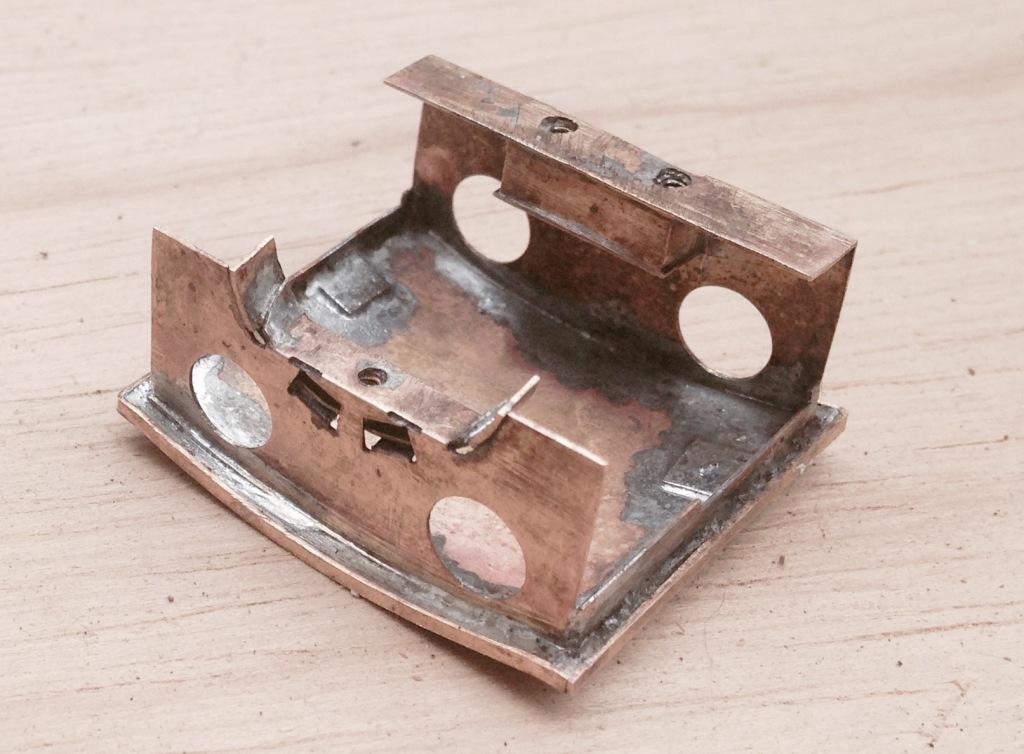
And this is what it looks like on. I find that I just can’t make roofs sufficiently well to sit perfectly on the body and nothing shouts “its a model” more than gaps where there shouldn’t be any – be this under buildings, roofs or between parts that have to be joined to structurally stand up! This is my solution, which I have used on other builds that I have done but it is so much easier when it is designed in.

Early Pattern Lookouts for Dia 38 HR Goods Brake
I have been doing more with the Scrap Tank, but I haven’t managed to take any pictures due to needing flippers outside yesterday. So instead, lets see something else that was on the test etch that I have recently had returned.
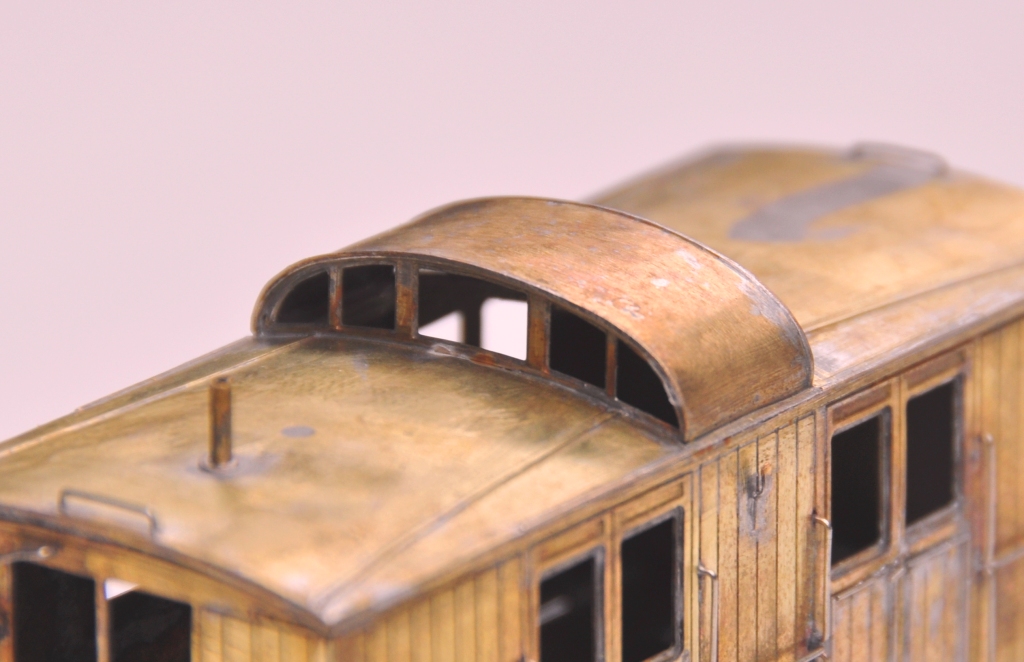
This is the early style lookout for the dia 12 Highland Goods Brake. As originally built these lookouts formed by a single slot to the centre of the roof and were fully glazed to the front and back. In use guards complained that they caught their heads on the lip of the roof as they climbed in. To overcome this, many of the vans were rebuilt to include ramped approaches to the centre of the lookout were incorporated, to become what was arguably the signature feature of the Highland’s rolling stock.
Microrail produced a kit for this van 30+ years ago and this included the latter style of lookout. I had a pair of these kits and ended up acquiring a third one and I felt I really could not have another one just like the first two! So I had an inspiration and thought it would be fun to make the early pattern lookout. The old man’s book came out and a scan of the drawing loaded up into the CAD machine. From here it was a relatively simple exercise to draw up the difficult bits, the glazed screens, and the more simple roof.
The components went together easily and do give a very different feel to the Microrail kit as intended. I also made a number of other adjustments, to the footboards and also the panelling, to make the model both different and authentic. The latter, the beaded panelling, is a right pain in the whatsit and took much longer than any other element of the assembly – so don’t to it unless really want to! And this is what it looks like next to the kit as originally intended, with the later style lookout.
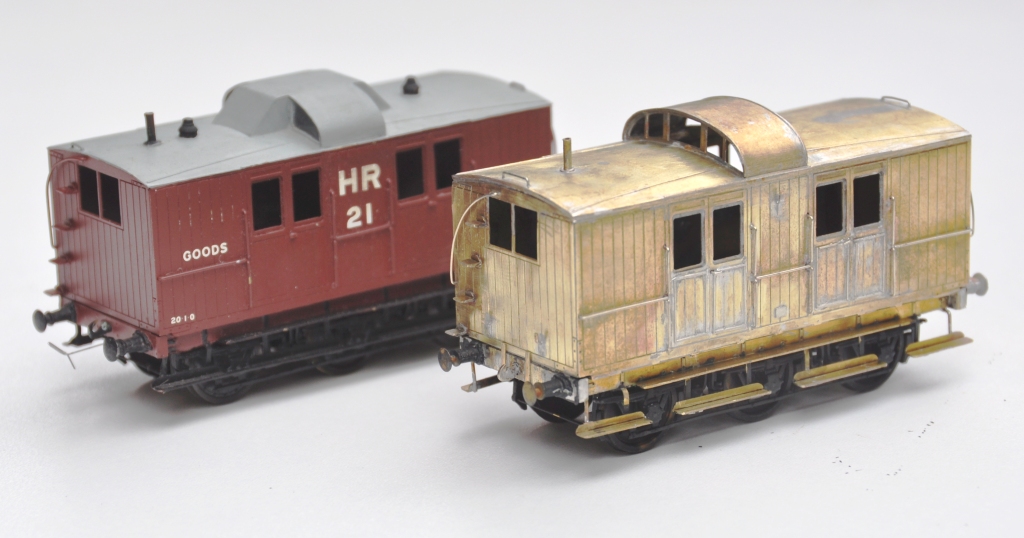
I will be making these available via the Miscellany Models site shortly, when I have done enough of the other elements I am working on to do a production run. In the meantime, I do have a pair of very slight seconds (there is a tiny bit of over etching – almost impossible to see, the pictures of my vehicle have the same problem). These are available for the price of the metal; say £2.50, plus postage (which won’t be much). Ordering is via here: http://miscellanymodels.com
And the real thing looks like this:
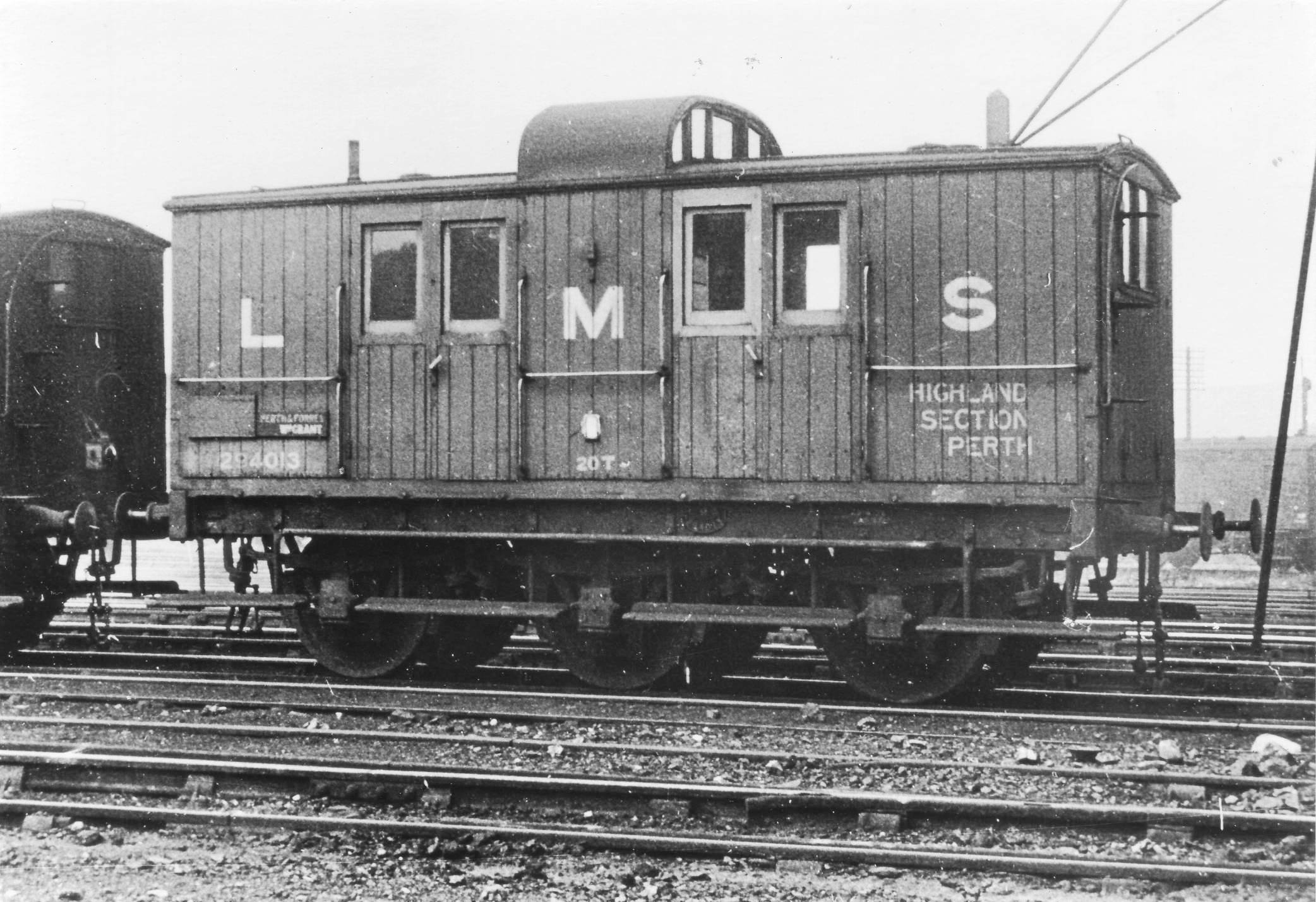
(C) Bill Steel
Scrap Tank Test Build – Part 2; Continuing with the Body
The next stages of the test build were to do the footplate/tank sides/can exterior.
My initial design for the footplate is not particularly radical, but the test build has shown up that until the boiler is put in place (which comes some way into the build process) the front is somewhat delicate, irrespective of whether the footplate valences are fitted or not. Thus, in addition to the temporary stiffener that can be seen to the front of the footplate in the picture below, stiffeners will be provided to the front half of the footplates. The idea of these can be seen in the following view which shows the rear of the cab. By folding these over at 90o during the build, they give strength to the more delicate parts of components. Some will be incorporated into the finished article, others will simply be discarded when their job is done.
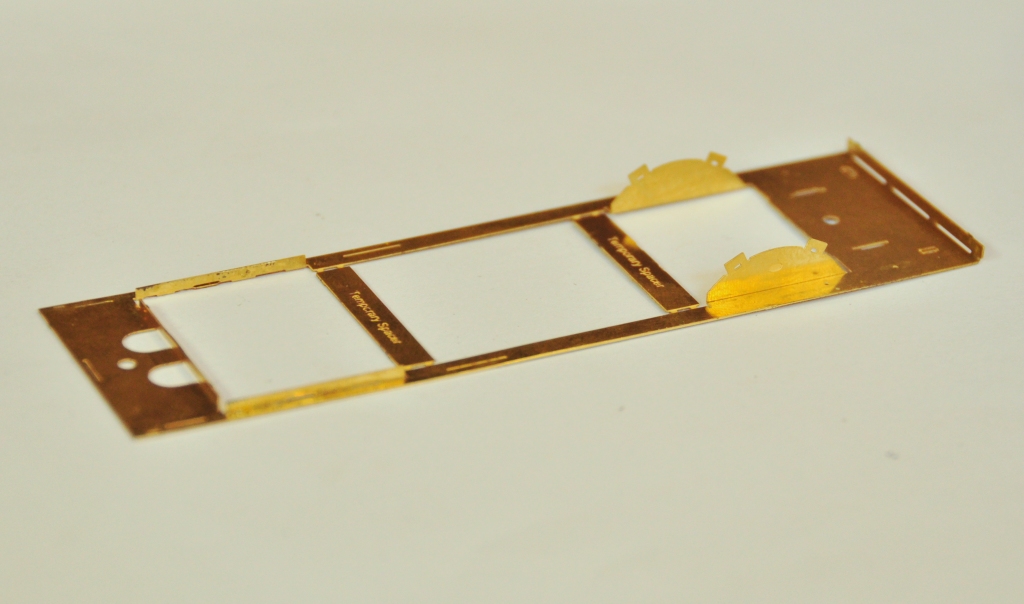
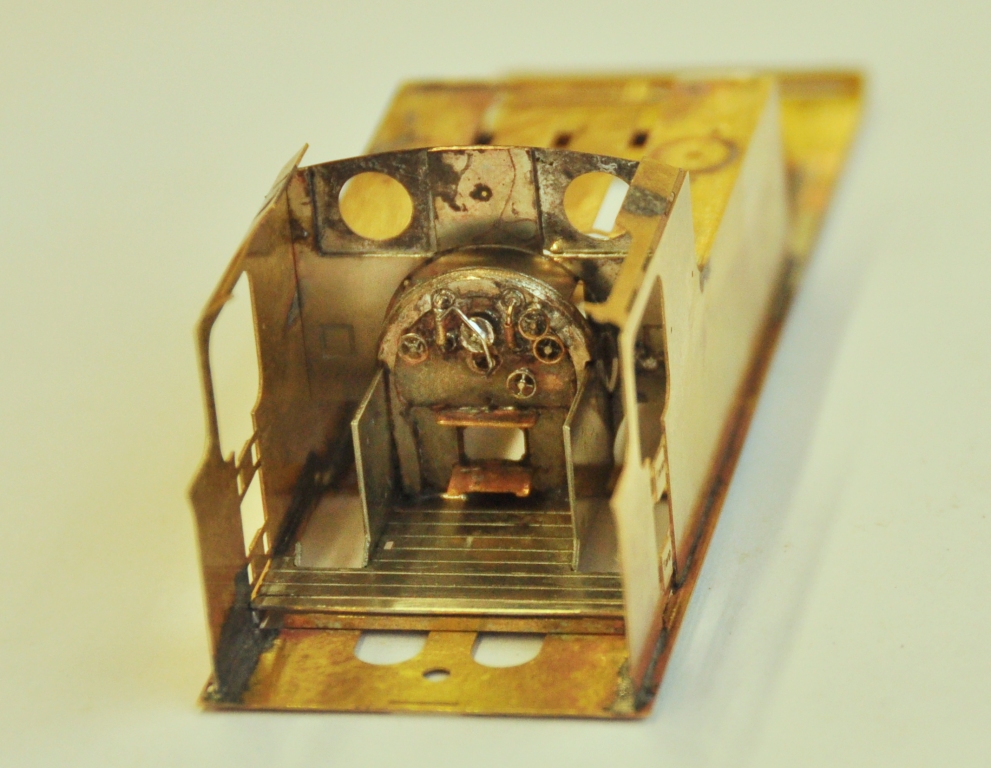
The two tanks, along with the sides to the cab/bunker, are conceived as a single piece (if you go back to my previous posting, you can see this in the flat in the etch). The two halves are separated by temporary spacers to both assist in locating them but also to give strength to the assembly prior to the fitting of the boiler which is where it will get its strength from. It was when I tackled this part, I reached the first disaster – the etchers had failed to half etch from behind so I was missing some fold lines. This was pretty frustrating as it entirely negated the intended efficiency of the design and even though I now have a corrected etch, I had to solder on by cutting the parts at the intended line of the half etch and soldering them together in the more traditional manner – exactly what my design was intended to avoid. As a result of this, there are no neat photos of the tanks being folded up and secured in place, we have to jump on a bit to see this.
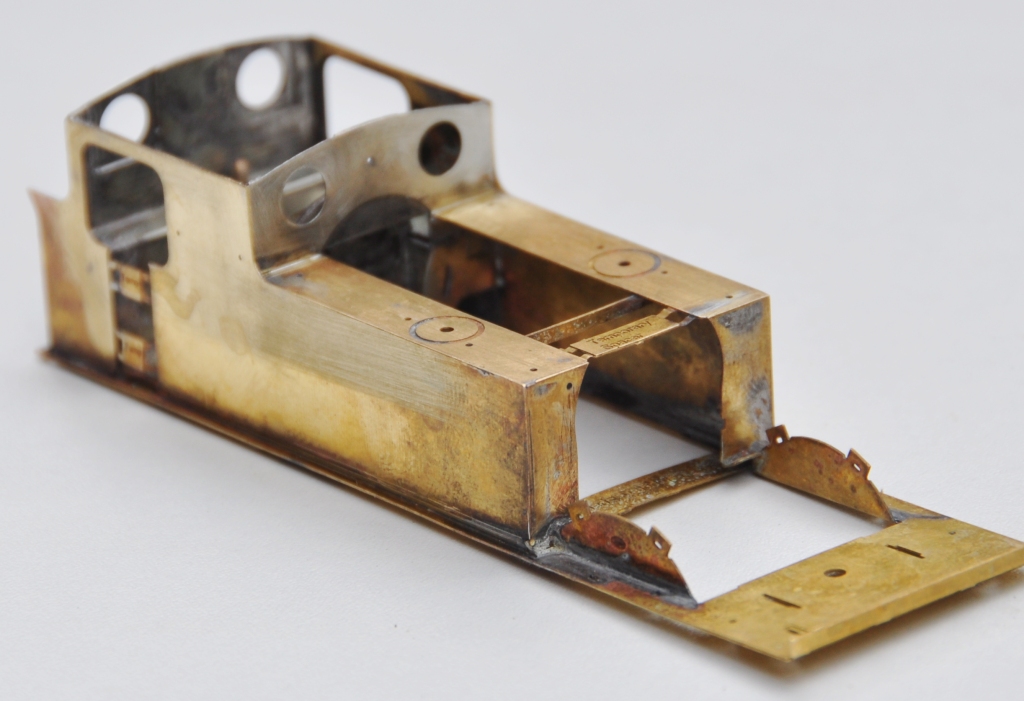
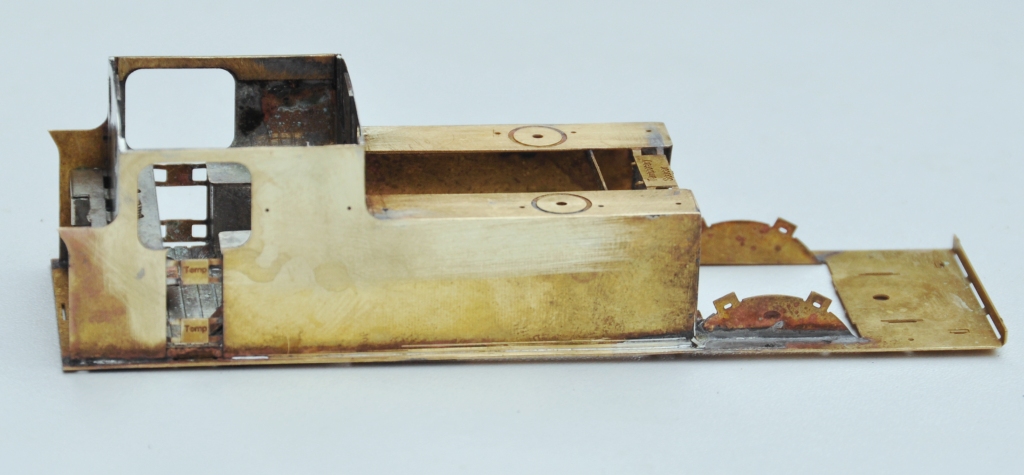
The cab fronts that were constructed earlier were no slid into place and I was pleased to find that it all fitted very snugly and in exactly the correct location. I did find that I could put in a further pair of fold up tabs on the running plate that meant that it was essentially impossible to put this in the wrong location, so this is another little refinement that will make its way into the production batch.
The rear of the cab was a similar fold up unit to that to the front, which was pretty easy to build but did have one dimensional error at its base that needed cutting away – well that is the purpose of a test build! All of this, has been created from one piece in maybe three minutes!
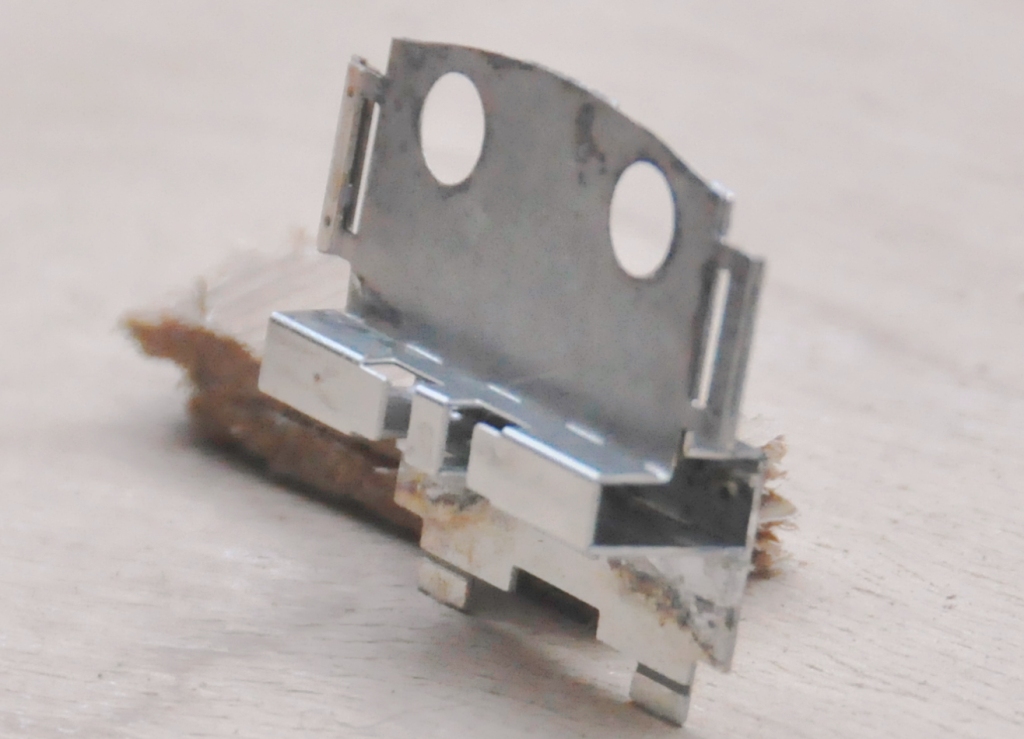
And this is what it looks like with the cab rear in place. If you look carefully, a couple of 12 BA screws are just visible in the cut out to the rear of the cab – the purpose of these will become apparent in a future posting but it is another one of my little ideas to make this easier to build/better when built.
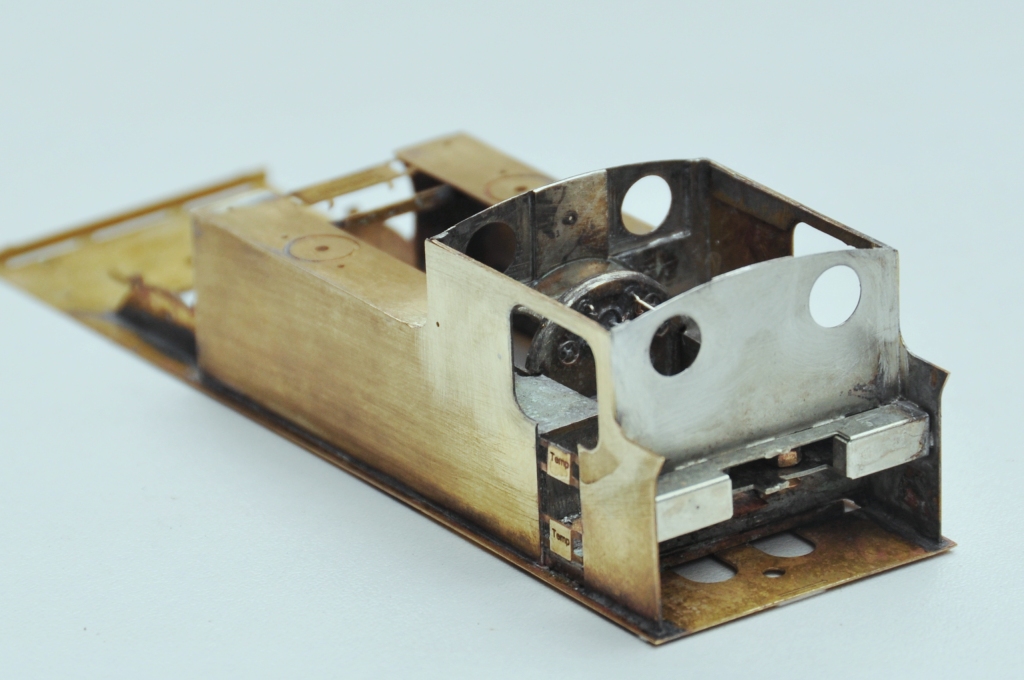
And this is what the cab bow looks like from above, after the addition of the splasher tops and backs. One of the issues this illustrates is that this kit, as it stands, will only work for EM or P4 modellers. There is insufficient room to get the narrower gauge/wider wheel treads into the splashers.
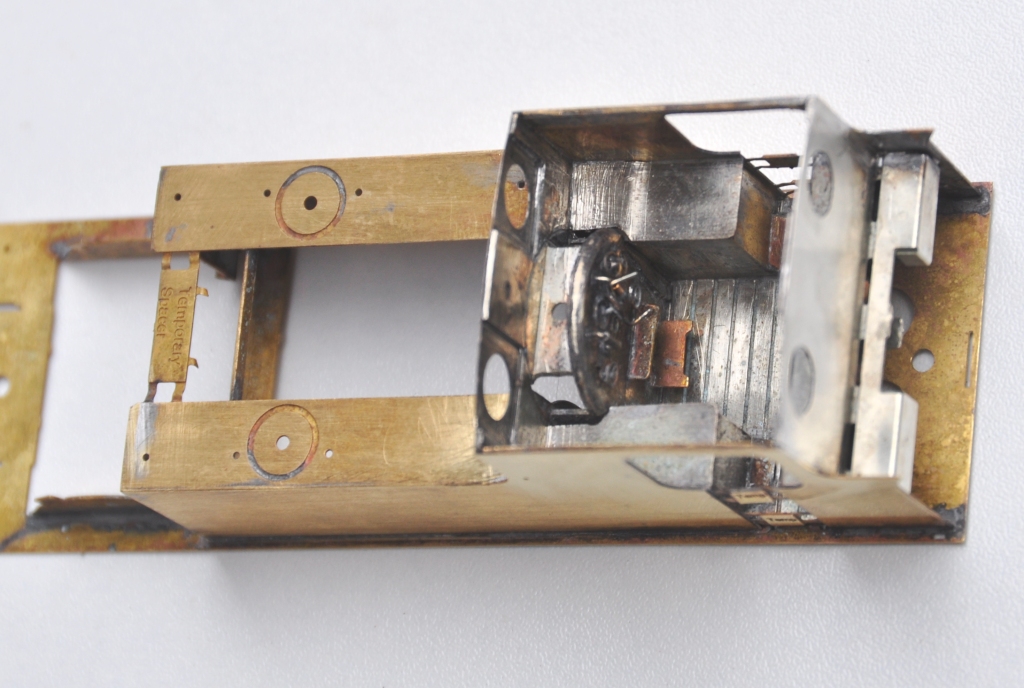
Next up will be the cab roof………….
Scrap Tank Test Build – Part 1; Getting Started
I took the weekend off the other week and attended the Spring Railway Modeller’s Weekend at Missenden. It is great to spend two full days just modelling away from the distractions of life and amongst people who are all doing exactly the same. I find it a form of therapy and it is well worth going if you have been thinking about it (and even if you haven’t!).
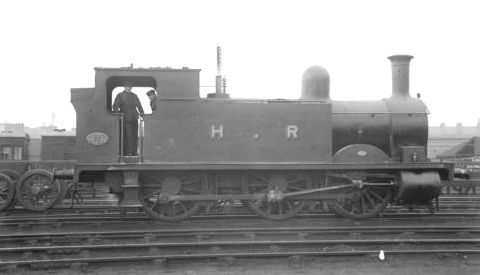
I took with me the etches that I have had delivered by PPD for the Scrap Tank; with a view to doing a test build using them. The origins of this class are some of the earliest locomotives built for the line; the Raigmore class. In an attempt to increase the life of these new enlarged boilers were fitted to them. Unfortunately for the Highland Railway the boilers were too heavy for their frames and consequently these cracked. This left the Highland with a number of new boilers, wheels and many fittings but no locomotives! Ever the frugal, they recycled these parts into a series of three shunting locomotives which were designed by Peter Drummond and these inevitably quickly picked up the name of Scrap Tanks.
These were rather brutish looking locomotives for the time, characterised by surprisingly large wheels for a shunting locomotive – something compelled on the Highland due to them reusing these from the Raigmore class which were mainline passenger locomotives with 5′ 3″ wheels. For those of you who don’t know what these looked like, this is what we are aiming at:
And this is what we are starting with:
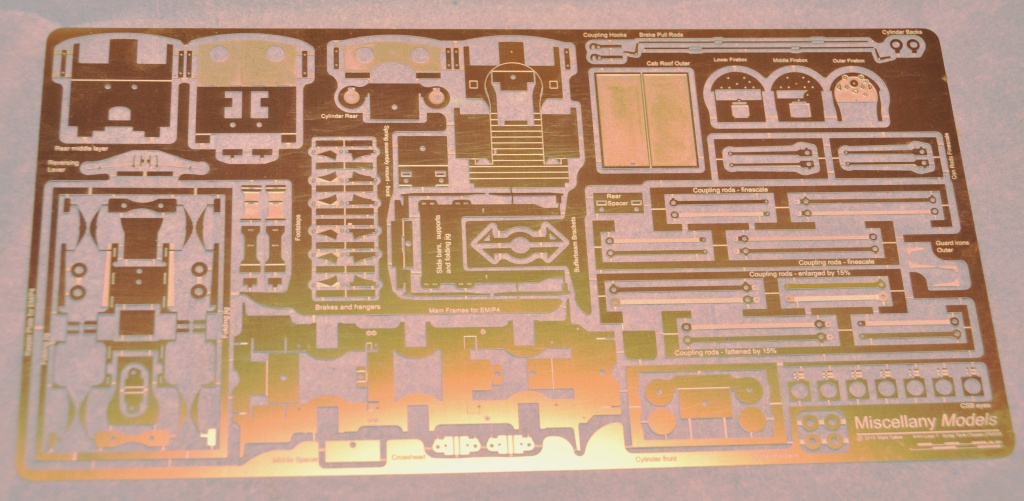
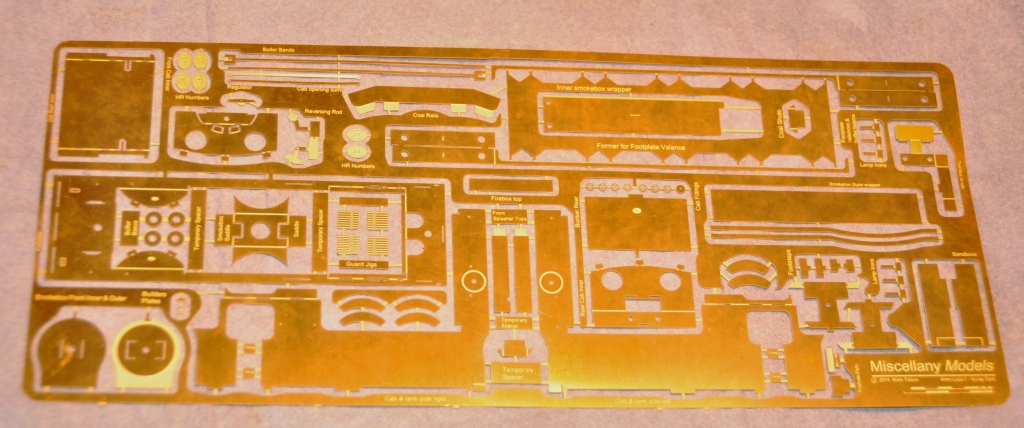
Whilst this may (well has!) got me into some trouble, I have sought to design the kit to be easier to build than the average etched brass kit and certainly easier than the Falcon Brass kits that are the staple in 4mm for many of the Highland’s locomotives. I have sought to do this in a number of ways and the first area tackled, the cab front/interior, illustrates one of these; the use of fold up assemblies to assist not only in creating the shapes but also the laminations. Many of the modern etch designers are using these (especially the 2mm boys/girls) but I have sought to do rather more than most (which has made the preciseness of the design rather more challenging, more of which anon).
The bulk of this assembly starts as a single piece, that is folded up to form the cab floor, splasher sides and the bulk of the cab front. To assist the lamination process, jigs either side of the cab front have been used. Wire rods are slipped through the small holes in these to ensure that they are registered on top of each other properly.
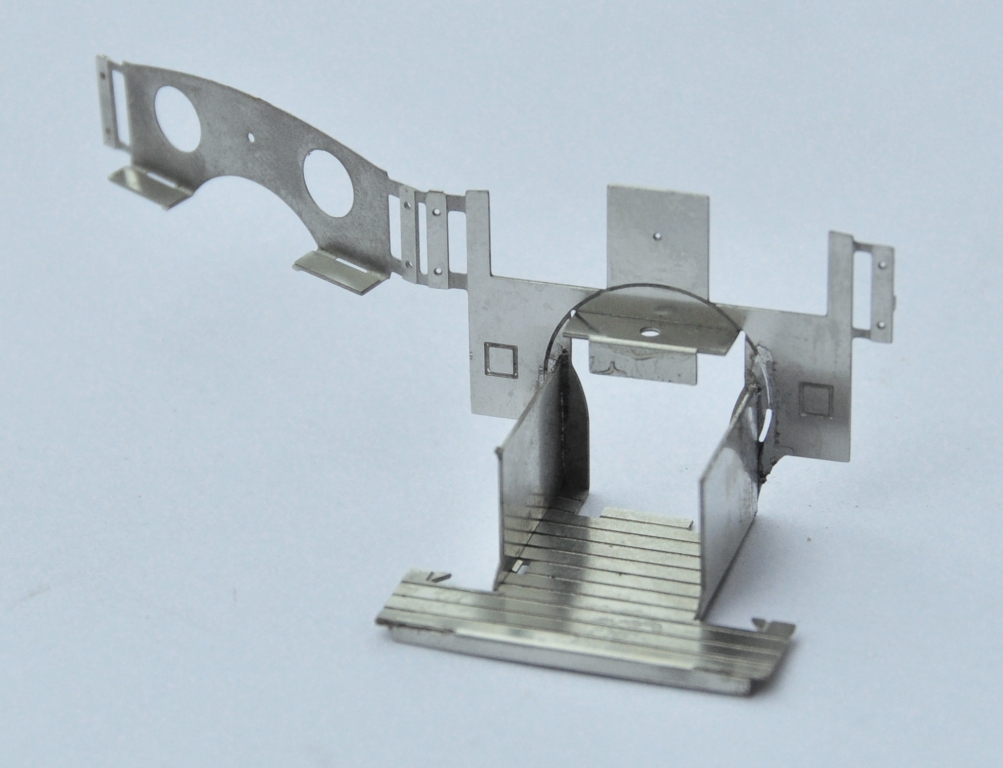
The view below shows the laminations now sweated together and illustrates the square cut outs behind the cab front which are to enable glass/Perspex to be slotted in to represent the sceptical glazing. The view also shows the boiler backhead which is made from three layers of etch (not with a folding jig – yet!). I am pretty pleased with this as this is only 13 * 15mm in size, so the wheels on the backhead are only 2mm in diameter.
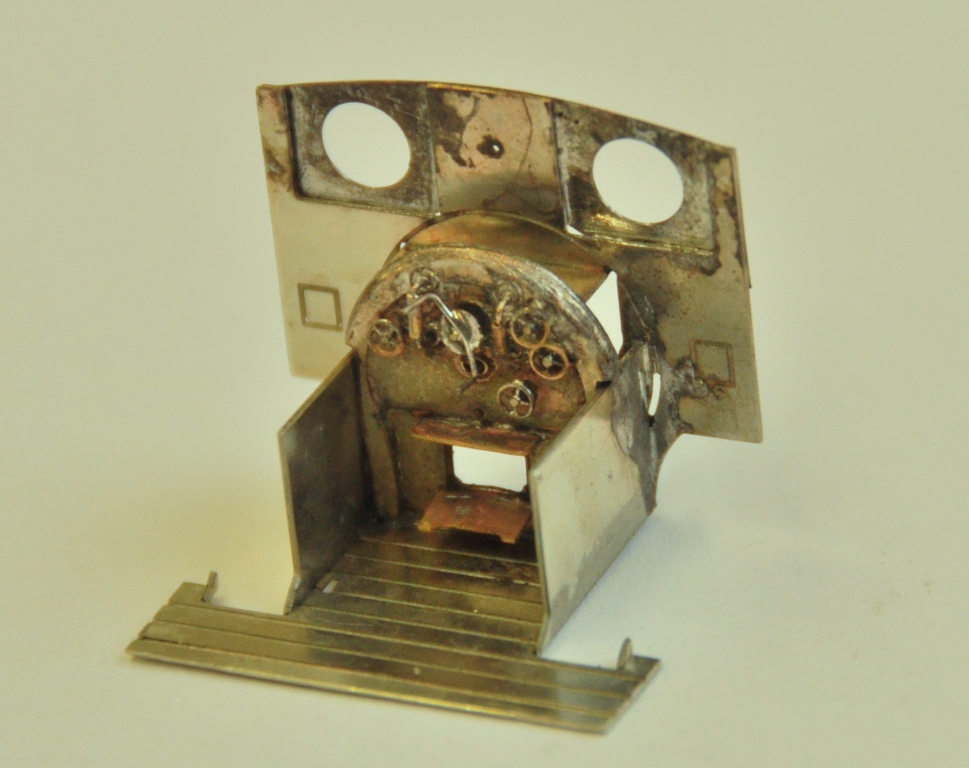
To be continued…………(soon too!).
HR Cradle Bolster – First Test Build
I had a delivery from PPD a week back, so I have been playing with some test builds of this:

This is a dia 25 cradle bolster; a type of vehicle that I have not seen on another railway. It has a square cradle that sits on the top of this, with four bolsters protruding from the corners of the cradle. They were used on pairs and the whole cradle rotated when the pair of vehicle went around curves. The intention, I presume, was to offer the load more support by offering more points of contact. Anyway, as no one else had tackled this vehicle before, I thought I would have a go!
As this is my first etched design for a vehicle, I have certainly encountered a number of problems. As the top photograph shows I produced this in both 4mm and 7mm; the latter has proved more successful due to the thickness of metal being greater. The main issue that I created for myself was to half etch the solebar overlays so that the rivets and the ironwork could be portrayed. However, rather than backing them on a further layer of etch (like the etched kits I have built – they evidently knew something……), I spanned it between supports. The intention had been to make the kit fold up more readily but in practise what has happened is that the half etched solebars have distorted (badly in the case of the 4mm one) due to the stresses introduced in the heat from soldering. Thus, whilst I have a working model (at least in 7mm), a rework is going to be required.

Both the 4mm and 7mm versions will have sprung axleboxes, using a varient of the guitar wire sprung version used by Bill Bedford and others. The 7mm chaps don’t seem to use it much and I guess the mass of their models helps. However, it does glide with the springing and is better as a result I reckon.
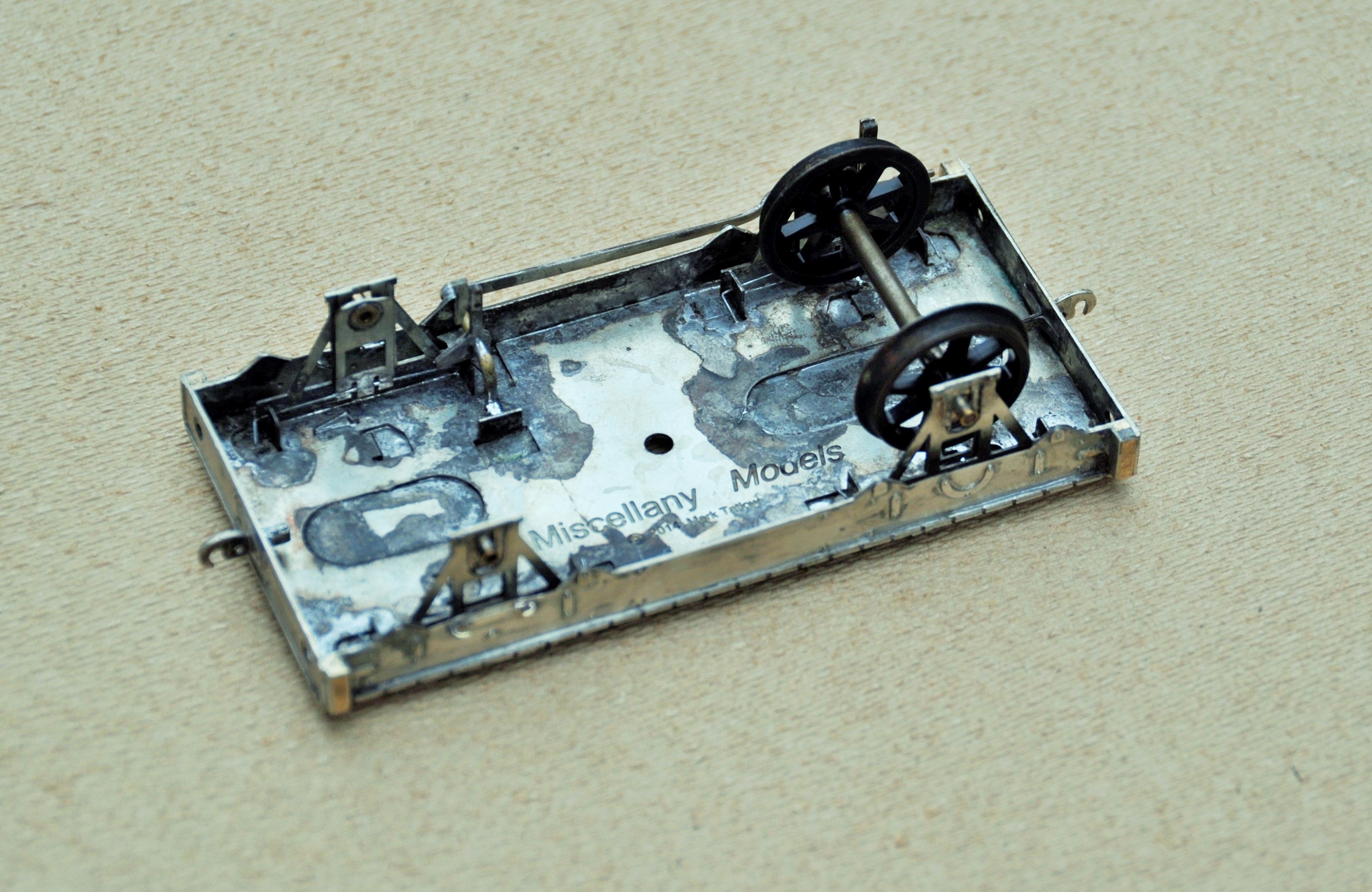
I have also done a 3-D design for the cradle, which I am proposing to use as a master for some resin castings (certainly in 7mm, I might go down the lost wax brass route in 4mm). A new process that I have not previously attempted. I need to find out where to get axleboxes and buffers from – Larrie Griffin I presume.
Also back from PPD, were some etches for something altogether more bold (which is a worry in the light of the problems I have encountered on a relatively simple wagon!). This is the chassis and body etch for a Drummond Scrap Tank. I have made a start on this and again, some reworking will be required but again there is a viable model in an amongst these parts; it just needs tweeking. More to follow once I have got further with it.


Benfieldside’s Signals – An Update
We have not had an update on the signals for Benfieldside for a bit. The first four of these, including the three that were restorations (although in respect of the twin doll signal, very little was reused indeed) are complete. This is what they look like (with thanks to Phil Hall & the Scalefour Society for the pictures):
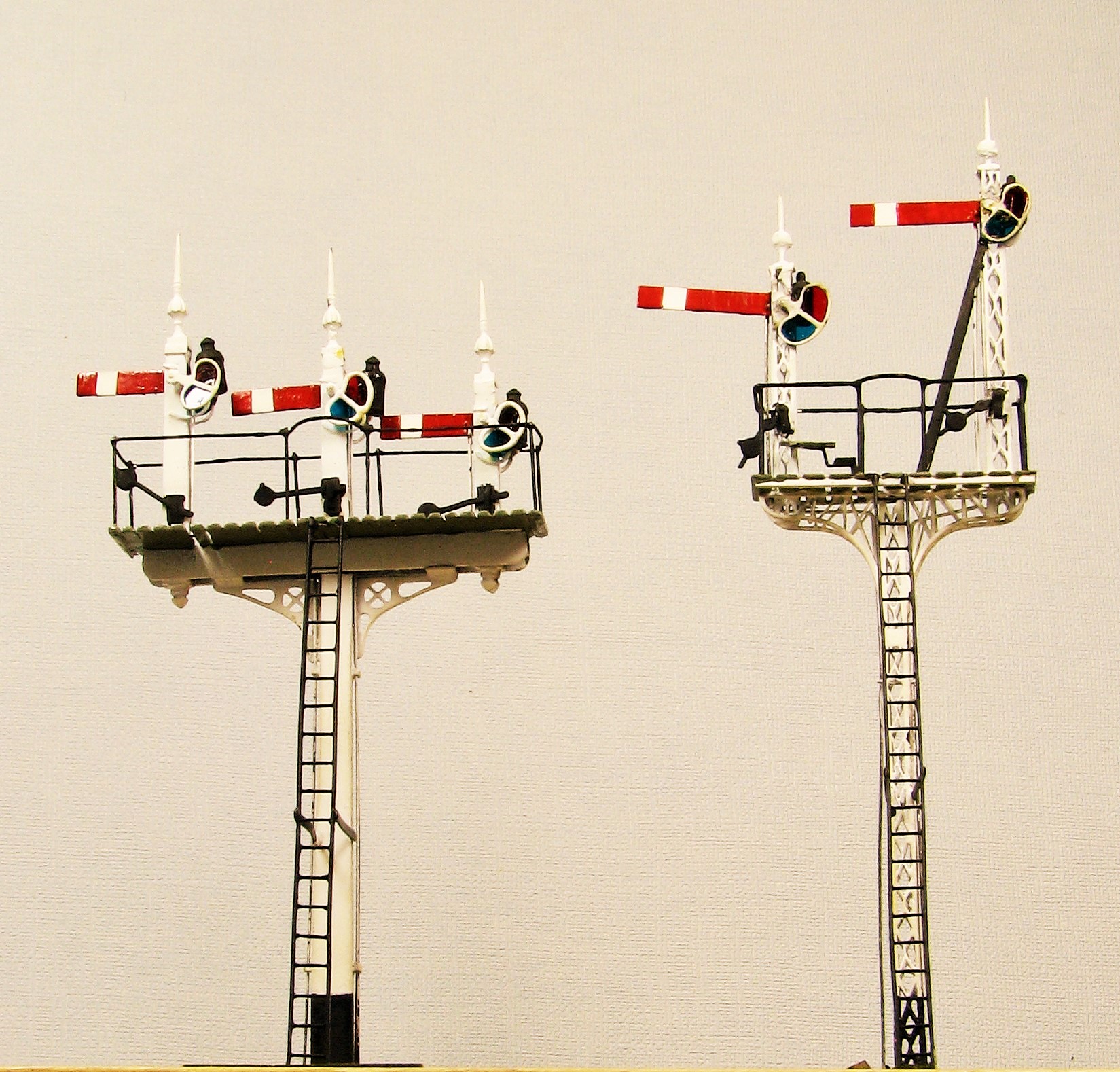
The three doll is a restoration from John H Wrights work, so too is the other in theory but the only components reused were the slated deck for the landing and the curved metal that formed the brackets!
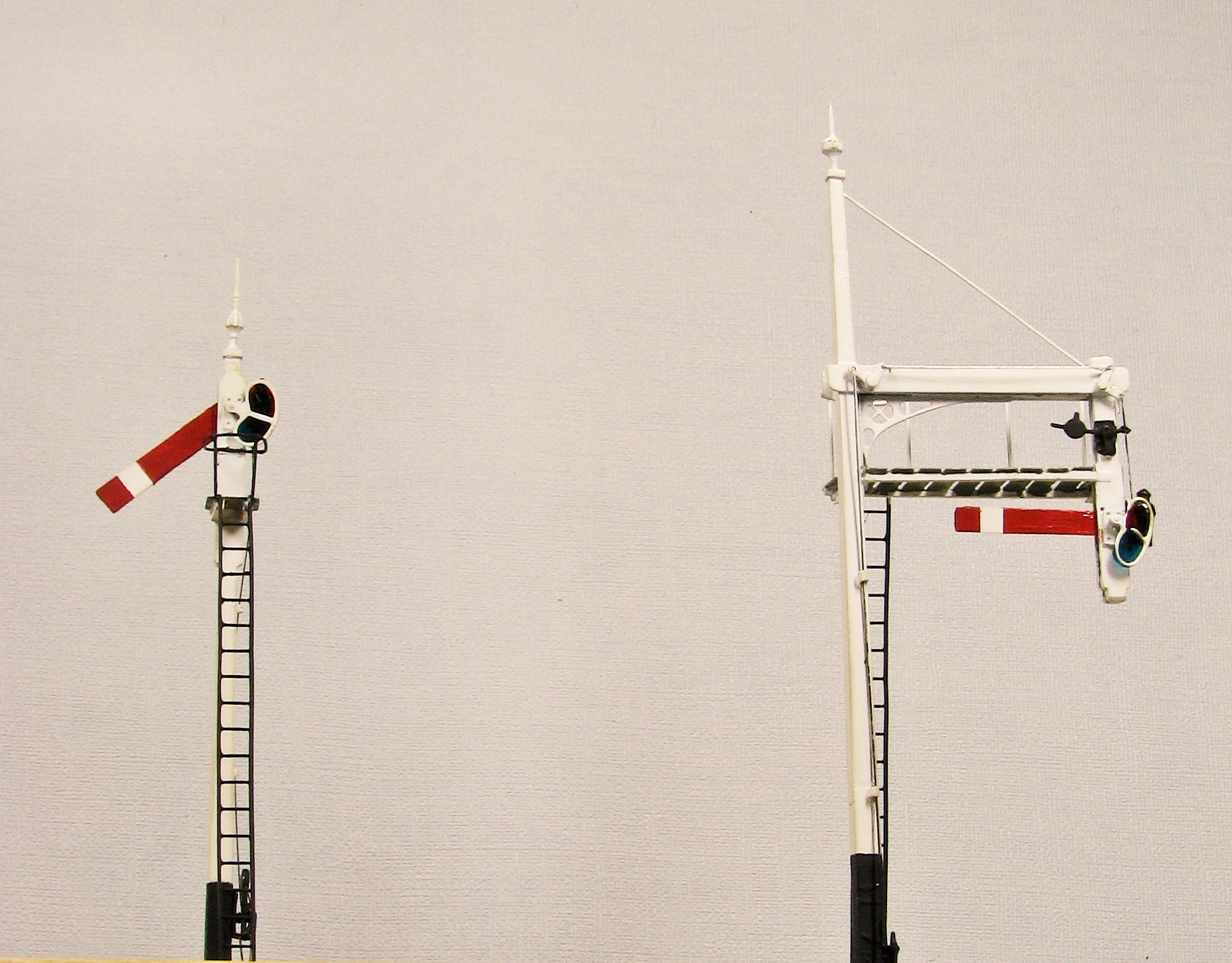
Gallows bracket to the right, restored from the John H Wright original. The simple post signal is all mine!
The gubbins for operating these is not shown in the views and I will write up a bit more on this at some point but an article I wrote for Rail Express on the signals I did for Elcot Road can be found here. A few of you may have played with these on the MERG stand at Scaleforum too, as I understnad it they kept people amused. There is more Benfieldside signal updates to follow, when I can get my camera out in the light to take some piccies.
A new website for Miscellany Models
I will be making at least some of the items that I have been developing available for sale.
Therefore, I have set up a separate website entitled Miscellany Models that shows what is available, how to get them and (when I get some time to do it) will become a repository for prototype information that I have on the items I have made, construction/finished photographs and instructions.
You can find this website here. If you look hard, you will see some hints as to what other things I have been working on and are expected to be made available in due course.
More on my casting and etching
We haven’t had an update on the etching and mastering that I have been doing for the signals for a while.
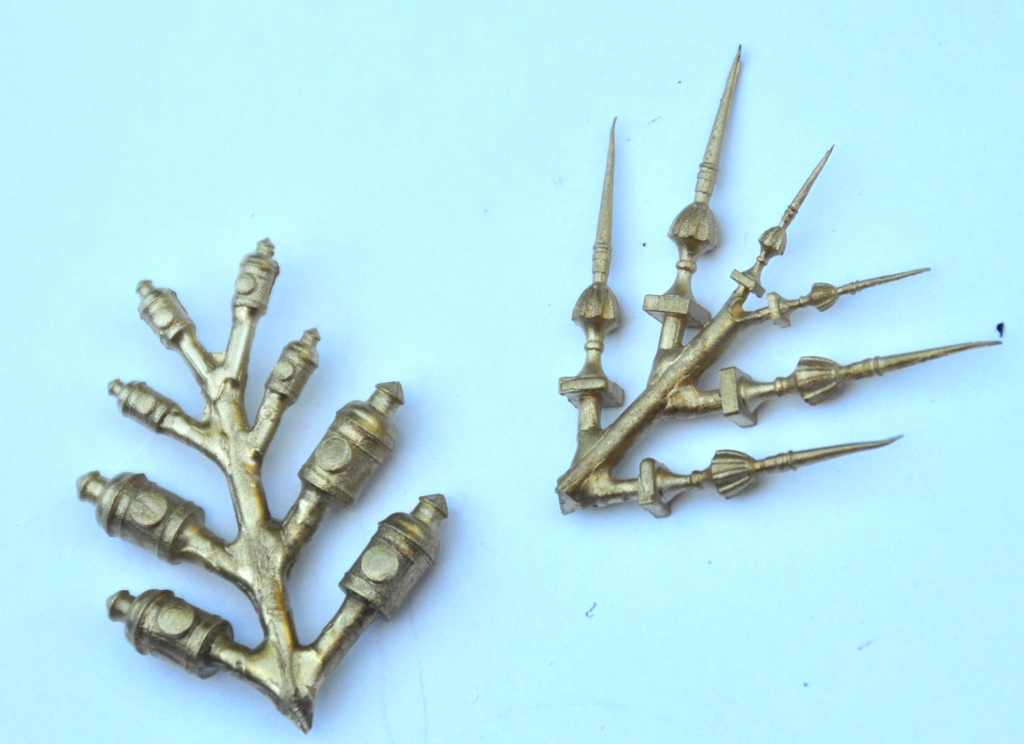
Well, I have had both the rapid-prototype masters and etching in. Using the former, I have also had my first set of lost wax casting done – in this case for the lamps and finials. This is what they look like – which I think is pretty good and a lot better than the white metal ones from MSE.
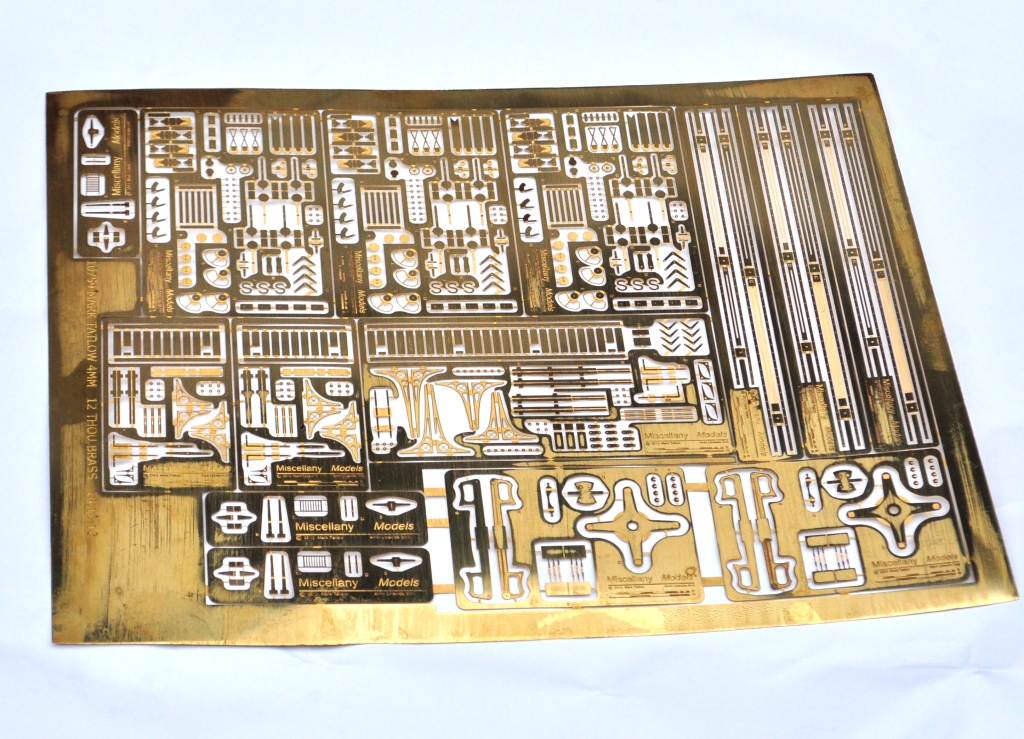
and the etching looks like this – brackets, arms, ladders and a few other bits and pieces.
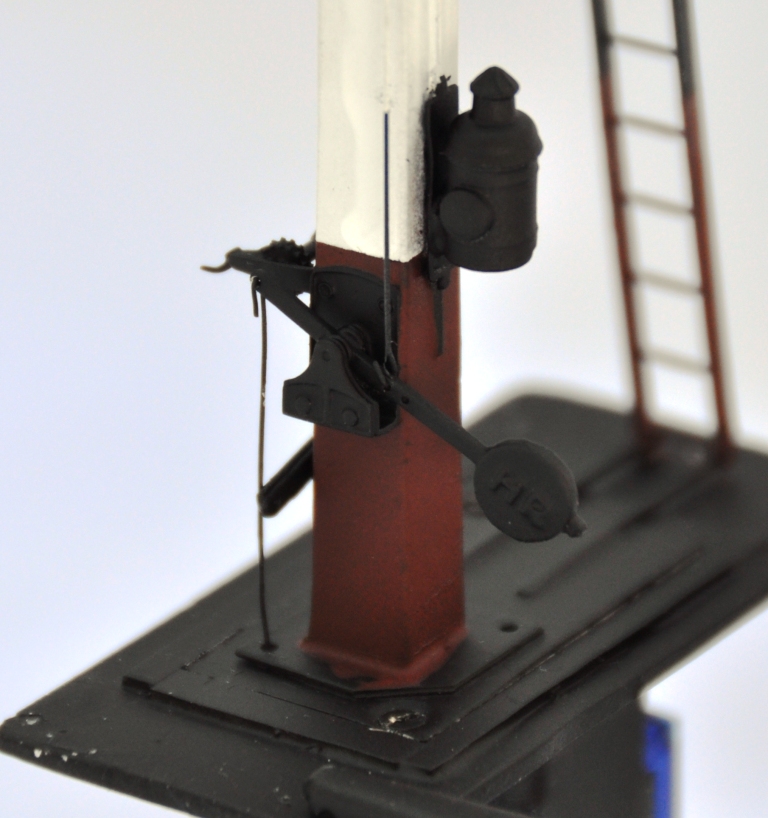
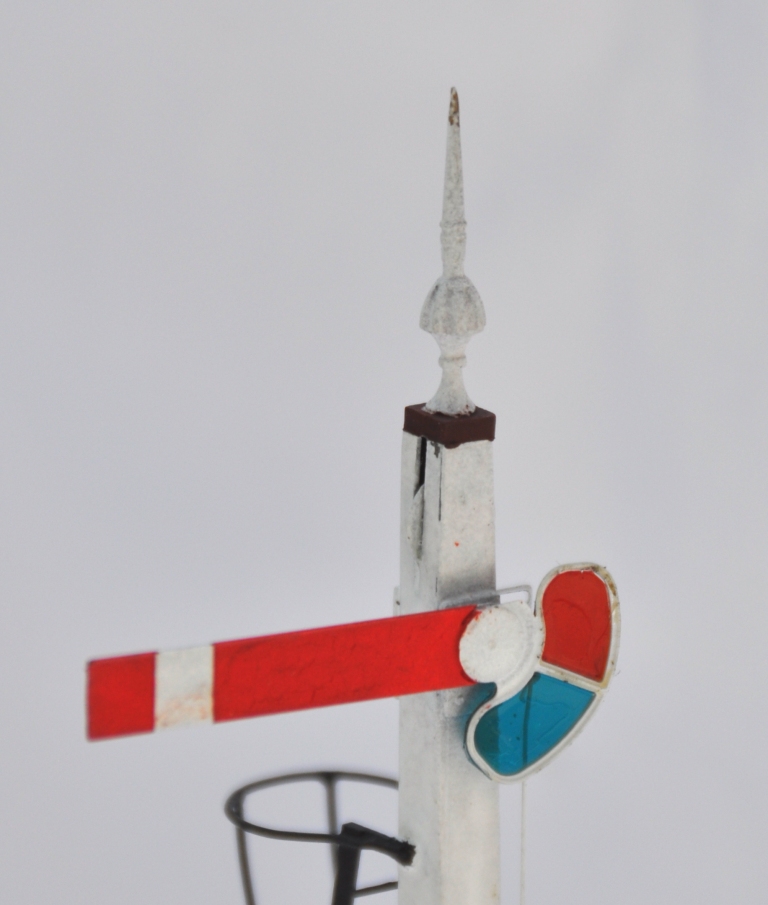
So it was time to make a signal – in this case a fairly simple single arm Highland signal. So using a post from Lochgorm and then my parts for the arms, spectacle plates, windlass, balance levers, ladders, finials and lamp, this is what it has come out like:


and the castings close up looked like this.
So all in all, I am pretty chuffed!
It does mean that I think there is some more signal building to come on these pages……….
Wetting Your Appetite
Slightly less modelling of late; although I did manage to get a Shapeways order off for the elements of the loading crane, signals and water column and I hope to do the same with an order for etchings tomorrow.
With Christmas coming up, we have done a little travelling done to visit people and we popped down to see the old man on Saturday. He has now had all of the proofs for his next book back and they look very good. Those of you who have seen his previous books will know that there are lots of photographs, drawings and text; laid out in a logical and easy to use fashion. They are designed to be books for modellers and I think they succeed.
So this is what it looks like; the expectation remains that it will be launched at the Glasgow show in February and judging by the proofs things are on target for this:

The reason we are cracking on with doing the family is that we will not be here for the Christmas and New Year; we are off to somewhere exciting; where the trains look like this…………………….

and go through scenery like this………..

So no more posts until the new year………………………
Merry Christmas!
More Computer Work……….this time a yard crane
In the summer, my 16 year old decided to rejoin the human race (having spent the previous three years on the planet “grunt”) sufficient that he and his mate decided that they might actually want a week away with a boring middle aged bloke. So after some discussion, we decided to go and get some “fest” in at Edinburgh, cycle the Dava way, bag a couple of munros and take in a distillery tour or two.
We stayed at Aviemore so I went on one of my photo recons and whilst I must have been past it several times before I found this rather nice yard hand crane.

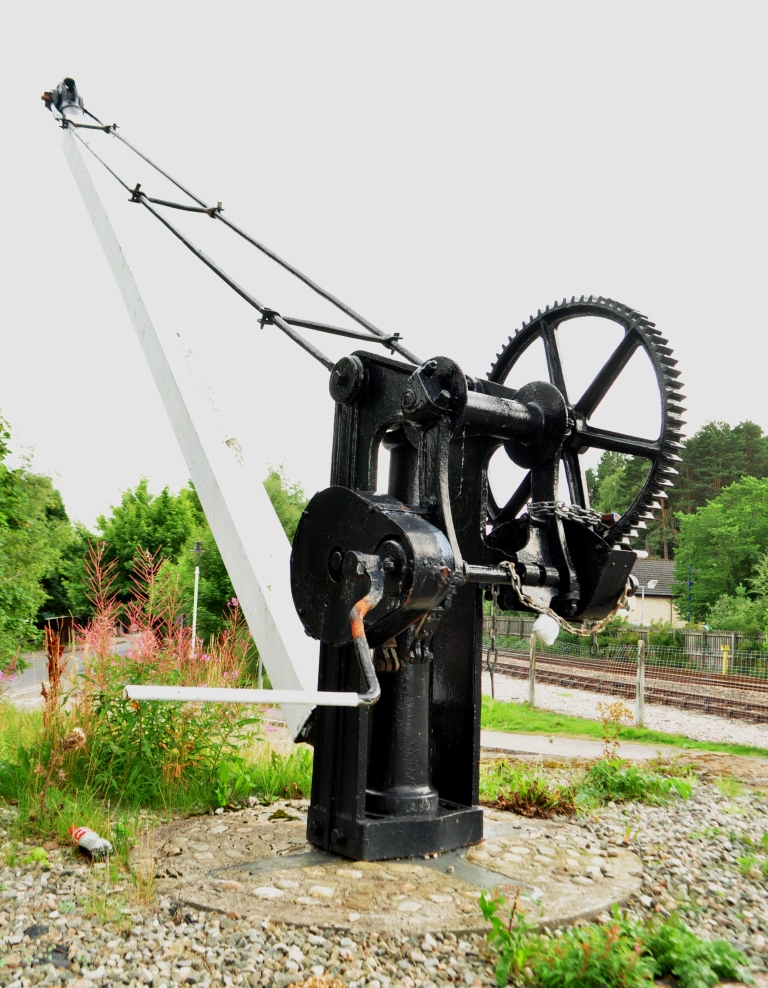
I thought it ouzed atmosphere and would make a lovely little model; so I have had a bash with it – again trying to use modern means to make it so that it could be replicated if need be. So other than what I think is a brake at the rear (which I forgot until I loaded the picture up above) I think it is done.
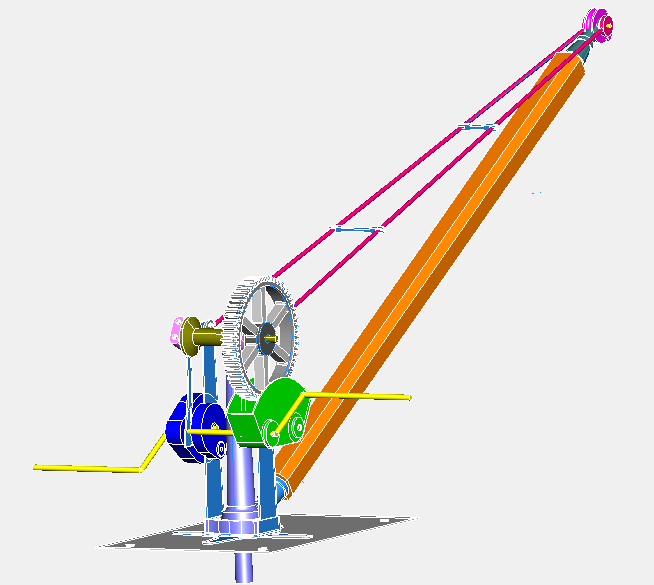


The base piece, sides and the cowl that goes over the base of the main wheel (the green bit) are intended to be etched; the rest will go down the route of 3 D printing again.
So it is time to spend some money with Shapeways and PPD again……….. I have also done some work on the other things that I had etched and printed before; hopefully they will have the little glitches sorted this time; a little present for myself for Christmas!
 highland miscellany