Blog Archives

The Glenmutchkin Pharmacy – Part 1 The Etchings
It is a fair time since I built my last building, so feeling that it was time that I rediscovered my mojo for architectural things I have made a crack at a building that will be a fairly key feature on Glenmutchkin – its pharmacy .
This is inspired, and largely a facsimile of, The Kyle Pharmacy that could be found on the approach to the ferry pier. Or at least it could until the 1970s when it was swept away to make a larger car holding pool for the ferry. In addition to being a characterful building, as you can see below, the real pharmacy at Kyle was a key part of the local community and I wanted to capture this feature in Glenmutchkin.
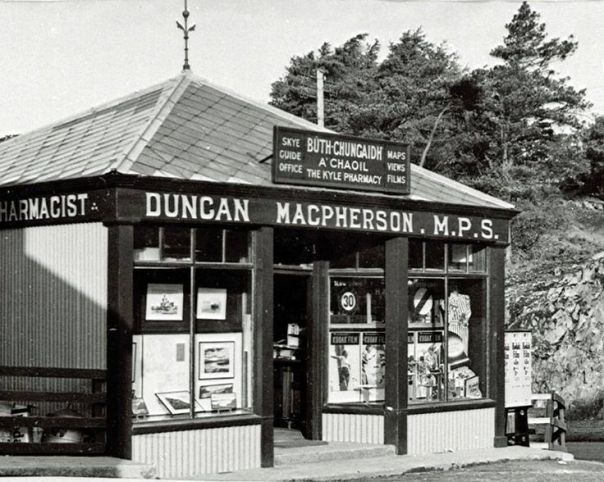
The pharmacy building is going to be located on the most prominent position at the front of the layout, so it definitely deserved some time being spent on it. Taking Peter Bond’s advice, it is going to be assembled in components which will make painting a great deal easier but rather than using plasticard throughout as he would have done, I have arranged to have the shop front and bay etched. I did so as I concluded that getting the slenderness and crispness of these was going to be key to get the feel of the model convincing. Peter is a professional architectural modeller and bending plasticard to his will is therefore his stock in trade – not quite so me!
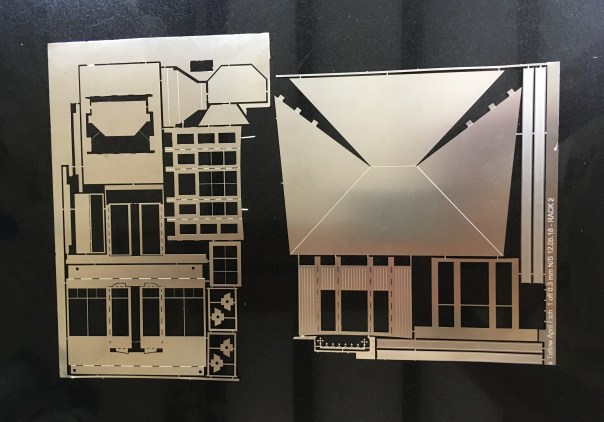
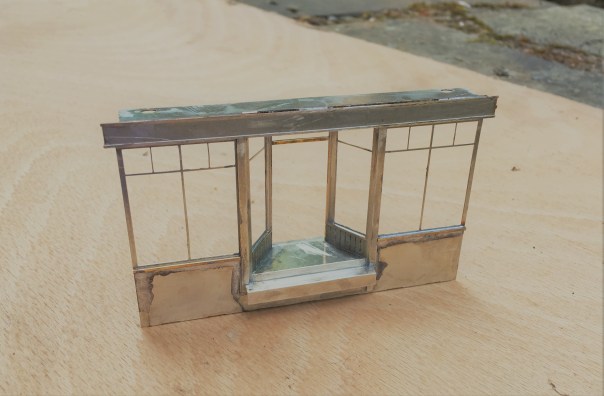
So these are the basic etches back from PPD:
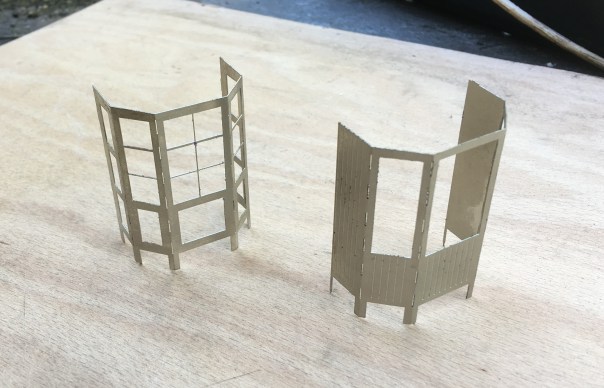
Some of the bay assemblies and the bay largely completed:
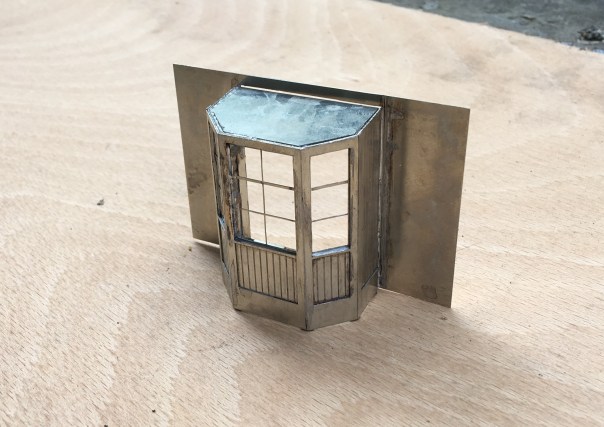
The real value of etching the components can be seen in the shopfront – I at least can’t get plasticard to look like this!

Richard Chown; 1941 – 2017
It is with great sadness that I advise that Richard Chown passed away last week.
Richard was a prolific modeller, typically of the somewhat unusual prototype and always in 7mm/1ft scale. Not for him a debate between BR blood & custard or blue grey, instead he modelled unusual and quirky prototypes from Norway, Ireland or France – that always made his models interesting!
Although he did produce some smaller layouts, typically his layouts were somewhat on the large scale; tending from the substantial right up to a full size french viaduct where unless you were a basketball player you needed to stand on a box to reach rail height. This layout was Allendenac, which was based on a French line a touch to the north of Clemont Ferrand. The line was famous for the rather beautiful Rouzat Viaduct designed by Gustave Eiffel as a sort of trial run for the Eiffel Tower.
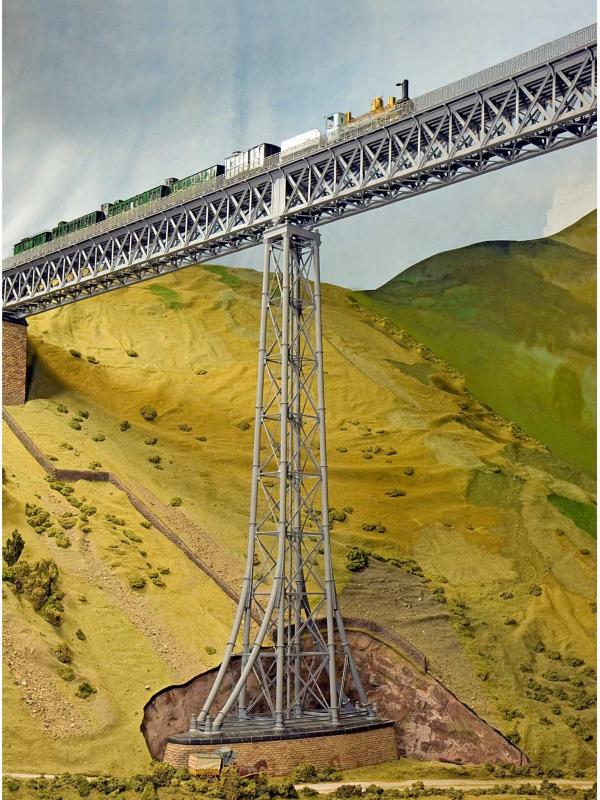
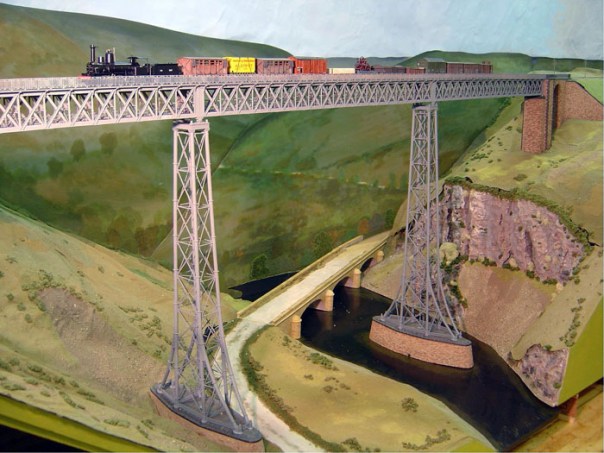
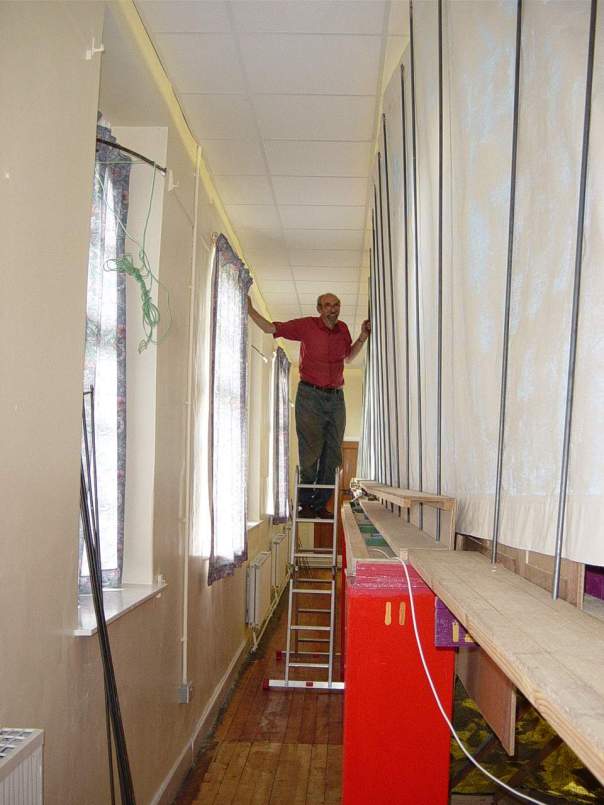
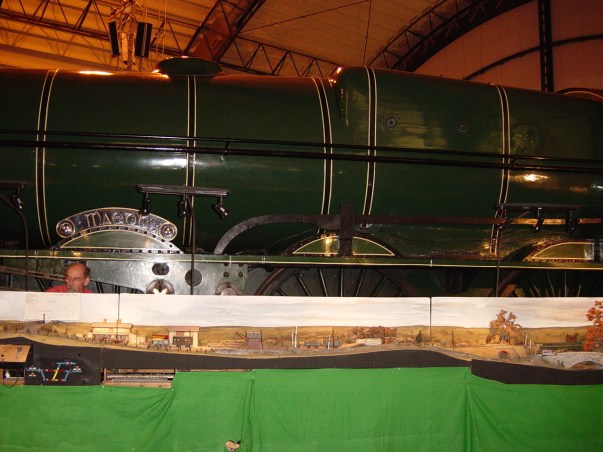
All being made in 7mm/1ft made for a somewhat large layout and to give a sense of its scale, in the picture below, all but the person directly in front of the viaduct is standing on a box and in the view below that, you can see Richard at the rear someway up a ladder and still not to the full height of the layout (so you see Mrs T, I am not that bad really………..).
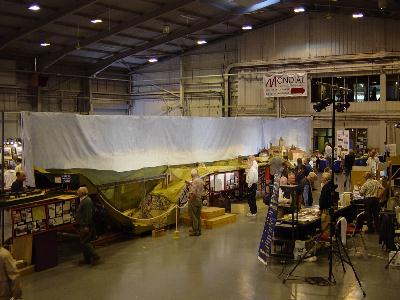
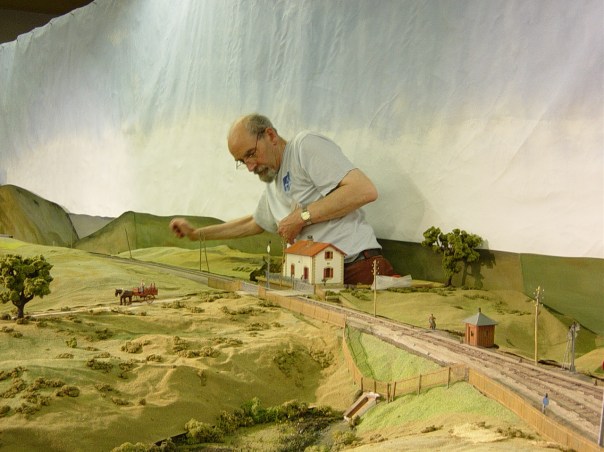
With a layout of this size, access points to maintain (or build) the layout are important and here is Richard popping out of just such a hatch!
Just because the layout was big does not detract from how good the modelling was, as these pictures show.
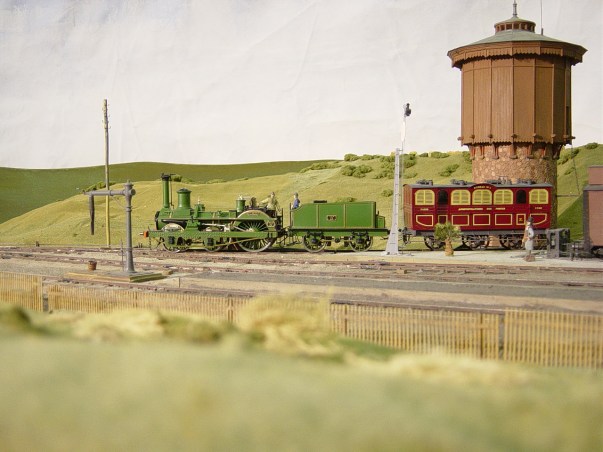
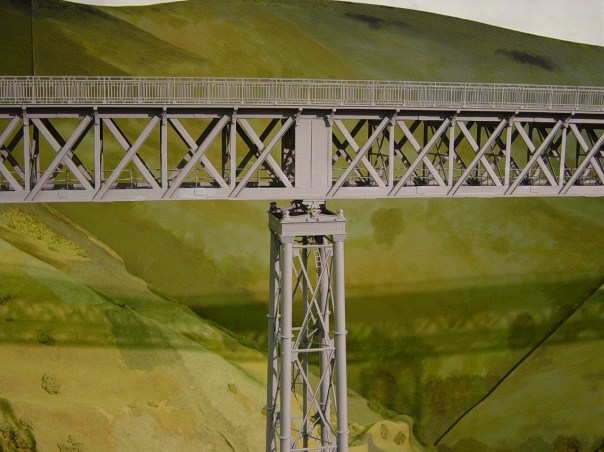
Naturally, as he modelled the esoteric Richard had to scratch build everything for his layouts and he was a very talented modeller as you can see ……..
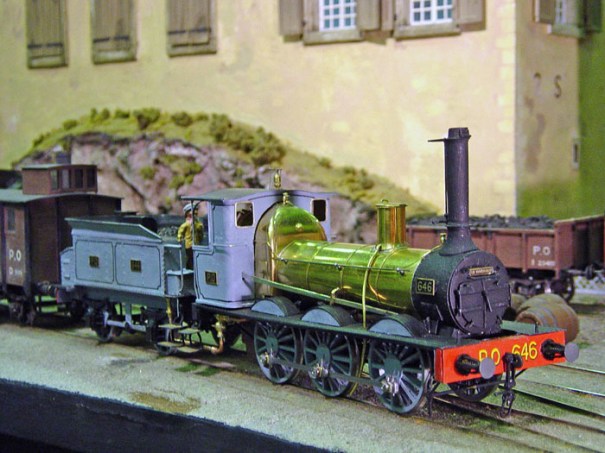
This locomotive operated on one of Richard’s smaller layouts, Courcelle Part which was built for a Gauge O Guild layout competition. It used some of the buildings from Allendenac and also its stock to create a more portable exhibition layout. As I understand it, Courcelle Part had some cut outs to the rear within which to place the operator’s wine glasses – the wine was often local to the Courcelle and Allendenac region as Richard felt that it helped the operators get into the right sort of mindset to operate a sleepy french railway. Now that is innovation in the field of model railways!
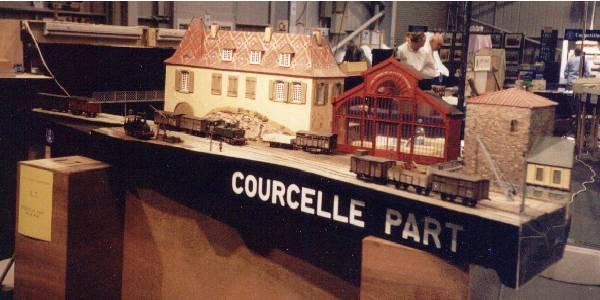
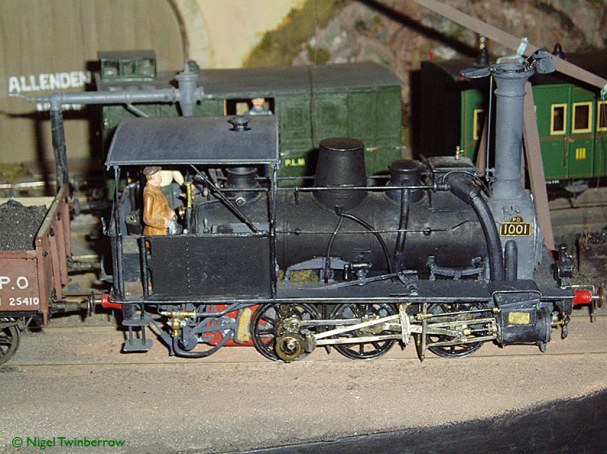
Richard’s own website (which is operating now but will presumably be taken down in time) shows that he was already firmly into modelling as a teenager and contributed to several group layouts.
His first layout that I know anything about was when he modelled the Highland Railway and built a full sized model of Kyle of Lochalsh – weighing in at a mere 48ft. Richard was, I suspect, inspired to follow the Highland by virtue of knowing Sir Eric Hutchinson and this interest brought him into contact with my father. Although the layout was exhibited and fairly well developed as a model, Richard became conscious of some operating restrictions of the prototype (but only because he did not know that the engine shed was used as a headshunt!) and lost interest in it. He disposed of it – apparently the under-bidder was none other than Roger Daltry!
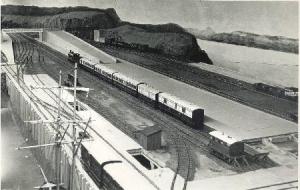
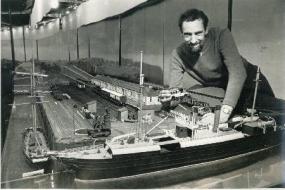
For me, however, Richard will best be associated with his layout Castle Rackrent; the name of which was inspired by a early 1970s property scandal. The origins of the layout are very modest as a small (for 7mm) transportable exhibition layout but it proved a crush in his small bedsit of the time. In an effort to find more room for the layout he found his employer accommodating (or perhaps unknowing) and erected it in a disused post office footbridge on Waverley station.
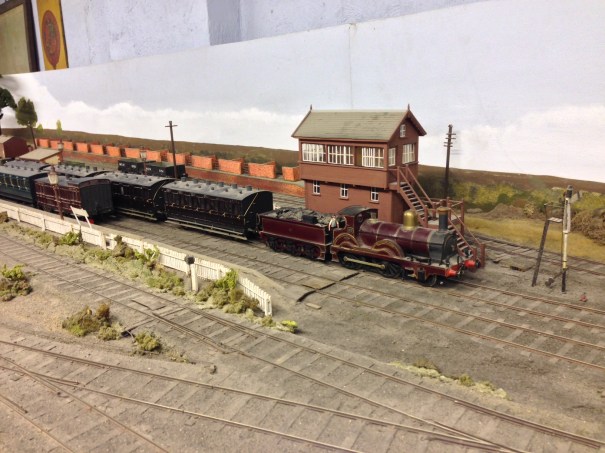
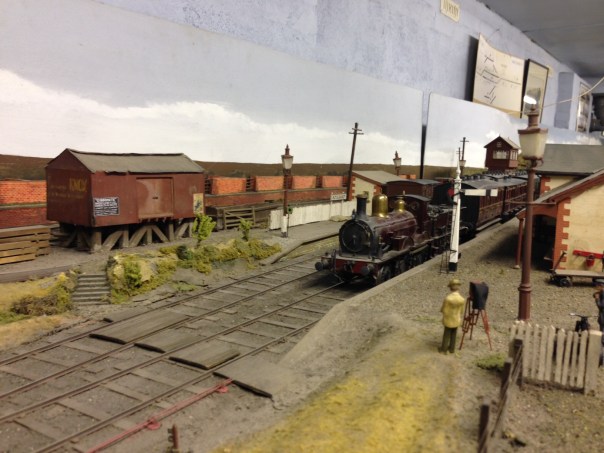
Helped perhaps by handy access during lunch breaks and the better part of a mainline station to fit it, the layout reached (I think) 70m in length before BR decided that perhaps they would like their footbridge back…… Undeterred, Richard had a house built with a conveniently large (a.k.a. giant) basement to fit it and subsequently extended it to some eight stations such that it was an entire system. The layout weaved around the room several times and even though the two stations below appeared next to each other, they were in fact nearly the length of the system apart.
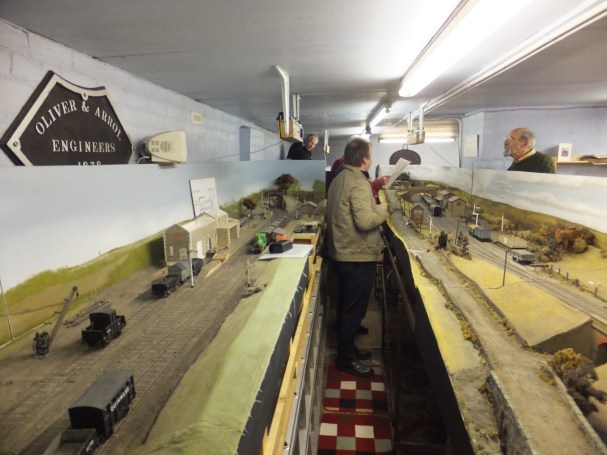
All this (or nearly all in the final incarnation) was single line and worked with bells as no station could see the adjacent station and the trains had to be driven to the signals and then handed over. This made the operation of the layout somewhat unpredictable as I discovered at one stage when I had four of the six trains on the system within my station limits and a rather irate Slim Controller (you know who you are) sending urgent telegrams to discover the whereabouts of the hunt special…….
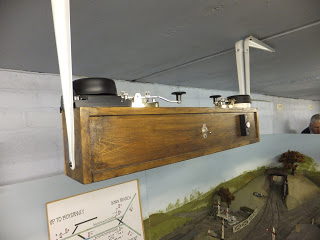
There are rather more photographs of Castle Rackrent in my earlier blog posts – here and here. The core of the layout – Castle Rackrent itself – was exhibited widely and on some occasions quite large parts of the system was transported to shows. Here it can be seen at the Ulster Folk and Transport Museum, Cultra.
Richard’s final layout (that was completed, there were others in gestation) was Fangfoss which was built to Scale7 standards but of a 3’6″ gauge prototype in Norway. The layout was not an exact model of any location but was inspired by the Randsfjord line that was a little outside of Oslo and was a means of portaging past a series of rapids – in this case the Fangfoss.
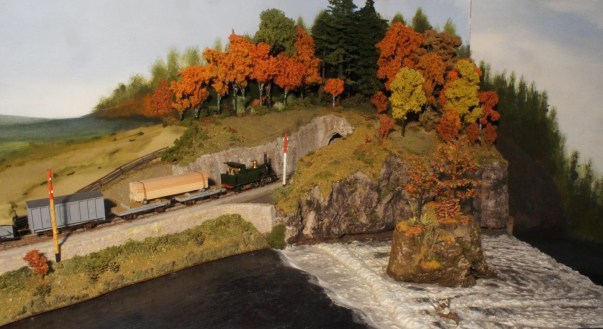
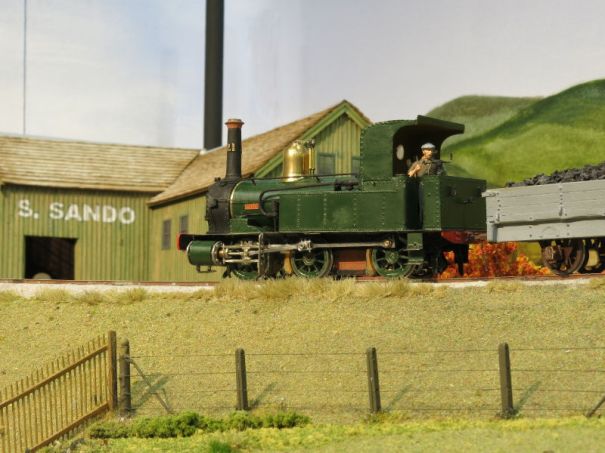
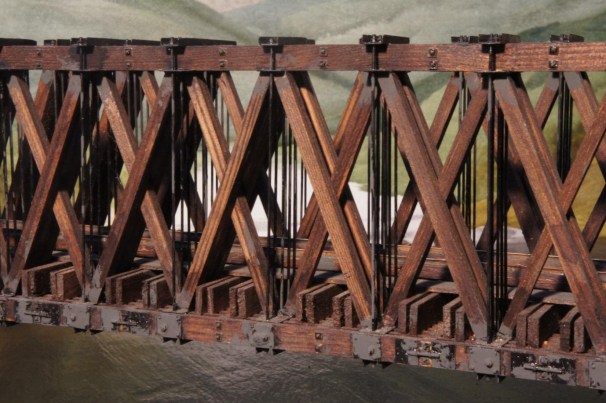
As can perhaps been seen throughout Richard’s layouts he was keenly interested in bridges, often being the key part of his models; as in Fangfoss from which this detail is taken.
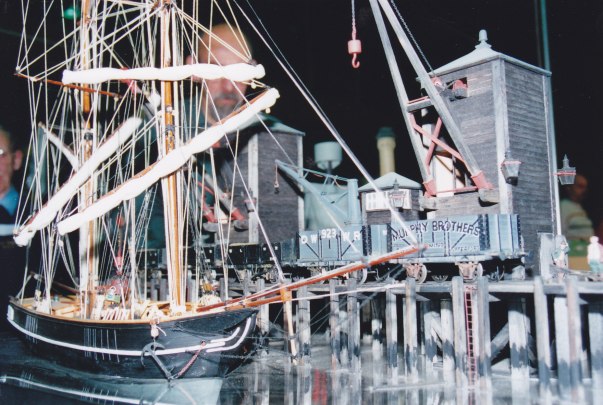
At the other extreme to the size of Kyle, Castle Rackrent or Allendenac, Richard also produced some cameo layouts, typically aimed at being transportable by train (he apparently took a large chunk of the Castle Rackrent system from Edinburgh to Bristol by train – back in the days when there were luggage compartments…..). Here is a small one called Port Lairge Wharf which was perceived as an extension of the Castle Rackrent lines (although I don’t think it was ever connected).
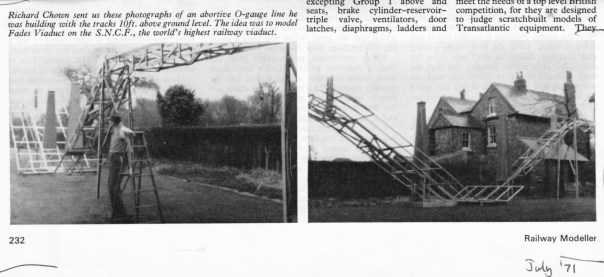
For finescale modellers in the Lothian Region, and occasional visitors from further afar like me, would gather on a monthly basis to operate Castle Rackrent and Richard was always welcoming and encouraging. He will be sorely missed by all and it is fair to say that I don’t think we will see the like of he in the hobby again…………….after all, who would try to model the tallest viaduct in the world in 7mm (even if sense did prevail on this one as it did not get completed)…….
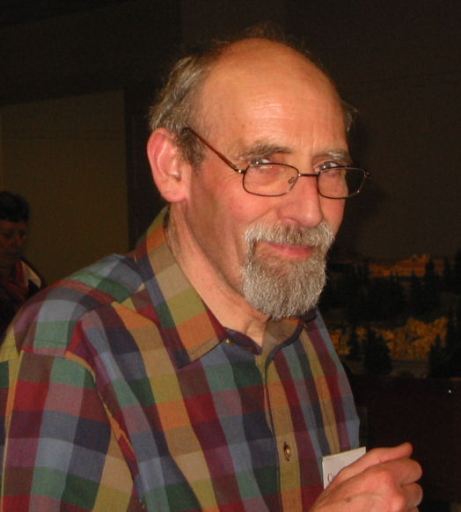
Rest in peace, Richard.
Thanks to Jim Summers, Danny Cockling and Alan Aitken for the use of some of their photographs.
The Dingwall & Skye Railway
The Dingwall & Skye Railway – A Pictorial Record of the line to Kyle of Lochalsh.
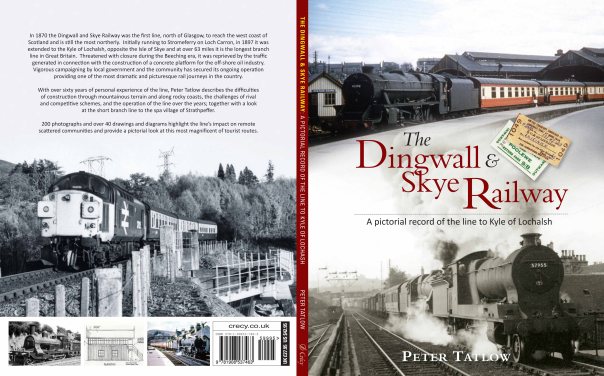
For those of you that are aware of my main exhibition layout you will be aware that it is based very firmly on the Dingwall & Skye Railway, which is the name of the line we now call either the Kyle line or occassionally the line to Skye.
I have to confess that the layout is heavily influenced by my memories of family holidays to the line in the early 1970s – we were dragged up there by my father and I at least (it all appears to be lost on my brother!) picked up a bug for the railways west of Inverness. This bug seemed to have been passed to me by my father and he was in turn infected in the late 1950s when he first made his visits to the area.
Based on his love of the line to Kyle of Lochalsh, my father’s latest book is upon the line. It does not seek to be a strict history of the line (Rails to Kyle of Lochalsh does this) but is instead a review of the line on a station by station basis. It is full of photographs (literally hundreds of them) and also a substantial number of drawings of the engineering and architectural infrastructure apparent on the line as well as around it. This covers station buildings, water tanks, bridges, sheds, signals, water columns, water tanks, cattle docks and indeed many other aspects of the line. There are historical reviews of aspects of the operation of the line, the exploration of alternative schemes that did not come to pass and some of the quirky storys of the past.
It is thus for those that like a coffee table picture book, a historical review of the highland railway, those that are interesting in modelling tbe line and those that simply are caught up in the nostalgia of the “line to Skye”…..
The Dingwall & Skye Railway – a pictorial record of the line to Kyle of Lochalsh, by Peter Tatlow ISBN 978 1906 537463 @ £27.95 by Crecy Publishing Ltd. For those of you who are members of the Highland Railway Society, you will find that your membership entitles you to a significant discount if you buy from the society. Thus if you are waivering about joining the society, you will be do well to do so if only to buy this book!
The Road Overbridge – Part 1
The bridge is in fact modelled on the one at Killiecrankie, but there were very similar ones at The Mound, Kyle of Lochalsh, Keith amongst others. Heres a picture of the Kyle one:
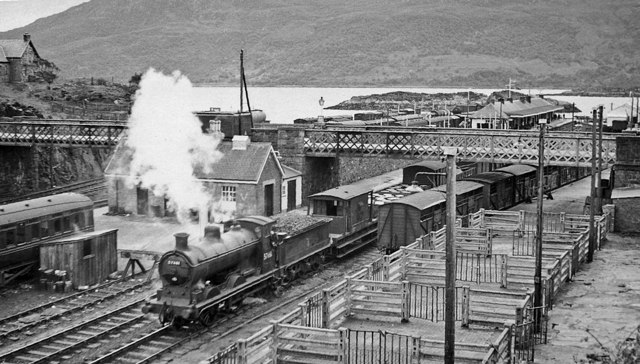
Copyright by Ben Brookshank and reproduced under a creative commons licence
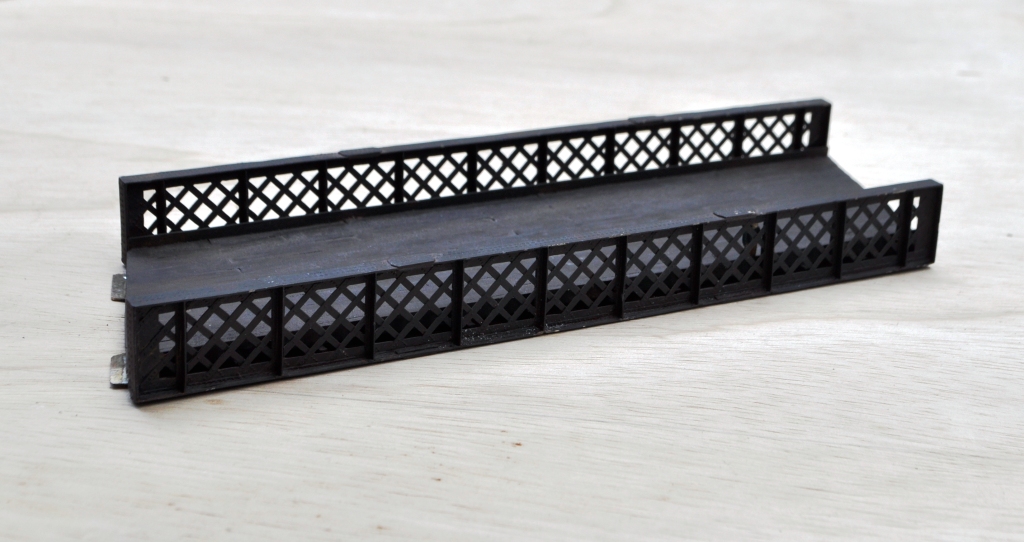
The advantage of using the Killiecrankie bridge is that I had previously modelled one for a layout of this station and whilst the abutments are still firmly attached to some mothballed boards, the deck could be reused. The deck has a nice skew to it to make it a bit more interesting and utilises lattice girders; which few seem to bother modelling. This is what it looks like:
In terms of abutments, most Highland (and indeed this is common to most scottish lines) had bridges with curved wingwalls swept back from the face of the abutment. To give the layout some locational character, this was something I wished to produce. This is where we are at presently with the abutments: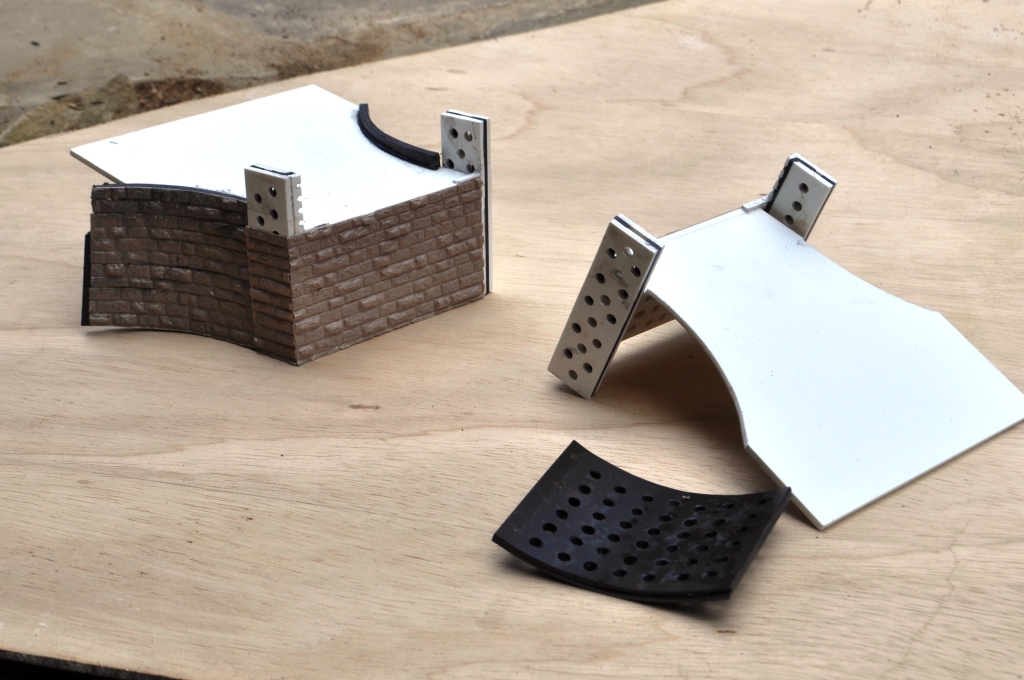 Typically, the random or dressed stone ranges from Wills are my favoured mediums but seeing Andy G making a good go utilising Slaters 7mm coursed stone I thought I would have an experiement with this. This is because many of the later bridges on the Highland used the same coarsely dressed stone; like this one at Dalwhinnie:
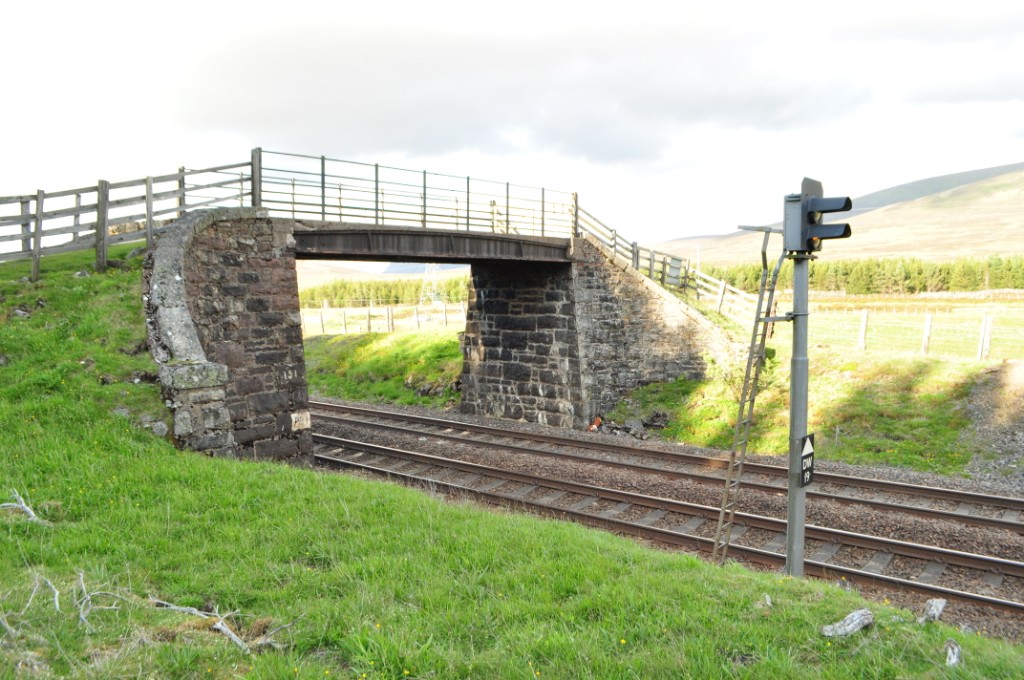
And these show the bridge deck on the abutments as they stand:
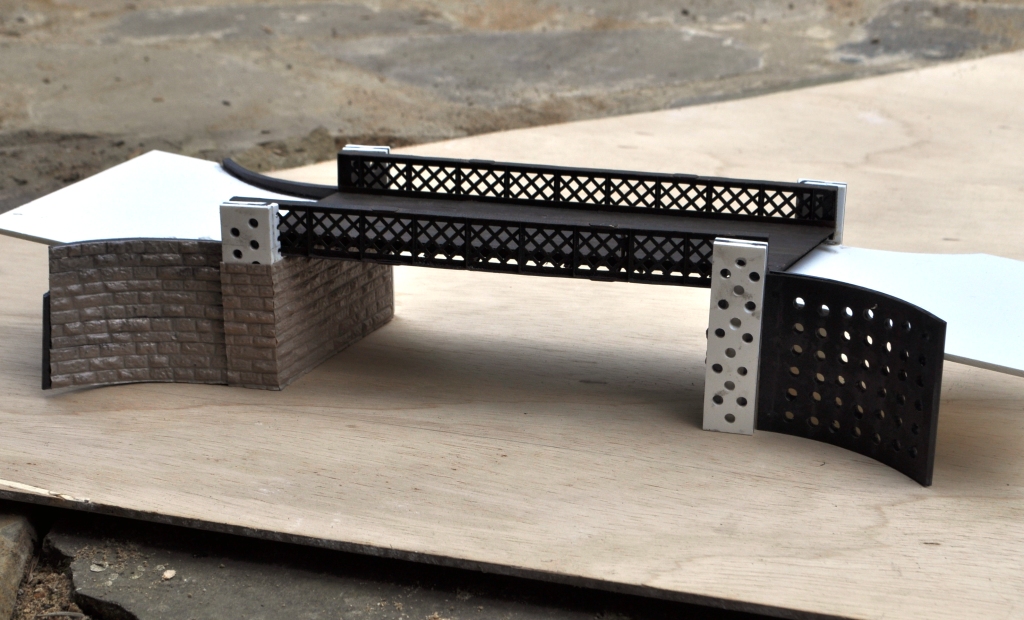
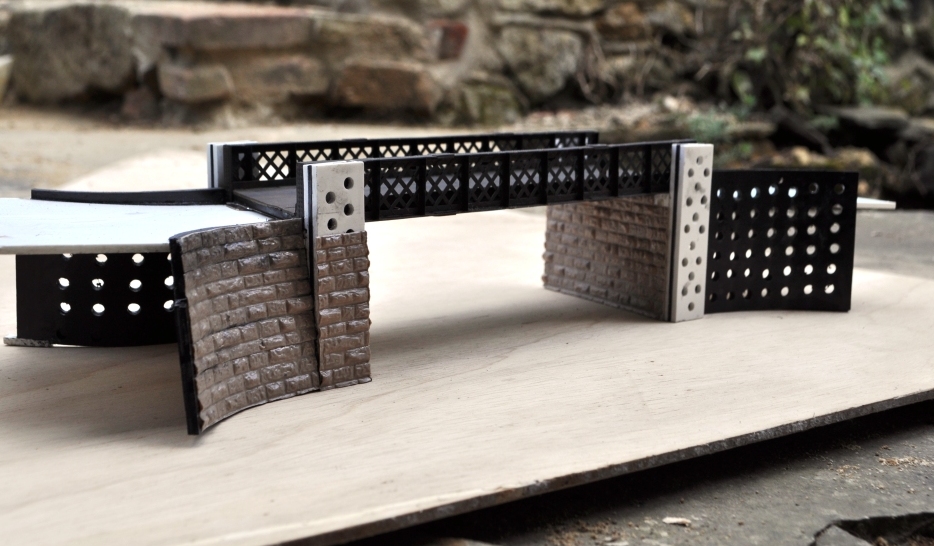
_________________ Mark Tatlow
 highland miscellany