Interlocked Lever Frame – Part 2; More Experimentation……
With a lot of help from Keith Norgrove (thanks Keith) the locking design for the lever frame should now be concluded. This is where we are at:
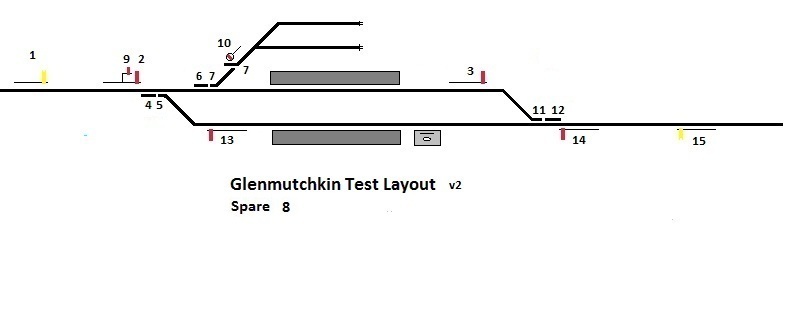
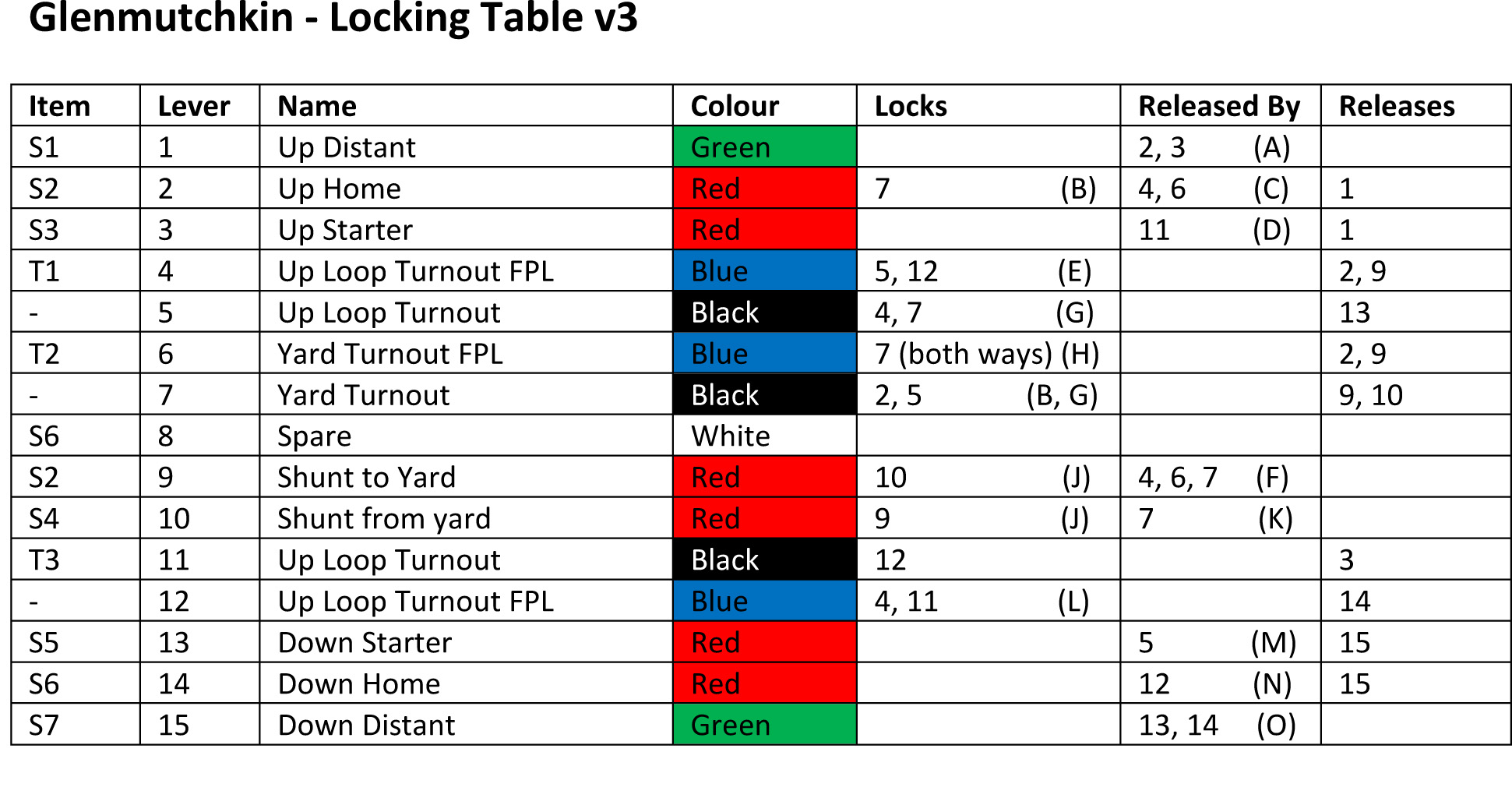
 The lever frame is also ready to receive the beginnings of the locking frame; so guess what i am doing this weekend………..
The Road Overbridge – Part 2
The bridge is coming along and is now close to finished (constructionally).
It has taken a lot of time with plastic filler to get the stones to meet neatly at the corners and also to be coursed sensibly at the corners. Having said this, I am inclined to think it is one of the more important parts of modeling structures and buildings. Cracks or missing sides/ends on a building are just a total no no and even an untrained eye (I am a chartered surveyor so it is worse for me!) spots the error immediately.
This is where we have got too:
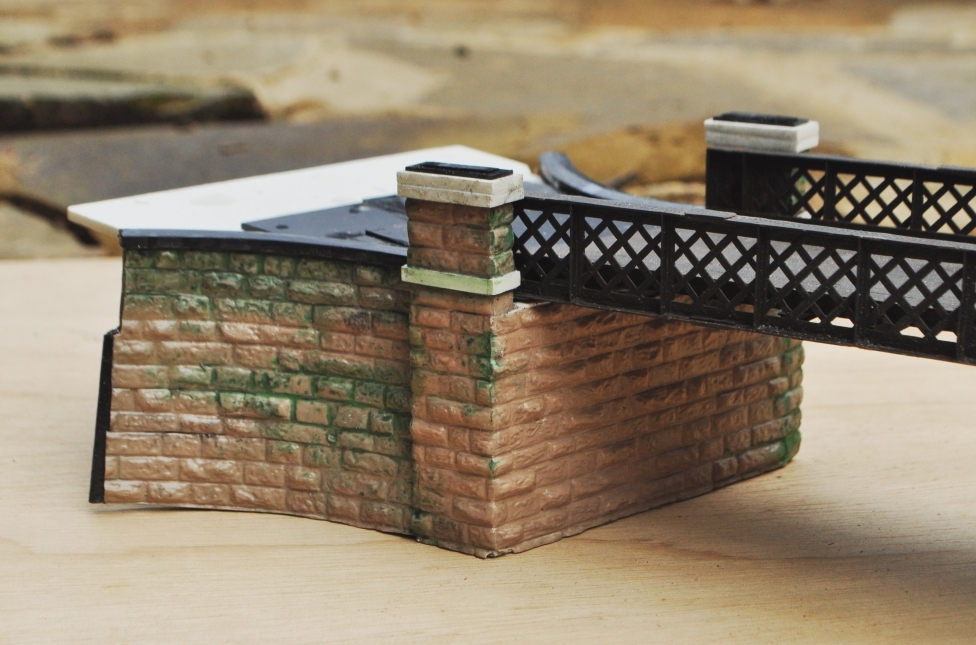
Lots of filler in evidence – but there is still more too do!
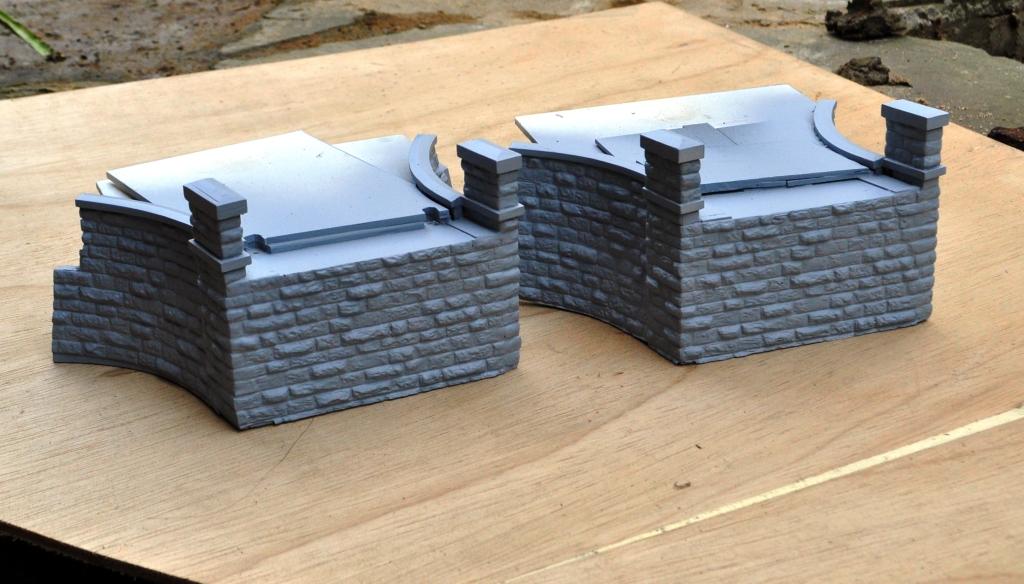
The abutments end on
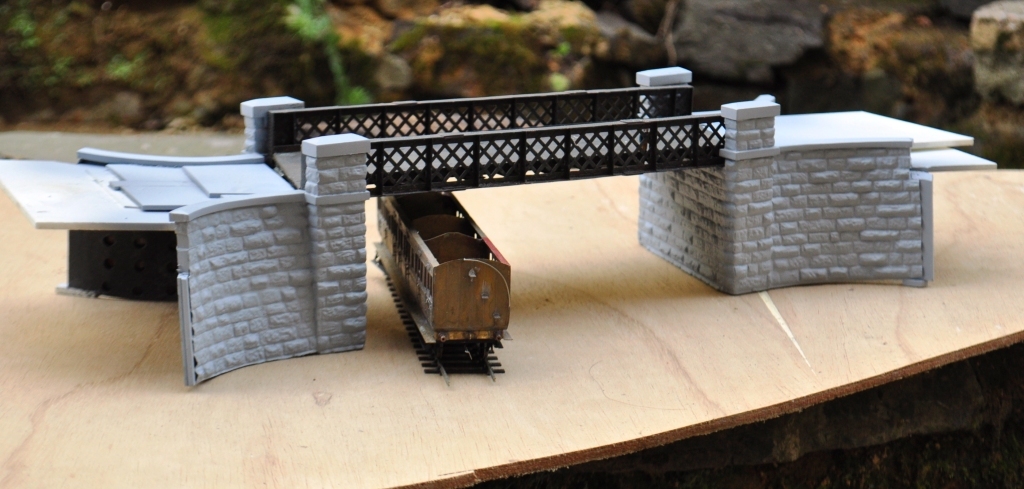
With a carriage to give a sense of scale – the Microrail Drummond All Third has only been on the stocks for 15 years………..
I am not happy with the string course at the moment, it sticks out too abruptly and possibly the same for the copings to the top of the parapet – so more filing and sanding………….
However, it does look like a bridge and I doubt the civils guys will condemn it!
The Road Overbridge – Part 1
The bridge is in fact modelled on the one at Killiecrankie, but there were very similar ones at The Mound, Kyle of Lochalsh, Keith amongst others. Heres a picture of the Kyle one:
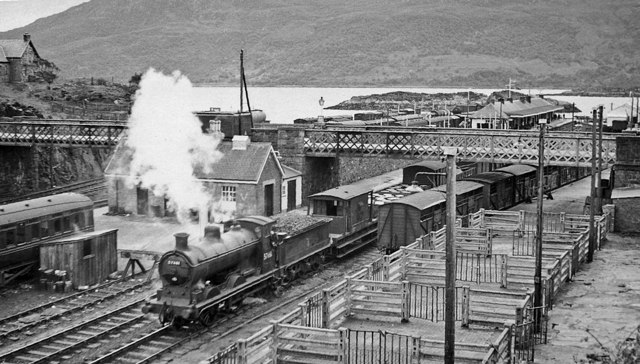
Copyright by Ben Brookshank and reproduced under a creative commons licence
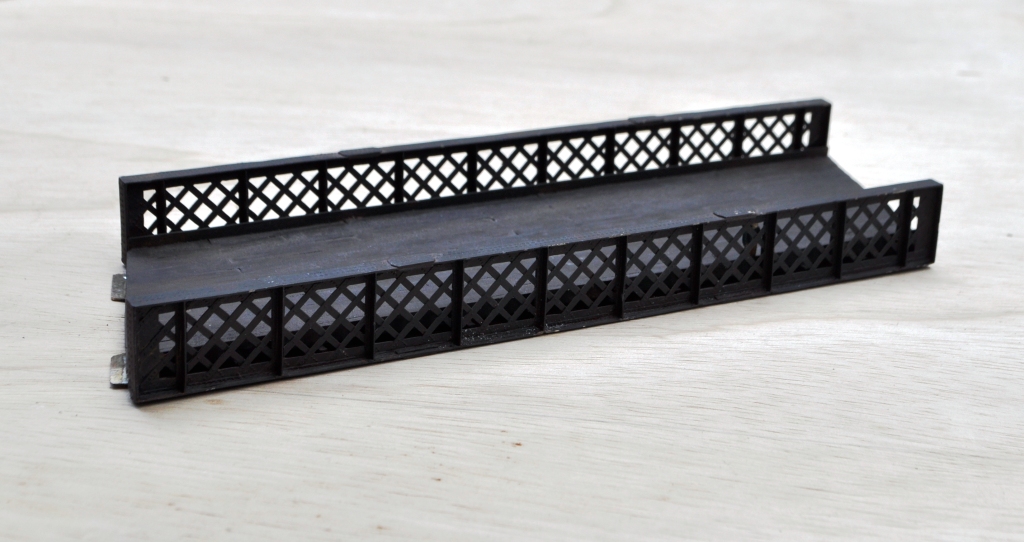
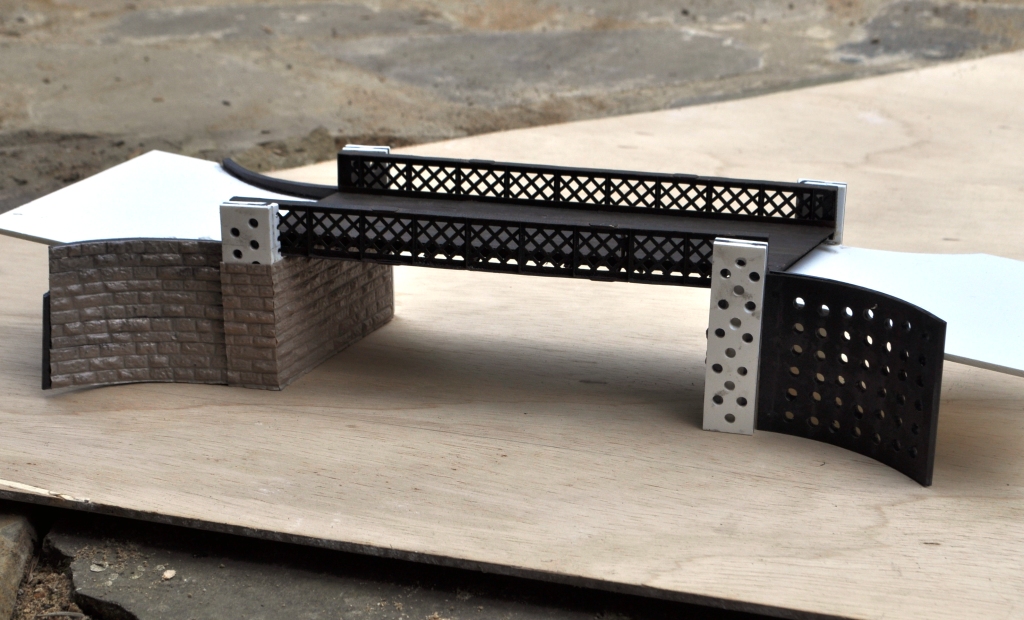
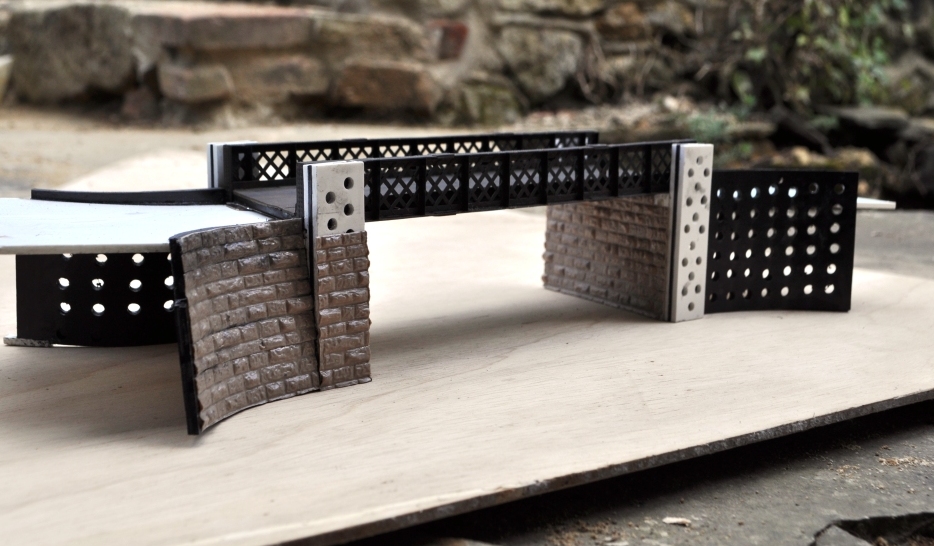
The advantage of using the Killiecrankie bridge is that I had previously modelled one for a layout of this station and whilst the abutments are still firmly attached to some mothballed boards, the deck could be reused. The deck has a nice skew to it to make it a bit more interesting and utilises lattice girders; which few seem to bother modelling. This is what it looks like:
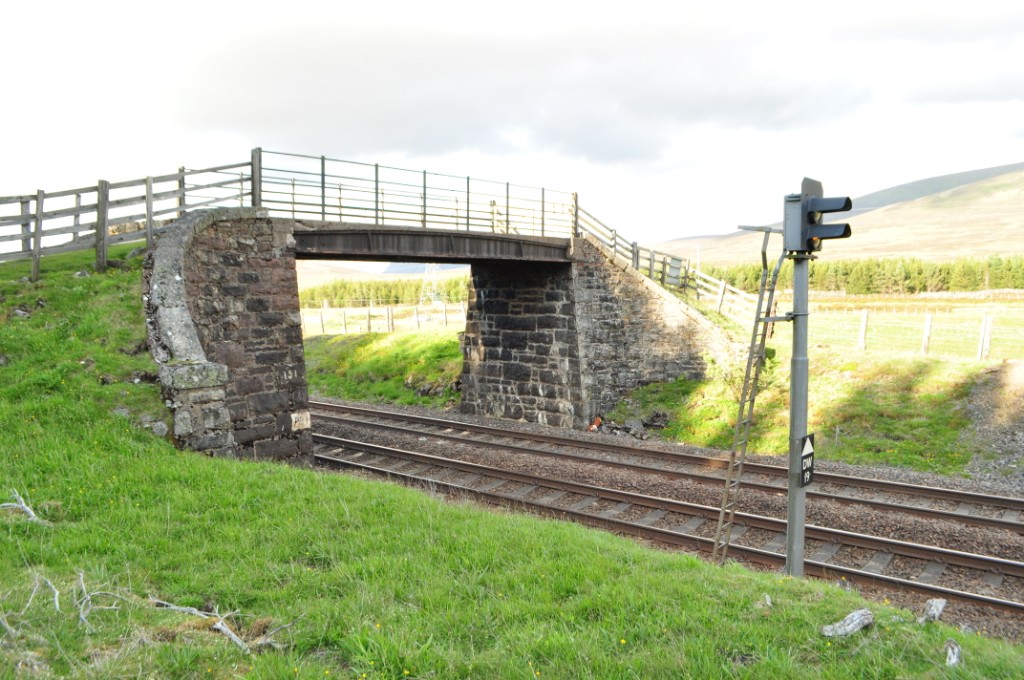
In terms of abutments, most Highland (and indeed this is common to most scottish lines) had bridges with curved wingwalls swept back from the face of the abutment. To give the layout some locational character, this was something I wished to produce. This is where we are at presently with the abutments: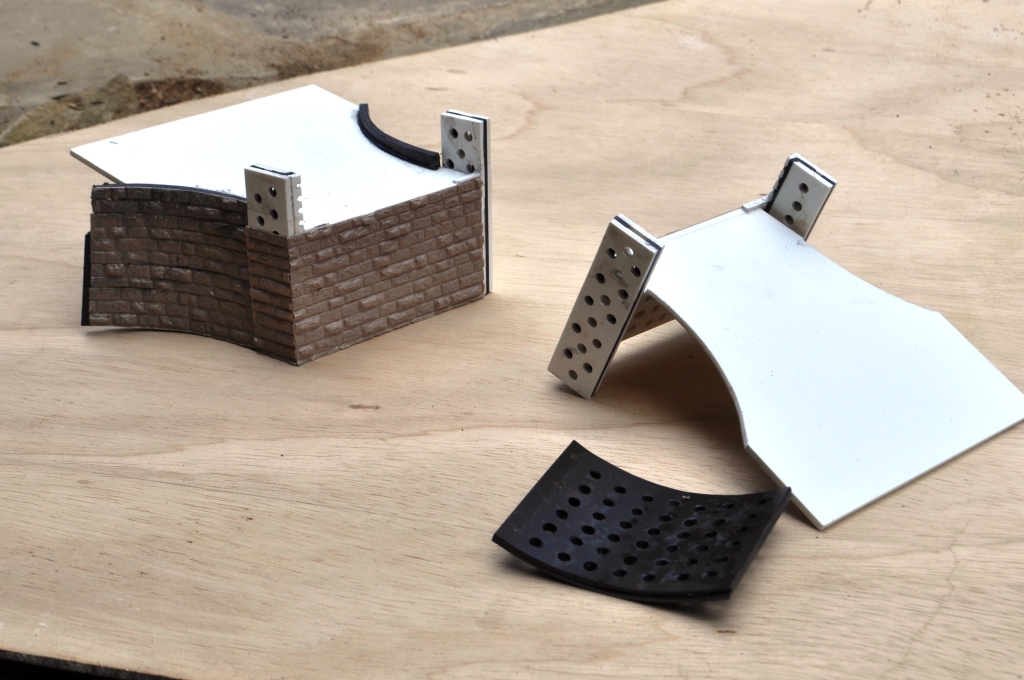 Typically, the random or dressed stone ranges from Wills are my favoured mediums but seeing Andy G making a good go utilising Slaters 7mm coursed stone I thought I would have an experiement with this. This is because many of the later bridges on the Highland used the same coarsely dressed stone; like this one at Dalwhinnie:
And these show the bridge deck on the abutments as they stand:
_________________ Mark Tatlow
Interlocked Lever Frame – Part 1; Experiments
And this is the locking chart that I think is right:
If people out there think there are errors in this; especially the locking chart (locking logic is a bit mind twisting) then please pipe up as I will be building it soon!
Glenmutchkin Part 5: Signalling
Whilst they are not without their frustrations (they are delicate for example), I was slightly surprised to have enjoyed building and using the signals as much as I did. Therefore, Glenmutchkins will going a bit more large on signals.
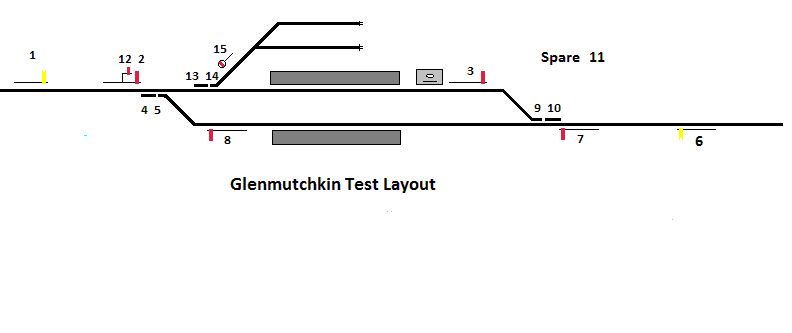
I am assisted in that the Highland seemed to follow the trend of the pre-group companies and be fairly lavish with their signals. Taking significant cues from my sources of inspiration, Wick and Kyle of Lochalsh, this is where I have got to with a signalling plan.
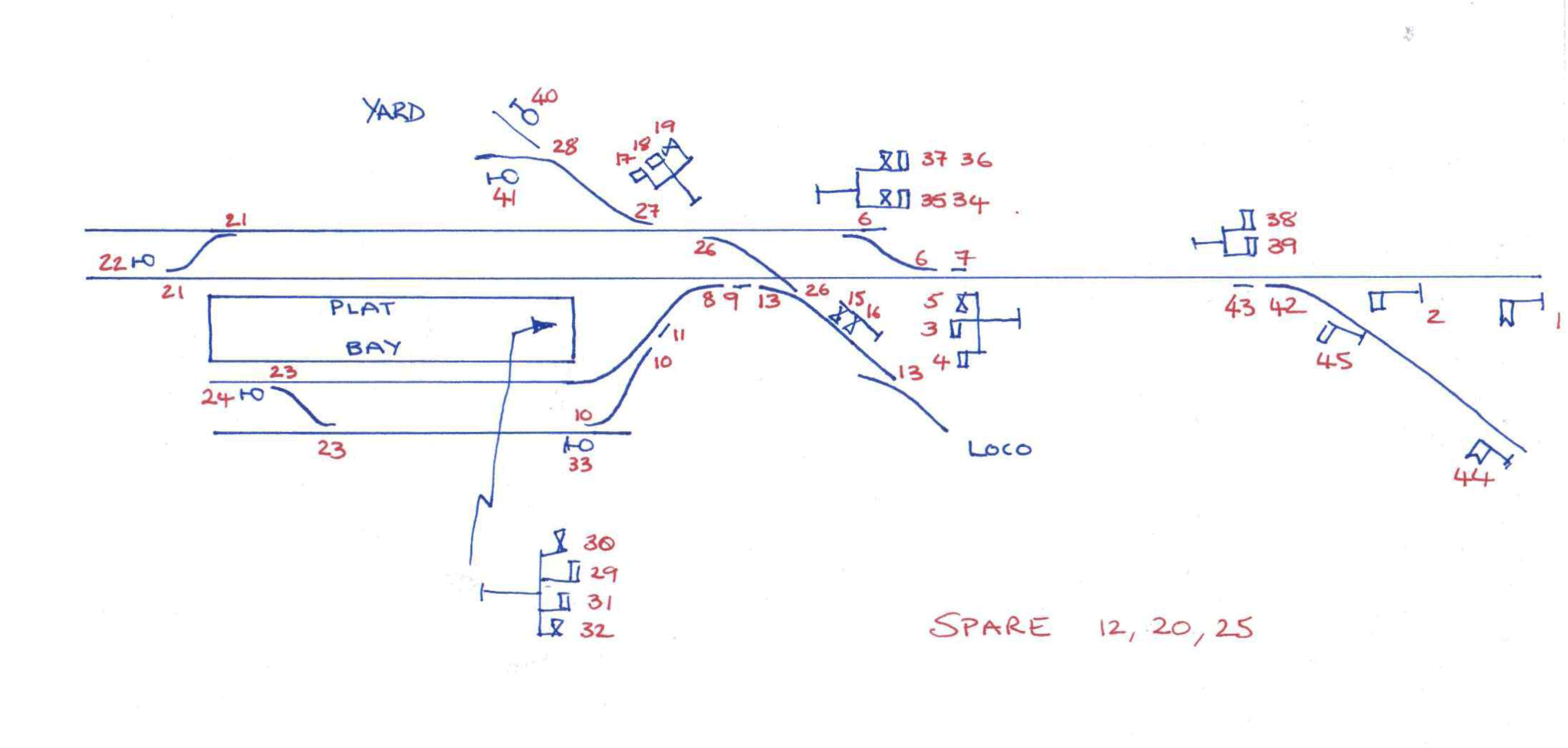
As can be seen, there is a fair amount to this as I have assumed that there is a junction off scene that is signalled from the station cabin (although this is still under review) and not only is the yard signalled onto the running line but both the run around loops and the shed are both signalled. It looks like this will be a 45 lever frame, so there is a fair amount to do……………
A particular signal to note is the one with arms 17,18 & 19 on it. This is a repeater for arms 15 & 16 so directs locos coming off the yard where they are to go to. This exact same situation existed at Kyle and in addition to being a surprising duplication between the two signals the former is that the signal is situated well up on the bank and faces fairly firmly towards the shed, not the running lines. I do not presently have a photograph that is free of copyright to illustrate this but there are lots in the various text books; try The Highland in LMS Days or LMS Engine Sheds.
Portchullin at Ally Pally – 23 & 24 March
Portchullin’s next outing will be this forthcoming weekend where it will be at Alexandra Palace
It will be dirty diesels on Saturday and 1920’s steam on Sunday.
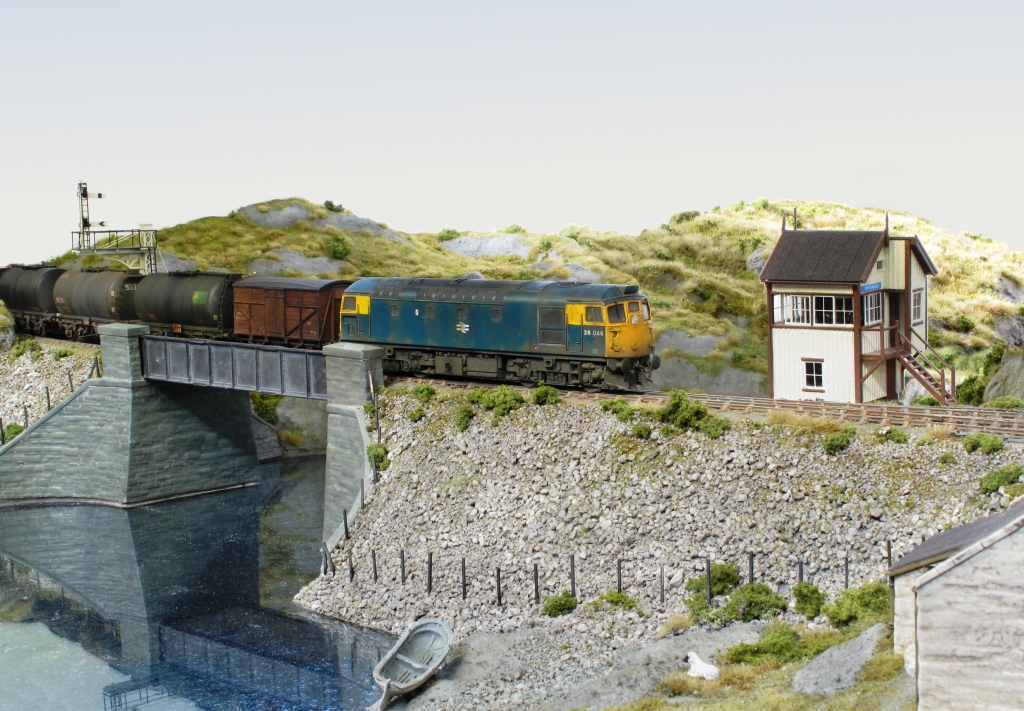
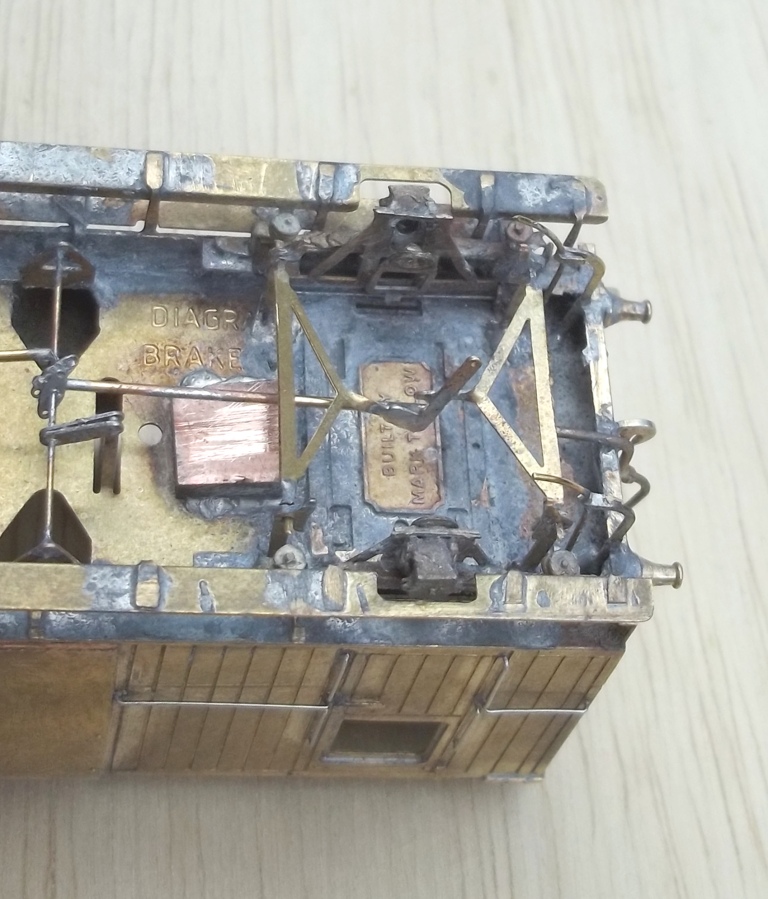
Diagram 39 Brake Van
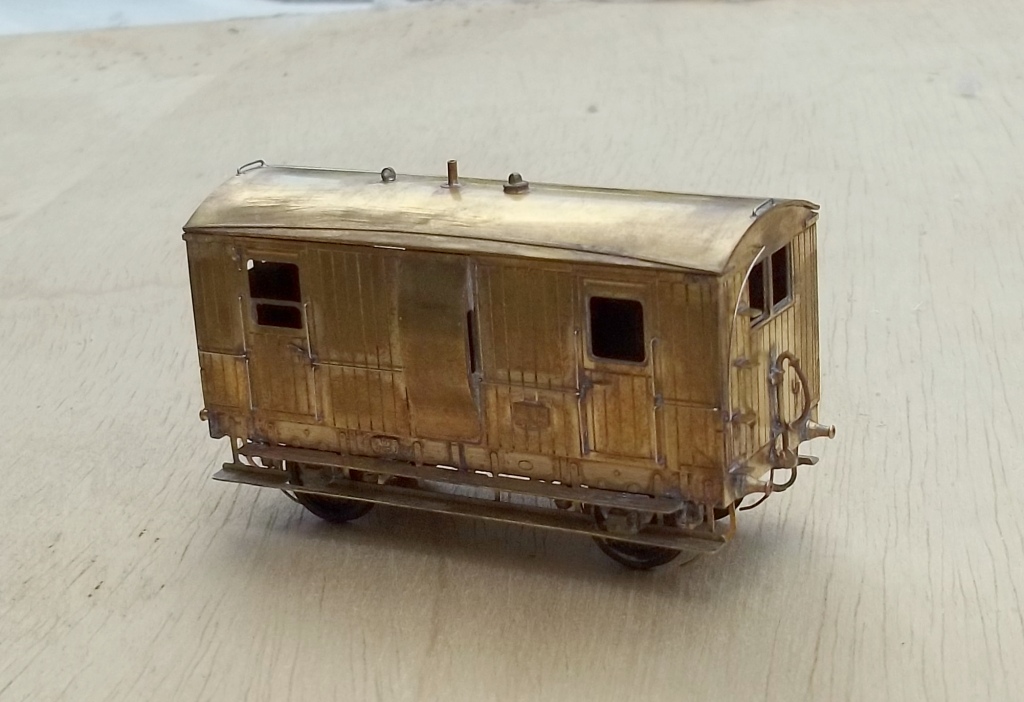
The latest completion off the workbench is a goods brake van.
This is a diagram 39 version; which was the Highland’s last brake van design (and there is some speculation that they were not delivered until after the start of the LMS era but if someone has a photograph in HR days, we would be all eyes!). These were quite modern by the Highland’s standards and were the first ones for several decades to do away with the lookout on the top of the roof which was likely to be a retrograde step given all the twists and turns of the Highland’s lines.
 .
.
It was built from a Lochgorm Models kit; constructed mostly as intended. However, I elected to insert some sprung suspension using Bill Bedford sprung W irons, rather than the designers intention of compensation. I also found that the sides were a little tall, so these needed to be cut down a tad. Other than this, it is was pretty easy. Having bought some of the NBR Models etched builder’s places, this became the first model of mine to be fitted with one – so a small first!
Glenmutchkin Part 4 – Inspiration
Glenmutchkin’s main source of inspiration is Wick or its slightly more slimline cousin, Thurso. These are very similar in layout except for their MPD’s; where Wick’s was quite a lot larger.
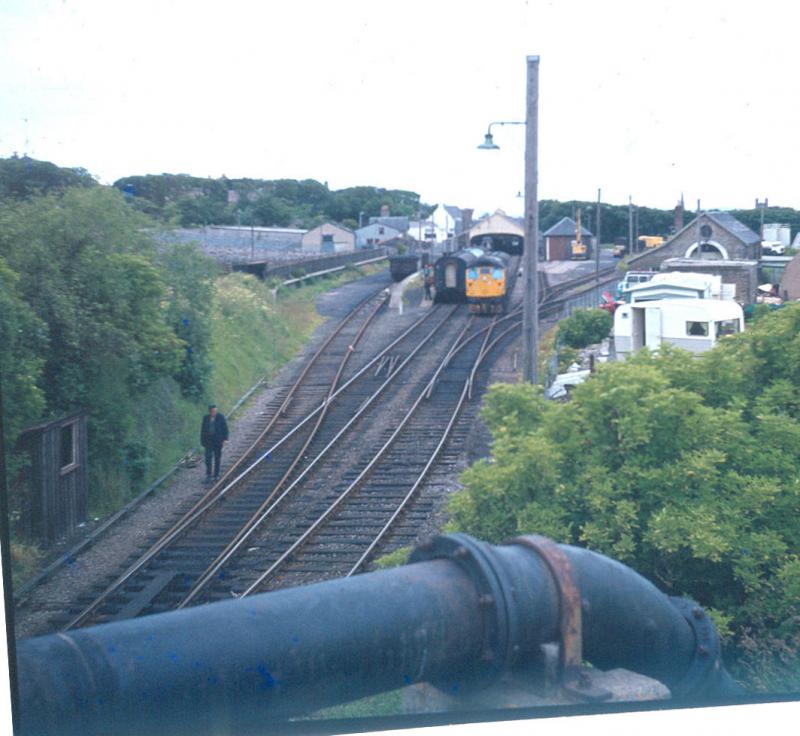
An overall view of Thurso in the 1970’s, with thank to Richard Oaks
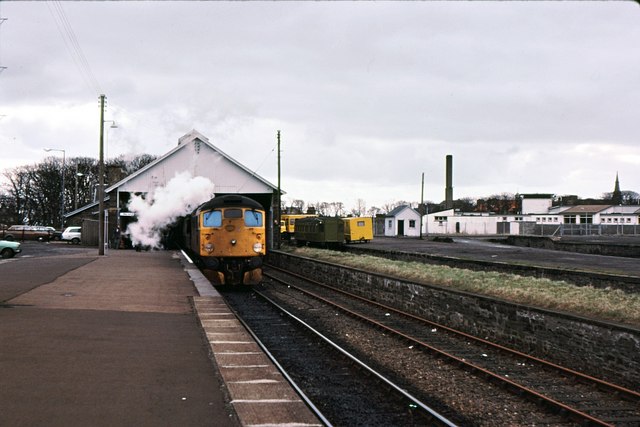
Wick in 1983; photograph by Peter Whatley with Creatives Commons Licence
However, rather than a facsimile of either (hey Ben Alder/Richard Oaks has nabbed that idea anyway!), I am proposing to use the same arrangement of MPD as at Kyle of Lochalsh’s shed area, with the access road leading to a turntable and then the shed roads coming back off this. Due to the way that the layout will sit in its home, I have had to do a mirror of the shed at Kyle but otherwise it will be the same.
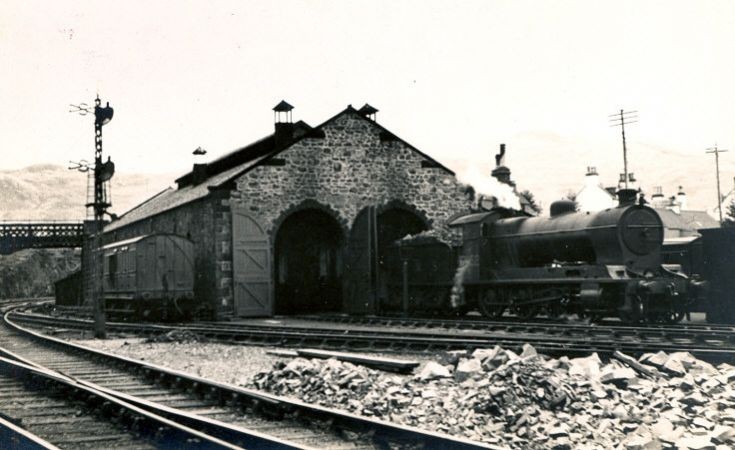
A rather fab photo of Kyle shed with a superheater goods (which were the mainstay of the line from about 1930 through to just after the war) on shed. It is also a fine view of the signal here – one that I wish to model. Photo with thanks to Jim Payne and available at www.throughtheireyes2.co.uk
All of the lines to the west coast of Scotland; both built by the Highland or any of its rival companies or projected come late in the 19th century – partly as a result of Prof Aytoun’s story that I have paraphrased in part 2. Wick and Thurso however were built rather before this and are stylistically rather different as a result. The main differences are the way that the platforms were arranged and the use of a stone built station building/train shed. However, having decided that the Glenmutchkin was much earlier than this, I felt that I could assume that the terminus was built before any of the other lines to the west coast were achieved and thus use the older style of station. In practise I have done so because I wish to model the overall roof – probably the building at Wick as its screen to the end of the train shed is very attractive.
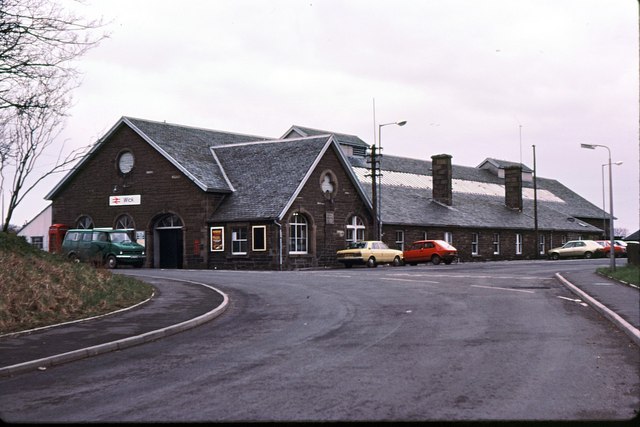
Photo of the road side of the main station building at Wick (that at Thurso is a bit smaller). Copyright held by Peter Whatley and reproduced under a Creative Commons Licence.
Another feature of Kyle that I will take is the overbridge splitting the station from the shed area. Being the son of a bridge engineer, I guess I need to get some proper civils into the model and the latticework is quite attractive. I will go for a single span bridge, rather than the twin span seen here at Kyle.
Copyright held by Ben Brookshank and reproduced under a Creative Commons Licence
Those cattle pens will appear at some point too!
Glenmutchkin: Part 3 – Era
Whilst I seem to be known in the electronic ether for my 1970’s modelling, this is not really my main interest.
Many years ago, I set my main era as the early years of the LMS. Whilst I do quite like some of the LMS standard classes, it was really the sight of the Edwardian and Victorian locomotives of the Highland in the lined red pulling a rake of fully lined coaches that seduced me. After all; who could resist something like this:
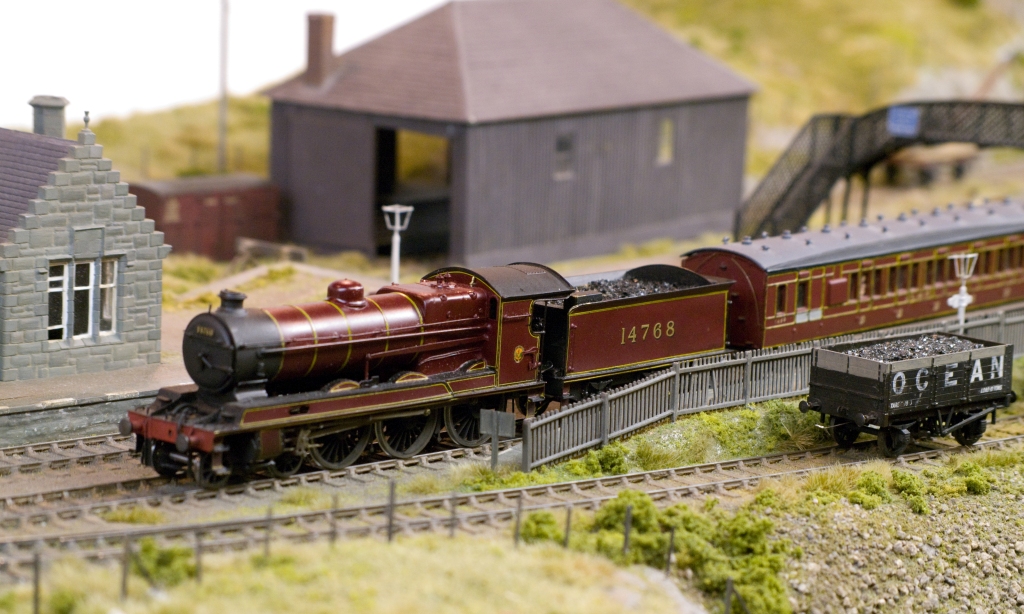
or this:
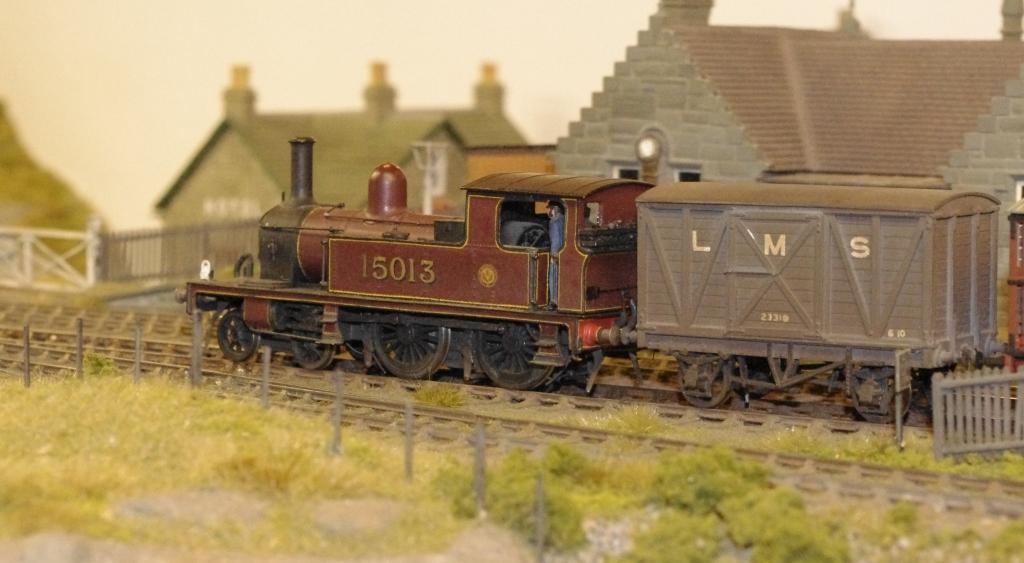
Its peculiar; I would think that the 1920’s is the least modelled era after about the 1880s? Think about it, when did you last see a model from this era?
My regret for this period though is the loss of the red oxide painted goods stock. The Highland often (apparently at random as to when they would and when not) pick out the ironwork of these in black and again I am drawn to the fusion of colour that occurred as a result. To get over this contradiction; I model in about 1925/1926. Much of the passenger stock and locos had by then been repainted in the new corporate LMS colours but at least some of the good stock remained in the old pregroup livery.
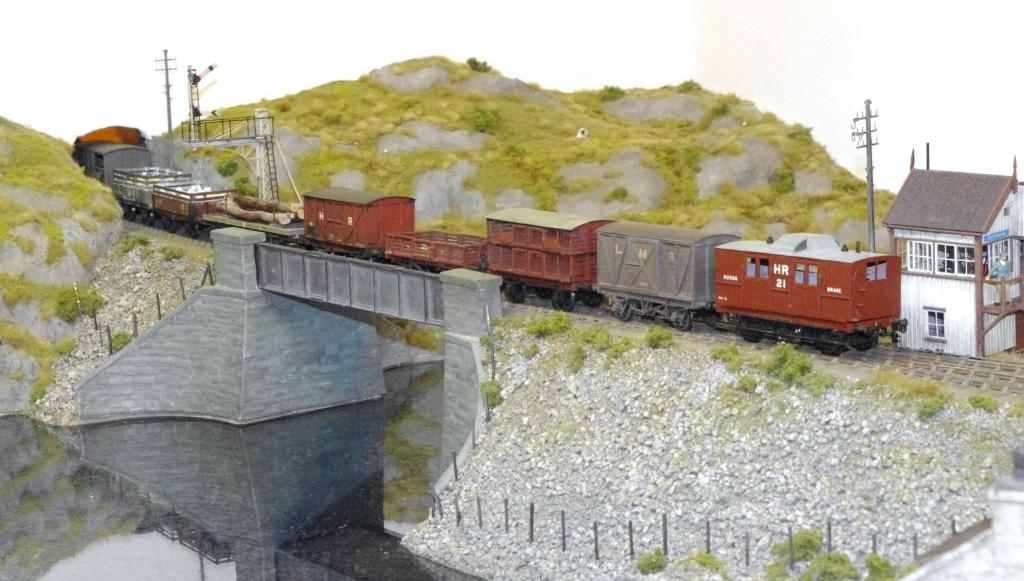
with thanks to Ray Nolton for two of the pictures
Portchullin’s Next Outing
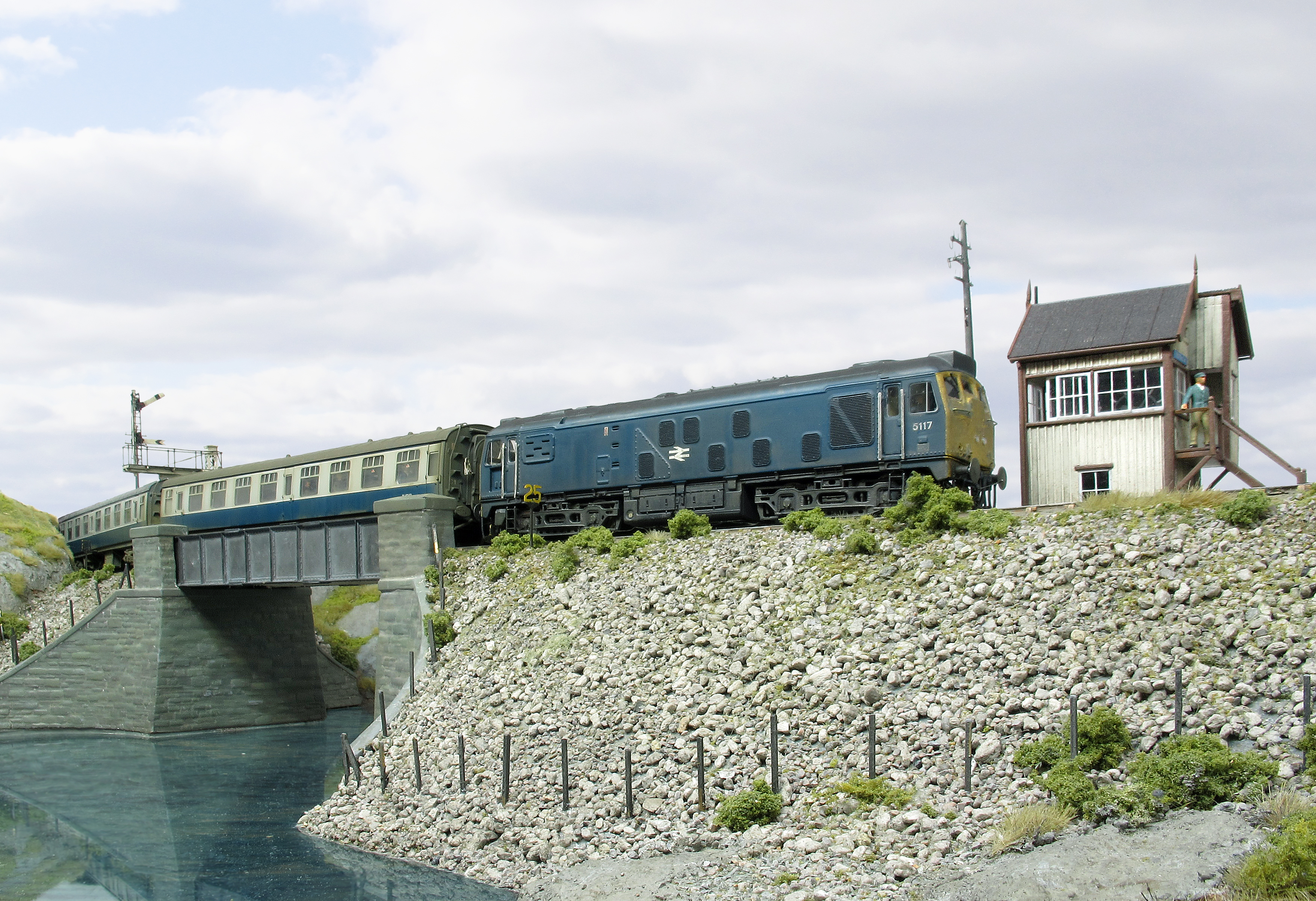
My existing layout, Portchullin – as shown above in Andy York’s photo, has its next outing this Saturday (16th Feb) at Tonbridge. Details of the exhibition are here
After this, it will be a month’s rest and then we are out at the London Festival of Model Railways at Alexandra Palace. This is on the 23 and 24th of March and Details can be found here
After this, it will be Wigan in June an unconfirmed invite for Hartlepool in July and then Warley way off in November.
 highland miscellany