Blog Archives

Destroying a Warranty – A Penbits Chassis
Despite having a layout that runs exclusively diesels, I have never sought to put suspension onto a P4 diesel loco. The class 20s, 24s and 26s that I operate with have short wheelbases and are pretty heavy, so they survive quite happily on even the rather rough Portchullin trackwork. However, I suspect that a longer wheelbase loco or one going faster would be caught out.
I visited the proprietor of the Penbits range a year or so ago and seeing his fully sprung locos on his layout convinced me that it was worth giving it a go. A video from my visit is below and shows how they operated so smoothly and looked heavy – just like the real thing indeed.
Ian’s embryonic model of Bodmin Road (now Parkway) with a Bachmann class 45 with one of his chassis in use.
So at this year’s autumn Missenden weekend, it was time to make the Bachmann team cry by deliberately chopping up a brand new LMS twin diesel. I even did it to a sound fitted one so that the bill would be particularly high if I messed it up!
The LMS twins were the first main line diesels in the UK and were built in the final gasp of the LMS before nationalisation – the first being built only three weeks pior to nationalisation and the second seven months after. The design work was split between the LMS at Derby and, largely for the electrical installation and the power units, English Electric. For an initial prototype, they proved pretty successful and carried on in service until 1962 and 1964 respectively – they each had over 1,000,000 miles on the clock.
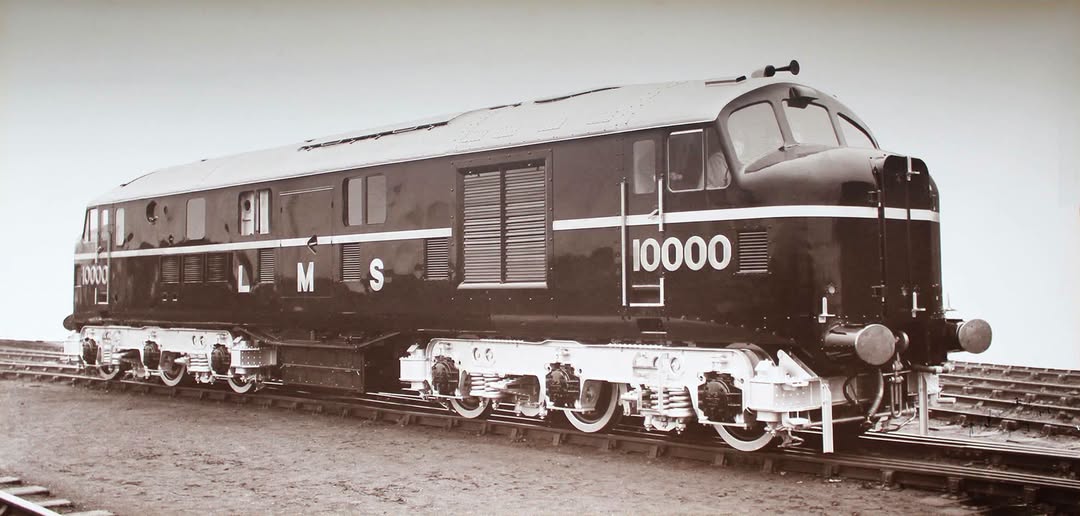
Official photos of the first of the twins, no 10000 in its striking black and aluminium livery.
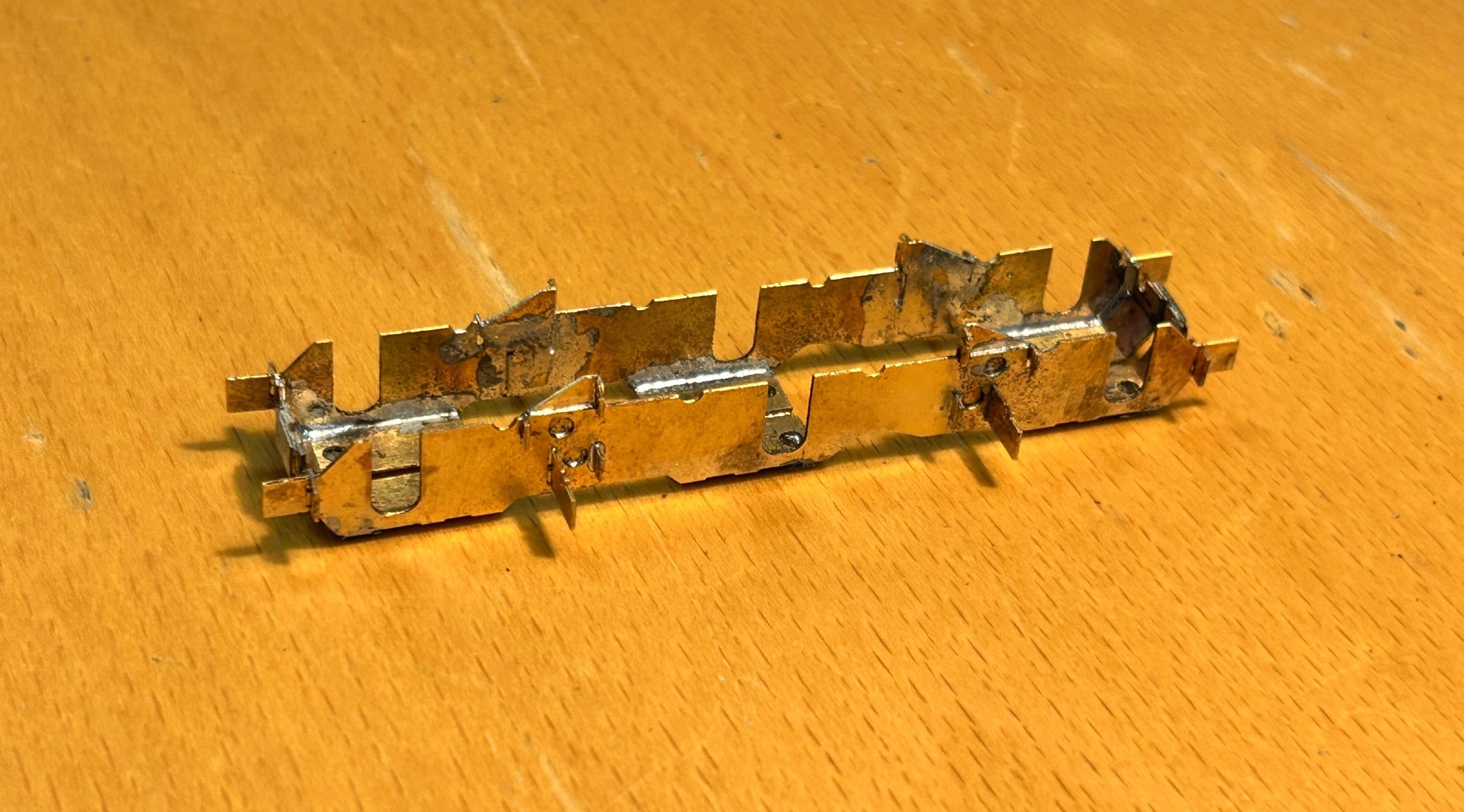
The design of the replacement chassis has primary springing on the axles and then secondary springing between the bogie and the bolster arrangment that acts as a pivot to the body. Below is the initial chassis made up – the slots being for hornblocks that are made up with a bearing and a rubbing plate/carrier.
Then over this is a bolster construction. In addition to allowing springing, this also forms the pivot with the body.
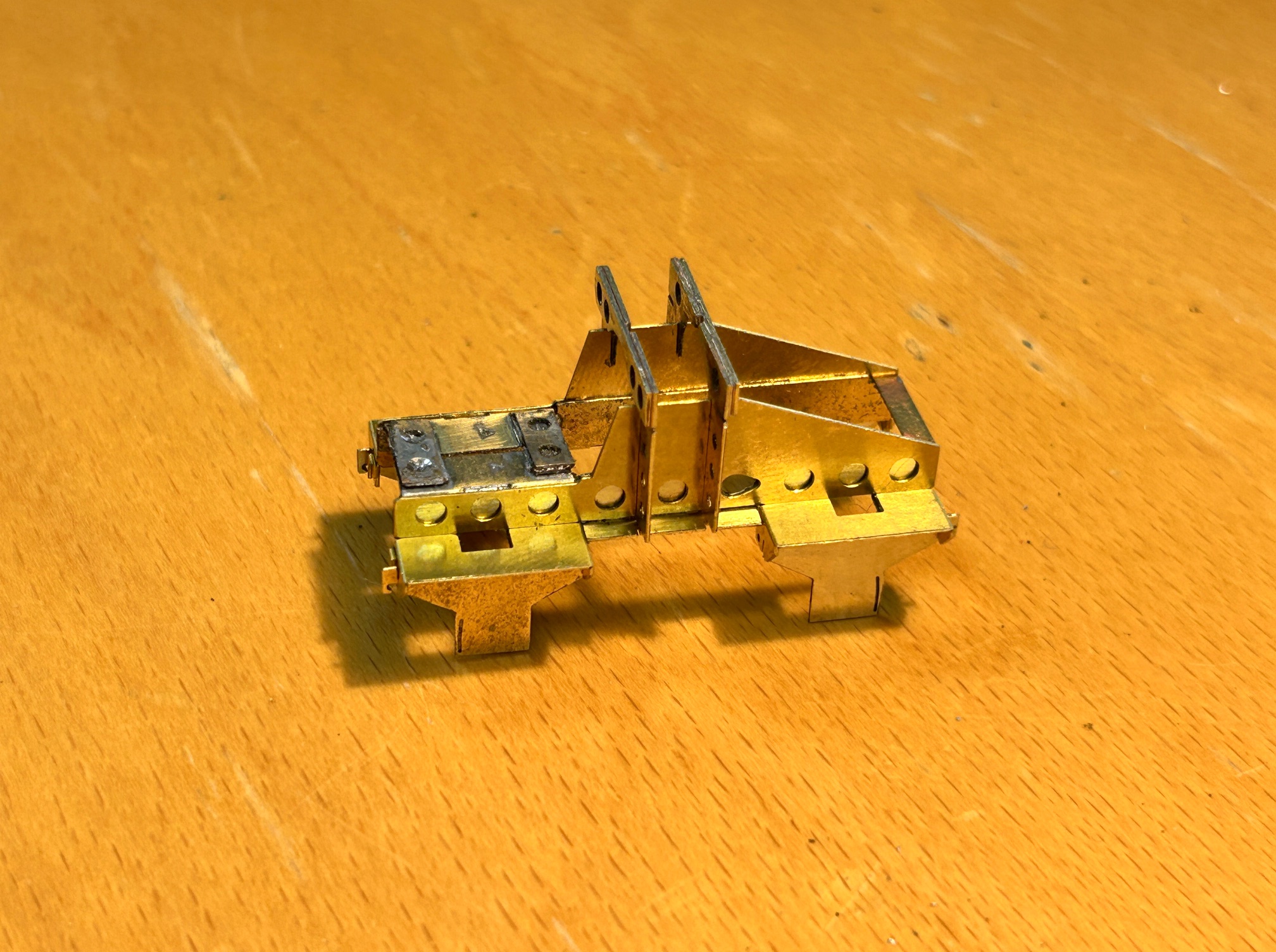
A big challenge for both of these components is the need to split each side of the chassis electrically because the donor model works on the split chassis principal. This buzz box (just a sounder) was absolutely invaluable for this as it was not easy to make sure that there were no breaches of the double sided paxolin.
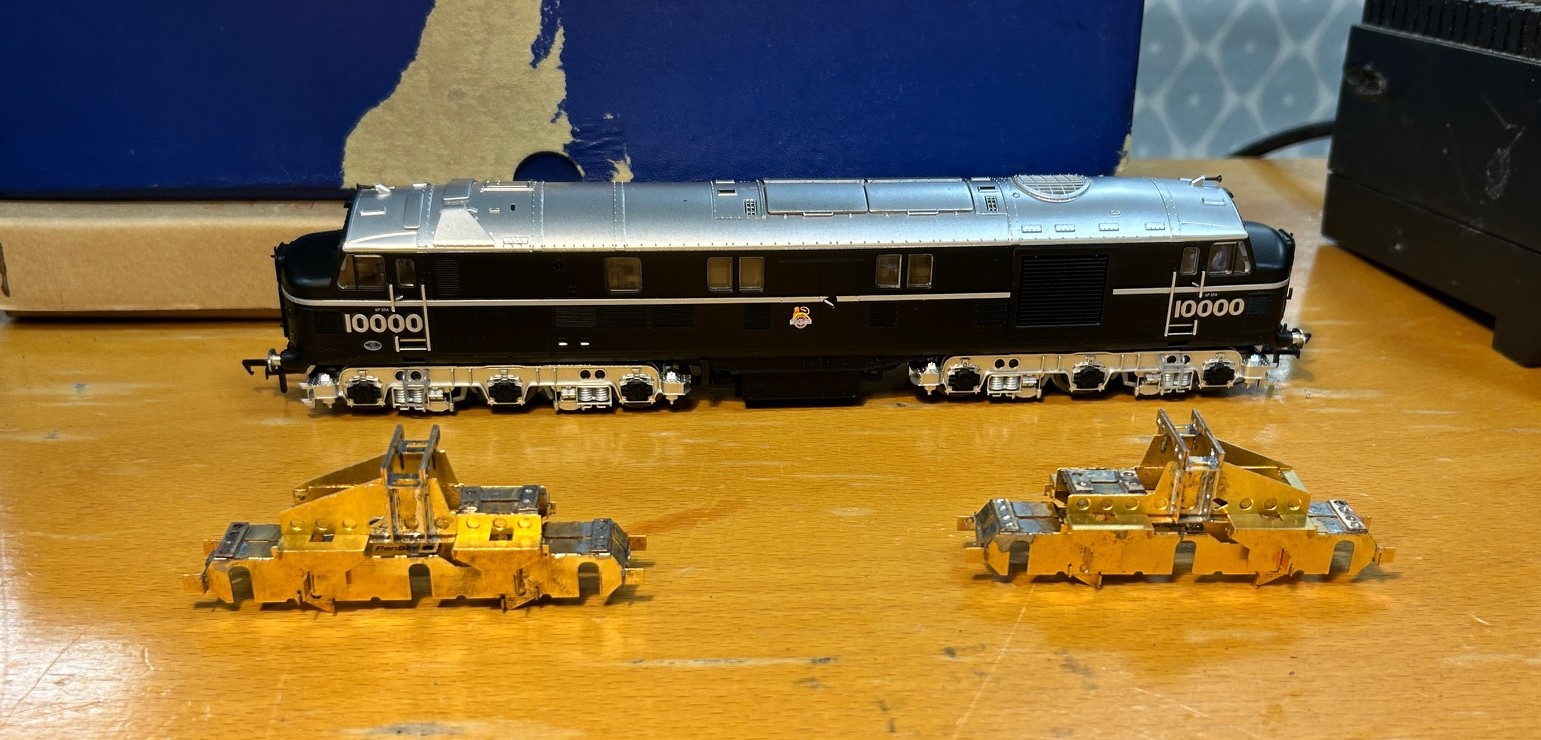
And here the two bogies with the brass soldering largely complete and the donar model awaiting her fate!
Next comes the cruelest cut and the destroying of the warranty! To allow the springing to work, it is necessary to cut the three axle bogies to allow two of the axles to float relative to the others, so the bogie assembly needs to be cut. First all of the gear wheels need to be removed – taking care to note where they came from so that they can be put back. Then, portions of the side mounts are removed and then it is literally sliced in two as you can see.
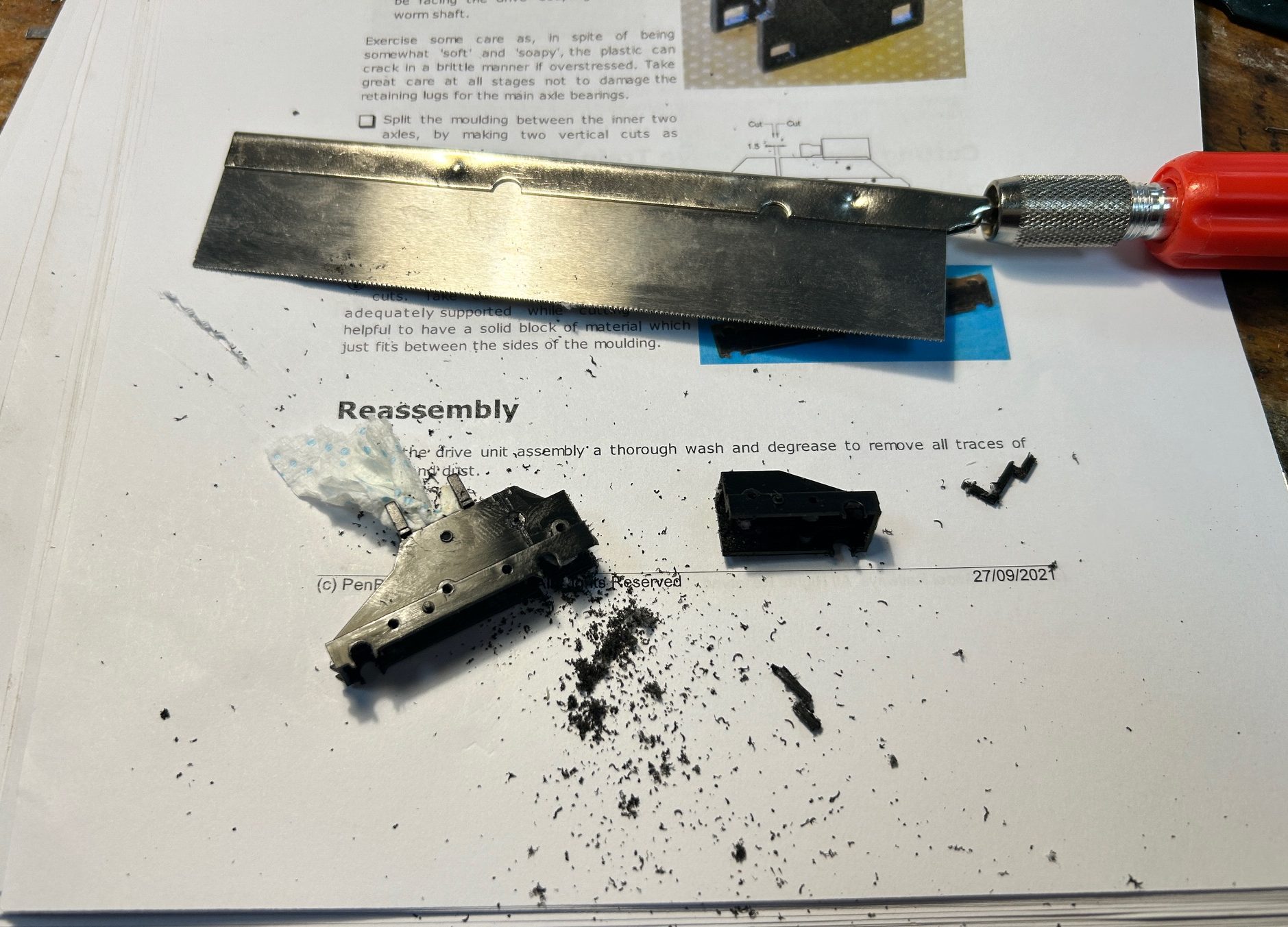
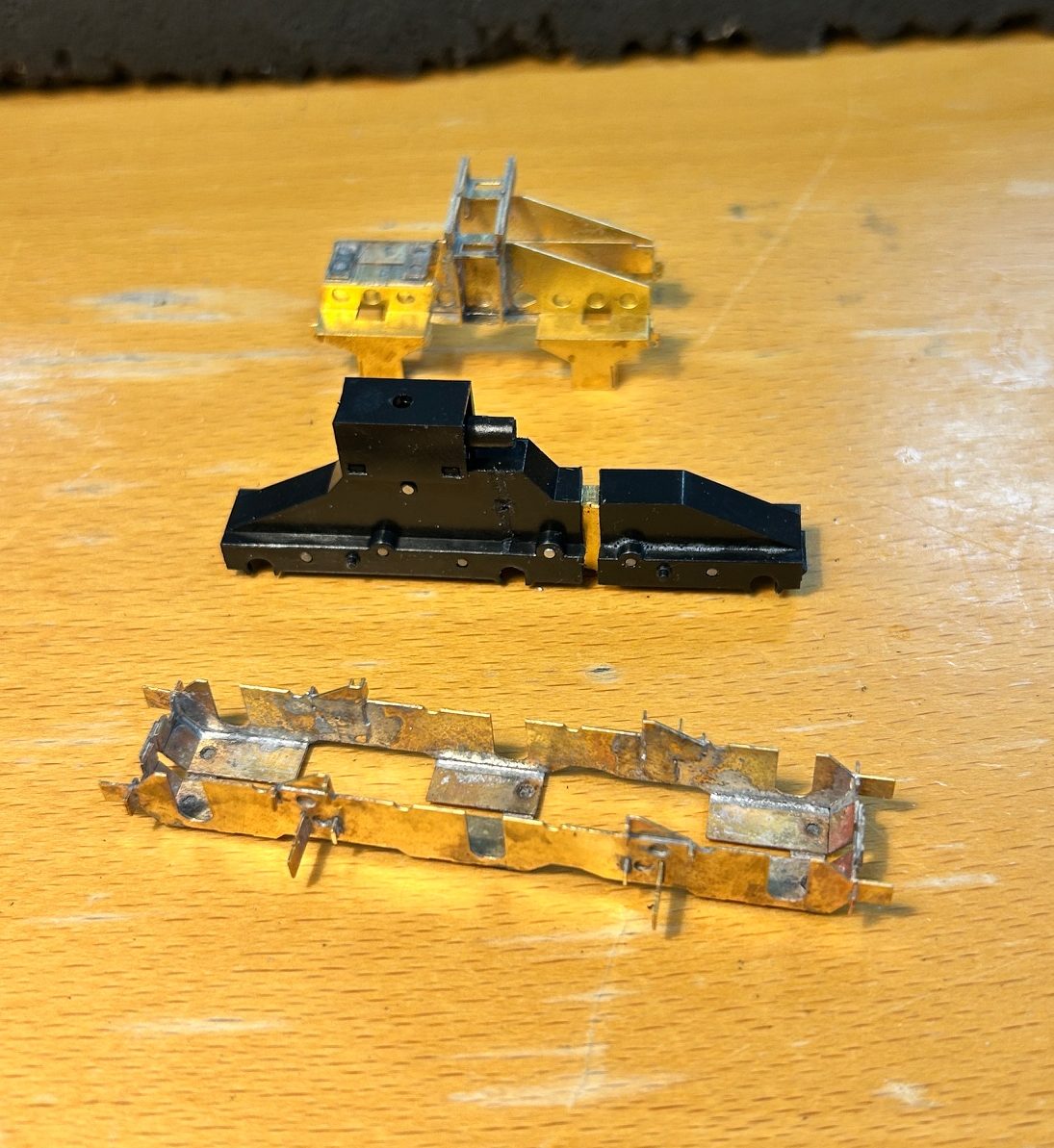
Once the cut is made (and all the shavings cleared up!) it can be reassembled like a Frankenstien’s monster.
Wheels are conveniently available from Branchlines and are designed to retain the use of the plastic muffs/gear wheels provided in the donar model. Once these are assembled, the various components can be assembled with guitar wires used as springs. I did find that it was not until the final components were in placed, with the springs clipped in their housings, that the whole performed as a single unit – so if you are building one of these bear with it until the end!
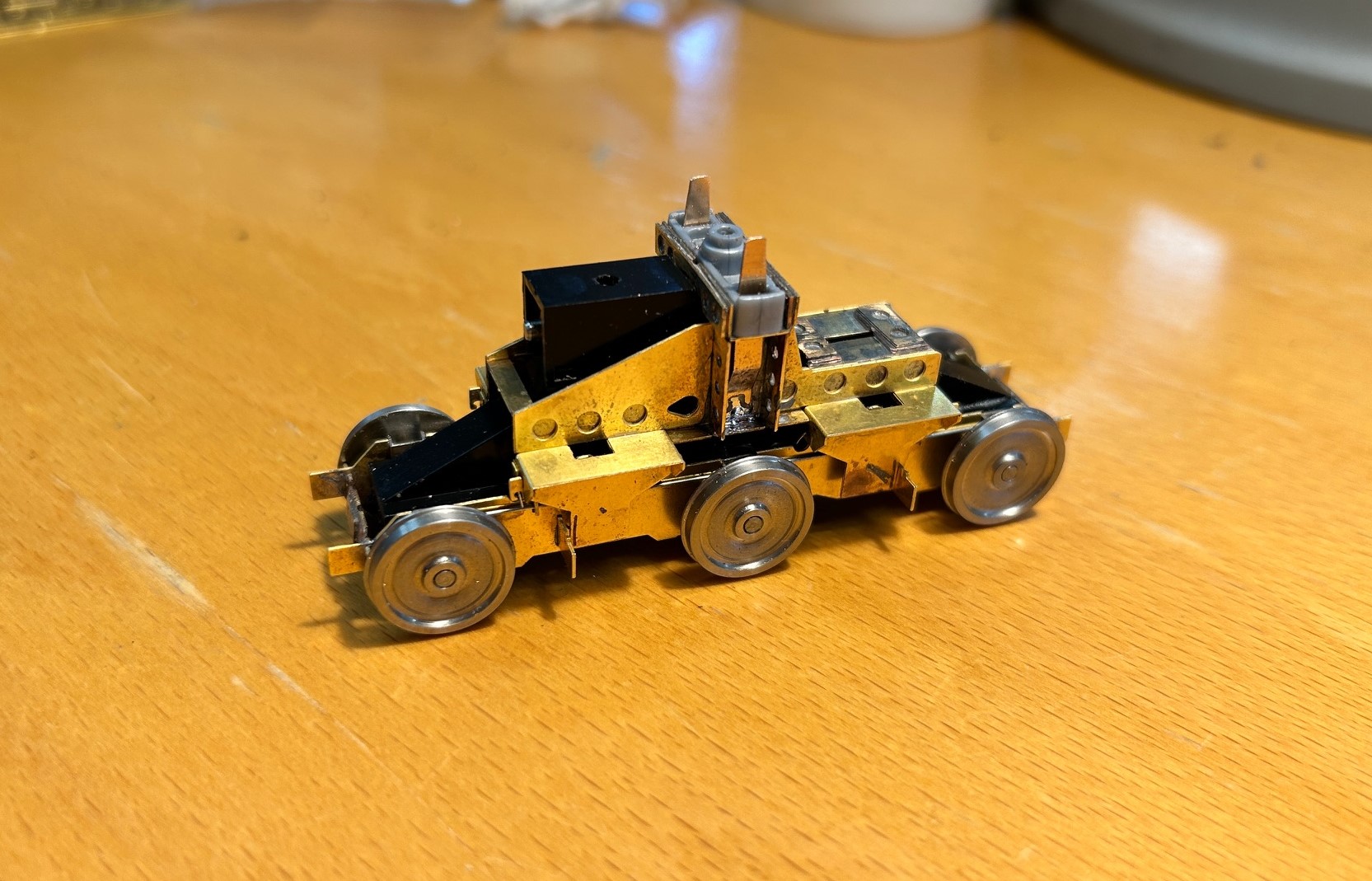
And this is what the final bogies looks like (prior to the fitting of cosmetic detailing).